

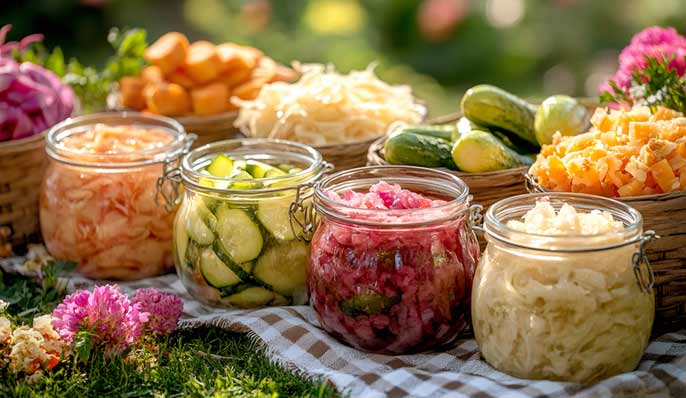
Recent discoveries about the microbiome and its role in health have drawn growing attention to postbiotics. What are they? Why do they matter in the Mediterranean diet, and what could they mean for longevity?
After probiotics and prebiotics, meet postbiotics
Postbiotics are bioactive compounds produced when probiotic bacteria ferment dietary fibre or other foods in the gut. Researchers have been studying them more closely in recent years.
Unlike probiotics (see this article), which are livingmicroorganisms, postbiotics are by-products (metabolites) of fermentation. They may include:
- short-chain fatty acids,
- antimicrobial peptides,
- polysaccharides,
- enzymes,
- vitamins and more.
Postbiotics can therefore be present in fermented foods and drinks even after sterilisation, which may destroy live probiotic organisms but leave some of their compounds intact.
Cooked sauerkraut, for example, is unlikely to provide many living bacteria, but it may still supply postbiotic compounds that help support the gut environment.
As for prebiotics, these are indigestible substances that feed beneficial bacteria, especially fibre-rich foods containing complex carbohydrates.
Postbiotics are being studied for several possible health effects, including:
- Anti-inflammatory and antioxidant effects
- Support for immune function : they may help moderate excessive immune responses and defend against gut pathogens.
- Support for the intestinal barrier : postbiotics may strengthen the gut barrier and help limit what is sometimes called “ leaky gut ”, when unwanted particles pass into the bloodstream.
- Metabolic effects : some postbiotics may influence glucose regulation and improve insulin sensitivity, with potential relevance to type 2 diabetes.
 California-based Dr Steven Gundry has written many books about the microbiome and its links to health. We find his work extensively referenced, although he tends to focus heavily on lectins). He describes postbiotics as important mediators of gut health. In his view, they amplify the benefits of probiotics: the compounds these organisms produce may matter as much as the organisms themselves.
Dr Gundry also suggests that postbiotics may support mental and cognitive health, partly by reducing inflammation and supporting the blood–brain barrier, which helps regulate what passes from the bloodstream into the brain.
In one interesting experiment, researchers assessed microbiome diversity after adding prebiotic prefibre, which feeds gut bacteria, to participants’ diets. After six months, diversity had increased little. The researchers then compared this with a fibre-rich diet that also included fermented foods: microbiome diversity improved more markedly in that group.
Postbiotics and longevity: what does the science say?
Postbiotics are attracting attention in longevity research because they may influence biological pathways involved in ageing. Some studies have reported effects relevant to healthy lifespan.
1. Reducing oxidative stress and chronic inflammation
Ageing is often associated with greater oxidative stress andlow-grade inflammation (sometimes called “inflammaging”). Some postbiotics, particularly short-chain fatty acids such as butyrate and propionate, have shown anti-inflammatory activity and can reduce the production of pro-inflammatory cytokines.
Some bacterial fragments classified as postbiotics may also improve immune tolerance as we age.
To assess aspects of your oxidative and inflammatory health, you can use our health assessment here >
2. Effects on gut health as we age
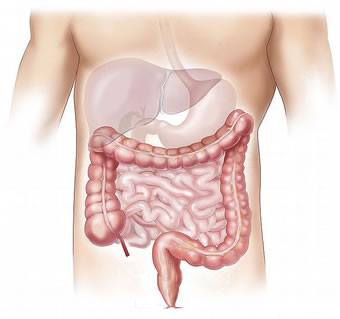 Gut microbiome diversity often declines with age, and this imbalance is associated with several age-related conditions. Postbiotics may help restore the intestinal barrier and support production of mucus and antimicrobial peptides.
In particular, butyratefuels cells in the intestinal lining, supporting renewal and local immune function. A healthy barrier may limit the passage of bacterial fragments and other unwanted substances into the bloodstream.
3. Recent studies of postbiotics and longevity
- In a study in fruit flies (Lee et al., Cell Reports, 2019), postbiotic supplementation significantly increased lifespan , possibly through effects on mitochondria and oxidative stress.
- In mouse models (Wang et al., Aging Cell, 2022), butyrate and other bacterial postbiotics were associated with longer lifespan, better cognitive performance and changes in cellular senescence.
- In studies involving older adults (Odamaki et al., Beneficial Microbes, 2020), postbiotics derived from Bifidobacterium longum improved markers of gut health, reduced inflammation and increased reported vitality.
The Mediterranean diet: rich in postbiotics
The Mediterranean diet is widely considered a sound dietary pattern and may support longevity. It includes several traditional fermented foods that may contribute to its well-known health benefits.
Here are some fermented foods commonly found around the Mediterranean:
 1. Yoghurt
Fermented from milk and eaten in many Mediterranean countries, yoghurt can contain probiotics and their fermentation products that may benefit gut health.
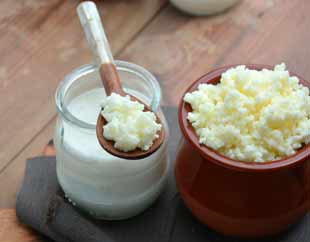
2. Kefir
Traditionally associated with the Caucasus, kefir is also consumed around the Mediterranean. This fermented milk drink contains a variety of bacteria and yeasts and may support digestion and immune function.
3. Fermented cheeses
– Feta: a traditional Greek sheep’s or goat’s milk cheese, often fermented and kept in brine; it contains lactic acid bacteria.
– Pecorino: an Italian sheep’s milk cheese sometimes fermented with lactic acid bacteria.
– Parmesan: a hard Italian cheese aged over a long period.
4. Fermented olives
Olives are often fermented in brine and feature in Greek, Italian, Spanish and North African cooking.
5. Sourdough bread
Il est préparé à partir de levain naturel contenant des bactéries lactiques et des levures sauvages. Il est traditionnel dans de nombreuses régions méditerranéennes et permet une digestion plus aisée grâce à la fermentation.
6. le vinaigre de vin
Il est produit par la fermentation du vin et contient des acides organiques et des composés bio-actifs bénéfiques.
7. les légumes fermentés
Moins courants que dans d’autres cultures, certains légumes fermentés comme les cornichons, poivrons, câpres… sont consommés dans la région méditerranéenne. Ils sont riches en probiotiques, post-biotiques, et en enzymes bénéfiques.
Ces aliments fermentés contribuent à la richesse nutritionnelle du régime méditerranéen, et à ses vertus pour la santé.
Could postbiotics support healthier ageing?
Other postbiotics
En dehors des post-biotiques cités plus haut, il y a par exemple :
- Choucroute crue – chou blanc fermenté naturellement en saumure, riche en vitamine C et en lactobacilles.
- Kimchi (Corée) – chou chinois et légumes fermentés avec piment, ail et gingembre.
- Pickles naturels (cornichons, carottes, radis… en saumure non pasteurisée) – riches en lactobacilles, croquants et acidulés.
- Miso (Japon) – pâte fermentée de soja (parfois avec riz ou orge), riche en peptides bioactifs, utilisée comme assaisonnement.
- Tempeh (Indonésie) – graines de soja fermentées par un champignon (Rhizopus), très protéiné, texture ferme et goût de noisette.
- Natto (Japon) – graines de soja fermentées par Bacillus subtilis, collantes et riches en vitamine K2.
- Kombucha – boisson pétillante obtenue par fermentation de thé sucré avec une symbiose de levures et bactéries.
- Cidre brut – boisson fermentée à base de jus de pomme, riche en polyphénols et en levures si non filtré.
- In particular, vinaigre de cidre
- Jus de légumes lacto-fermentés maison (carotte, betterave, céleri, etc.) – riches en acides organiques et en métabolites protecteurs.
- Charcuteries fermentées crues – saucisson, salami, chorizo : fermentés grâce à des bactéries lactiques…
- Poissons fermentés : hareng, truite, requin… des pays nordiques.
How can we use postbiotics for healthy ageing?
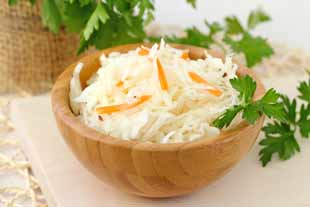 Il apparaît qu’intégrer une bonne part d’aliments fermentés au quotidien ne puisse qu’aller dans le sens de la longévité (et d’un microbiote plus sain).
N’oubliez pas de manger des aliments riches en fibres prébiotiques (légumes, fruits, légumineuses, céréales complètes en quantité modérée…). En toute logique, ces fibres favorisent la production de vos propres post-biotiques dans l’intestin.
Si, dans certaines circonstances, un apport plus ciblé était nécessaire, des compléments alimentaires contenant des postbiotiques commencent à être disponibles. Toutefois, rien ne remplace la nature.
Les aliments fermentés sont excellents mais peuvent être moins bien tolérés par les personnes ayant un microbiote perturbé avec trop de fermentation et une prolifération bactérienne trop haute (SIBO). Des troubles digestifs à type de ballonnements peuvent survenir. Il faudra d’abord rééquilibrer la flore intestinale, et utiliser des quantités modérées au début.
Il va sans dire qu’une bonne hygiène de vie optimise également l’équilibre du microbiote et renforce l’effet bénéfique des postbiotiques.
Perspectives de recherches pour l’avenir
Les études sur les postbiotiques n’en sont qu’à leurs débuts. Les scientifiques explorent leur rôle potentiel dans la prévention des maladies liées à l’âge, comme les troubles neurodégénératifs et les pathologies cardiovasculaires. À l’avenir, il se peut que nous voyons apparaître des formules postbiotiques spécifiques pour éviter certaines maladies liées à l’âge, ou prolonger la durée de vie en bonne santé.
En attendant, intégrer les aliments fermentés dans son quotidien est une stratégie simple pour préserver son capital jeunesse.

A mon avis, Ces informations sont majeures.
Je vais modifier mon alimentation.
Le reste de mon hygiène de vie est correct.
Merci
Francoise