


|
|||
In this article:
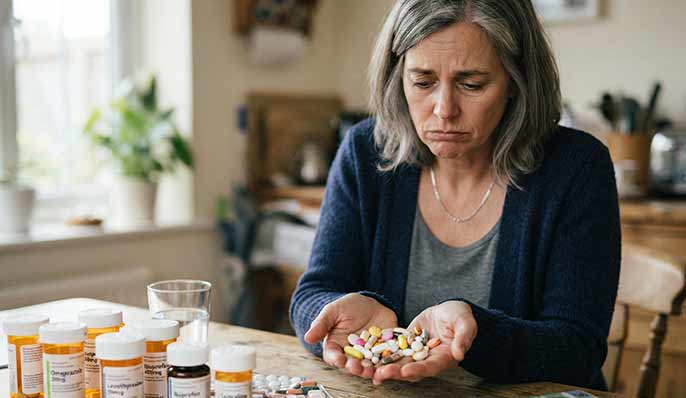
Are there really anti-aging dietary supplements?The European definition of a dietary supplement is "foodstuffs intended to supplement a normal diet and which constitute a concentrated source of nutrients or other substances having a nutritional or physiological effect " This remains quite vague, especially for certain plants whose pharmacological action is known. On the other hand, why supplement a "normal diet" if it is "normal"? We would say that there are many substances classified as "foodstuffs" by legislation (and therefore not as medicines) capable of regulating or improving certain failing functions with age. On the other hand, it is generally observed that our modern diet promotes certain deficiencies in essential nutrients that worsen with aging, for various reasons. We will therefore clearly differentiate here the " supplementation " (which complements our dietary intake) of the " supplementation " in anti-aging medicine. The latter has shown effects that slow down aging, and we will see the main supplements. Nevertheless, the miracle and universal dietary supplement to live longer does not exist. Only product choices suitable for each case can improve longevity. |
|||


Why use dietary supplements for anti-aging?
As their name indicates, dietary supplements come to complement our diet: they are useful if our body lacks essential micronutrients that he needs every day (in this case, we are talking about deficiencies, and we can say that our diet is not "normal"). It involves about thirty essential nutrients for the proper functioning of our body:
- a dozen of vitamins,
- a dozen of minerals,
- a few unsaturated fatty acids,
- eight amino acids called essential.
Deficiencies in essential nutrients can occur at any age, so we cannot really talk about "anti-aging supplements" when it is simply a matter of nutrient intake. However, it must be acknowledged that these deficiencies become more frequent with aging and the gradual deterioration of functions absorption and digestion.
Several factors can make it difficult (even impossible) to achieve optimal intake of micronutrients:
- physiological factors such as stress, intense exercise, growth, aging…
- poor digestion-absorption, disruption of the intestinal flora
- unbalanced diet (diets, fast meals, eating out…)
- decline in food quality: agricultural and food methods are becoming increasingly industrialized. More time elapses between the production of food and its consumption. As a result, the content of food in vitamins and minerals is decreased (as shown by some studies).
- various pollutants, smoking (even passive), alcohol…
On the other hand, as we age, our energy expenditure decreases, and we therefore need smaller amounts of food. Ultimately, our intake of vitamins and other essential nutrients turns out to be often insufficientEpidemiological studies are numerous in demonstrating this (particularly for magnesium, zinc, vitamins D, B9, and C…).
Once a deficiency exists, certain body functions will not be optimal. This is why dietary supplements are increasingly used in Western countries. They allow to ensure the correct intake of essential micronutrients (those that our body cannot produce).
How to get your essential nutrients?
The most important thing is to improve your own intakes based on each case:
1. Avoid major dietary mistakes; that is already a good start.
Nowadays, "junk food" is a common phenomenon in our modern societies where we do not take the time to eat. This slowly ruins our health and digestion, as you can read. in this article.
2. Eat healthier

In broad terms: have a healthier diet, pay attention to the quality of the foods you consume (origin, organic label, preservation, freshness…), avoid ready-made and industrial food, ensure you vary and balance your foods well, and eat in reasonable quantities. Finally, cook little and gently (below 120°).
See our article >
3. Optionally supplement your diet
The ideal would be to perfectly know your deficiencies (your experienced symptoms, and/or biological analyses can evaluate them). It is also known, through statistical studies, that certain populations have very frequent deficiencies (for example in: vitamin C and D, zinc, magnesium, iron, omega 3… for the most common).
See our test to find out if you are lacking essential nutrients >
What is the risk of toxicity with dietary supplements?
For most micronutrients, there is no risk of overdose for amounts ranging from 10 to 100 times the recommended daily allowances (RDA). This leaves quite a large margin of maneuver. Some doctors actually recommend daily intakes of up to forty times the RDA, or even more, for certain micronutrients.
On the other hand, one must remain vigilant with a few nutrients whose excess threshold is reached more quickly and can be harmful to health. They therefore require a bit of caution. These are :
- vitamins A, E, and K : for example, vitamin A (in its retinol form) can become toxic at very high doses (100 times the RDA nonetheless) but also at only 10 times the RDA, if this lasts for several months
- certain minerals such as iron, copper (which are pro-oxidants), calcium.
Thus, they should not be taken at random.
Anti-aging dietary supplements

They are nutritional substances non-essential but can have a particular beneficial effect on longevity (and health). They are classified as foods by the administration, and not as medications.
Here are the main categories, along with supplements used in anti-aging medicine, among the most interesting and studied. Some will say "anti-aging dietary supplements," but this term should rather apply only to essential nutrients.
Conclusion: my favorite anti-aging dietary supplements
This is a personal opinion but one that follows a logic.
In a first instance, dietary supplements should aim to avoid deficiencies in essential nutrients. Thus, the dozen vitamins, the dozen minerals, the 8 amino acids, and essential fatty acids hold a special place, particularly: magnesium, selenium, zinc, vitamins C and D, iron, omega 3 for which deficiencies are common.
Next, super-supplements are actually super-supplements, and our favorites are those that act on multiple metabolic pathways related to aging and on several of the functions mentioned above. In particular:
- creatine
- glycine and NAC
- resveratrol
- EGCG from green tea
- alpha-lipoic acid
- curcumin
- quercetin
- berberine
- carnosine
- taurine…
To choose and combine according to each specific case.
Remember that any excess can also be harmful. For example, taking too many substances with an antioxidant effect can lead to a lack of oxidation reaction in the body, which is not good, and has been demonstrated (5).
Always be in the right measure: the middle way and balance. Seek advice from a qualified health professional. Do not take your supplements based on mere dubious claims.
References
- Dietary supplements and health (NIH) – reducing chronic disease risk
- Michael Janson
Clin Interv Aging. 2006 September; 1(3): 261–265. Published online 2006 September.
Orthomolecular medicine: the therapeutic use of dietary supplements for anti-aging - Annette Dickinson, Leslie Bonci, Nicolas Boyon, Julio C Franco
Nutr J. 2012; 11: 14. Published online 2012 March 14. doi: 10.1186\/1475-2891-11-14
Dietitians use and recommend dietary supplements: report of a survey - Alexander Vaiserman corresponding author and Oleh Lushchak
J Transl Med. 2017; 15: 160. – Implementation of longevity-promoting supplements and medications in public health practice: achievements, challenges and future perspectives - Meta-Regression Analyses, Meta-Analyses, and Trial Sequential Analyses of the Effects of Supplementation with Beta-Carotene, Vitamin A, and Vitamin E Singly or in Different Combinations on All-Cause Mortality: Do We Have Evidence for Lack of Harm?

Are there ways to know if we are taking too many antioxidants? Are there symptoms? In your article, you say that this has been demonstrated: do you have studies to support your claims?
Thank you in advance for your expected response.
Good question: a lack of oxidation in the body is reflected by symptoms such as fatigue, lack of muscle performance, weaker immune defenses… We can also do blood tests for oxidative stress and see levels that are too low. It’s a bit technical, but let’s mention total antioxidant capacity, markers of lipid peroxidation (8-isoprostanes, MDA)… and, conversely, a reduced glutathione level that is too high.
There are many studies showing that excessive intake is harmful, and I have included a meta-analysis in (5). There’s nothing surprising about that: oxidation plays an important role in the body. Like everything, it requires neither too much nor too little.
What is unfortunate is that some authors of these studies conclude too categorically that taking antioxidants is useless, which is a bit too simplistic. In medio veritas.
Thank you for always taking the time to respond to me.
And especially a big thank you for all your fascinating and very enlightening articles for the laypeople that we are. Certainly a complicated exercise, to be as clear and precise as possible without being too technical. Bravo, you do this wonderfully.
Hello
What do you think about astaxanthin dietary supplements?
Fact or fiction regarding its health benefits?
Is it a good idea after 60?
Thank you in advance for your answers.
Best regards
Dear Carole. I will respond to you as I try to explain on this site: no dietary supplement is good or bad for everyone (even after 60).
To say: you need DHEA after 50, you need antioxidants as you age, you need magnesium, vitamin D, E, C, etc... is not justified. It depends on each person's condition and their specific needs.
Astaxanthin has been widely studied and has shown certain effects, particularly antioxidant ones, with the ability to diffuse into the eye and brain. So in some cases, it can be interesting. Conversely, too many antioxidants can be harmful for some.
The good idea after 60 (and even well before) is to know how the overall health of your body evolves, then to adopt a good lifestyle and diet (which often resolves quite a few problems), and possibly to help the body repair existing health issues (this is easier with the help of a competent therapist, of course). Stay fit.
Thank you for your articles… which are beneficial, provide excellent action points to stay healthy, and are also extremely well written (readability).
I will promote your site on my social networks and my website dedicated… to retirement.
mariepauledessaint.com
Thank you for this appreciation which is also uplifting, especially since it comes from a very productive professor and author.
Yes, although it is highly recommended to take care of oneself beforehand, retirement is a good time to focus on health. And it is never too late to improve, if one is willing to admit it…
Thank you, what we read here is great. I like the articles and the quality of the comments for all the tips.
I am 58 years old and I have chosen to seriously follow a nutritional therapy to stay healthy and put all the chances on my side to protect myself from the cancer that worries me. For that, I found a doctor who focuses on prevention with cutting-edge nutrition and a complete assessment.
It seems that one should not take too much calcium, zinc, or iron. Too much of these metals could be dangerous for health.
It's true: iron, copper, zinc, calcium, vitamin D, K, A (for the most important ones) should not be overdosed. When one wants to supplement with nutrients, it is necessary to know which of these we are really lacking. For other nutrients and vitamins, there is no risk of overdose when taking the recommended daily amounts, and even much more.
But the problem, Bernard, is finding a doctor who knows about this, as you say. What is your doctor's specialty?
Before taking these minerals or vitamins that are toxic if taken without really needing them, it is better to seek the advice of a doctor who knows about this.
Personally, I tend to have too much iron in my blood and my doctor has always told me that it would be dangerous for me to take it in the form of a dietary supplement. So since then, I carefully read the ingredient labels before choosing my vitamins.