


As we age, we become a bit more «fragile» and more sensitive to external, physical, or psychological aggressions. Thus, in anti-aging, adaptogens help us withstand these stressful situations and may also increase our longevity.
What is an adaptogenic plant?
Who hasn't heard of the famous ginseng, highly valued in Asia and said to prolong life and enhance performance? It is one of them.
Adaptogenic plants can help better withstand a state of stress, to adapt to it, adjust, and to recover from the resulting fatigue. Perhaps that is why they are reputed to improve longevity.
Nicolaï LAZAREV, a Russian pharmacologist, defined the concept of ’adaptogen« in 1947 as » a pharmacological substance capable of inducing in an organism a state of increased nonspecific resistance, allowing it to counterbalance stress signals and adapt to exceptional effort. ».
In 1968, his successor Dr. BREKHMAN, head of the Department of Physiology and Pharmacology of Adaptation in Vladivostok, provided 3 criteria to define an adaptogenic plant:
- « Increases the body's resistance against various types of aggressors (physical, chemical, or biological) in a nonspecific manner ;
- Presents a normalizing influence, regardless of changes in physiological norms;
- Shows an absence of toxicity and influence on the normal functions of the body. »
To better adapt to stress
To put it simply, let's say that an adaptogenic plant makes us more resistant and more resilient to the stress response (see below). The latter, when prolonged, is a significant factor in aging and disrupts our health on almost all levels, particularly: nervous, digestive, and hormonal. It can be, for example, an increased workload, unusual physical effort, variations in the environment (climate, surroundings…) that we must adapt to, relational problems (work, family, marital…), etc…
To regain balance
These plants do not have a habituation effect like so-called «tonic» or «stimulant» plants such as coffee, ephedra, guarana, tea… but they are balancing. They restore a better homeostasis, that is: they help the body to naturally regain its health balance. They are neither stimulants nor sedatives.
Thus, in addition to increasing a person's resistance, an adaptogenic plant can balance their physiological norms : temperature, blood pressure, heart rate, activity of the autonomic nervous system, immune system… and this without harm or disruption to the body (7).
Be careful, these plants do not have a specific action on any particular disease. They will not heal a part of the body or a targeted organ. On the contrary, they strengthen the whole and thus increase a person's healing potential.
Known for a long time in traditions
In traditional Chinese medicine, as in the Ayurvedic medicine, adaptogenic plants have been known for thousands of years as superior general tonics, strengthening the various functions of the body, increasing its energy, and overall promoting good health.
Mechanism of action of adaptogenic plants
Curiously, adaptogens may reduce the effects of stress and help the body recover, not by directly opposing it, but rather by acting as a mild stress repeated with each intake. The body, eventually getting used to and overcoming this mild stress, strengthens itself to better withstand more intense and chronic stress.
This phenomenon is found in the so-called techniques of’hormesis where a »tolerable trauma» of short duration is applied to the body (exposure to cold or heat, food deprivation, brief and intense exercise…) and ultimately strengthens its defense and adaptation system.
In studies, the effect of adaptogens mainly focuses on the endocrine axis hypothalamus-pituitary-adrenal and on mediators associated with stress: so-called heat shock proteins (HSP) in particular, protein kinase enzyme, cortisol, nitric oxide, FOXO… HSPs play a role in cellular survival mechanisms and in apoptosis: the natural elimination of sick or abnormal cells.(1)(2)
Without going into further details, these mechanisms allow for more energy production in our cells, better physical and cognitive performance, and give us insight into why traditional medicines associate the use of these plants with better longevity. (1)
Stress, adaptation to stress, and aging
As a reminder, the stress reaction is a non-conscious physiological process that is triggered in the presence of imminent danger or aggression in our environment, putting us at risk. This reaction contributes to the survival of a species.
It primarily involves our autonomic nervous system and our adrenal glands, which will produce, among other things, more cortisol and adrenaline. Originally, when hunter-gatherer humans lived in the savannah and encountered danger, this survival reaction prepared them either for fight or flight. For this purpose, blood circulation is activated in the muscles while it decreases in the digestive tract, the heart rate increases to send more blood into the vessels, the pupils dilate, hair stands on end, etc… All of this returns to normal when the danger has passed (6).
 The real problem comes from prolonged stress (or chronic). Nowadays, in our modern societies with a frantic pace of life, it is most often psychological or related to pollution or poor diet. We now know that it accelerates the aging of the body (see our article on mental stress and accelerated aging). It promotes among other things:
- intestinal permeability disorders that generate toxins,
- global acidification of the body, with demineralization and deficiencies,
- the’chronic inflammation,
- loss of elasticity in body tissues…
As a result, it leads to premature aging of all tissues: skin, hair, nails, bones, membranes, tendons, organs, hormonal glands, etc…
Interest of adaptogenic plants in anti-aging medicine
Many studies exist that demonstrate various effects of adaptogens (see bibliography at the bottom). Many of these properties have led them to be included in the arsenal of anti-aging medicine:
– in the prevention of aging:
 The goal is to strengthen our body and make it more resilient. Adaptogens then act like the methods applied to the’hormesis : exposures to cold, heat, nutrient deprivation, fasting, high-intensity exercise, apnea… The ideal is, of course, to combine these techniques and not to believe that a few plant capsules will replace them all. Laziness is not an anti-aging weapon!
– to help return to balance after significant stress:
Most often this stress will have led to common disorders with aging, such as:
- fatigue, even adrenal exhaustion,
- loss of libido,
- digestive disorders,
- mood disorders and depression,
and in the longer term (3)(4):
- atherosclerosis,
- chronic inflammation,
- insulin resistance and metabolic syndrome,
- neurodegenerative diseases,
- cancers…
The triggering element may have been a long illness, one or more physical or psychological traumas, nervous overwork, a surgical intervention, etc… especially since we tend to become less resilient with age.
Other uses
Adaptogenic plants stimulate the immune system which tends to become less efficient with aging.
They also have anabolic capabilities and promote the production of tissues in the body. They are therefore particularly indicated for people with individual constitution catabolic and metabolic (Vata and Pitta in Ayurvedic medicine). Thus, they can improve healing capacity. Some doctors use them after anti-aging treatments aimed at aesthetics to help the skin recover: peels, lasers, surgeries…
They can also aid in muscle production, which is particularly interesting in anti-aging since we know that our muscle mass decreases with aging.
They improve capacity cardio-respiratory in athletes (5).
The best adaptogenic plants
Some are very well-known, others less so. Most have been studied and have proven their effect on enhancing adaptive capacity and on nerve and/or physical fatigue. Here they are:
- Ginseng (panax ginseng): with a particular effect on kidney function, nicknamed “the vitality plant.” It improves mood, libido, immunity, and helps fight depression.
- Turmeric: known mainly for its anti-inflammatory, antioxidant, and anti-cancer effects.
- Sea buckthorn: rich in vitamins C, A, E, trace elements, omega 7, and antioxidant flavonoids, good against skin aging.
 Rhodiola (rhodiola rosea): growing in Siberia, with a more pronounced effect on nerve balance.
 Rhodiola (rhodiola rosea): growing in Siberia, with a more pronounced effect on nerve balance.
- Eleutherococcus: primarily found in Asia and Siberia, it is a mild adaptogen, easily tolerated with properties similar to those of ginseng.
- Ashwagandha ((withania somnifera) is a staple of Ayurvedic medicine, improving the sleep/wake rhythm, libido, fatigue, mood…
- Schisandra : used in Ayurveda to tone the nervous system and by Chinese medicine to improve longevity. It is also said to be an aphrodisiac.
- Astragalus still used in Ayurveda to aid sleep, and which may promote the’lengthening of our telomeres, which is correlated with our longevity.
- Ginkgo biloba, a rich antioxidant in flavonoids. It particularly improves cerebral capillary circulation.
- Reishi or ganoderma: also known as the miraculous mushroom. It acts particularly on the liver.
These plants and their dosages are better described in our article: « The best adaptogenic plants for anti-aging.
How to take adaptogenic plants?
To prevent the body from getting used to these treatments, they should be taken in courses, for example, for 2 months. Beyond that, they will become less and less effective.
In general, it is commonly said that it takes 3 weeks for a sufficient effect to manifest. This seems normal given the mode of action of these plants which actually «train» the body to adapt. Nevertheless, some studies in animals have shown effects after 7 days of treatment (2).
It is possible to use a single plant or a mixture of different plants.
It is often recommended to combine them with essential micronutrients (vitamins, minerals, amino acids, and fats). On one hand, because deficiencies are common during these stressful periods and therefore need to be addressed. On the other hand, because the need for nutrients may be increased to overcome the effects of stress, particularly: magnesium, zinc, B group vitamins, and C.

Happy New Year to everyone… and thank you for this article.
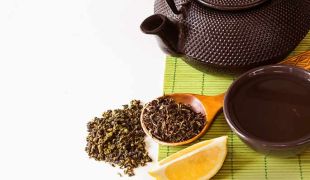
Adaptogenic herbal teas have an epigenetic action, meaning they activate the «good» genes, such as anti-cancer genes, and prevent the «bad» ones, like those related to inflammation, from being expressed.
Personally, I have been drinking an infusion of these plants for breakfast for a long time. Here it is. It’s a blend of plants aimed at epigenetic, hormonal, and antioxidant effects, among others:
Cranberry fruit Antiradical, antioxidant, anticancer urinary tract
Rosehip fruit Asthenia, diuretic, flu, urinary vitamin C
Eleutherococcus root Immunity, anti-aging, fatigue, physical performance
Guaiac wood Anti-inflammatory, diuretic, arthritis, rheumatism
Galangal root Anti-rheumatic antiviral antioxidant
Juniper berry Anti-inflammatory immunostimulant arthritis
Cat's claw bark Anti-inflammatory immunostimulant anti-cancer
Guarana seed Anti-fatigue headaches cognitive performance
Pygeum africanum bark Treats BPH bladder anti-inflammatory
Schisandra berries Adaptogen stress sports immunity night vision
Muira puama wood (erection wood) Physical and mental resistance libido fatigue
Horseradish root Antioxidant anti-aging anti-inflammatory GERD gas
Rhodiola rosea root Digestive adaptogen prostate stress heart nerves
Elderberry Sinusitis bronchitis flu hyperlipidemia cystitis
Cinnamon bark Antioxidant diabetes transit bloating asthenia
Licorice root Anti-inflammatory Digestive Expectorant Gastritis
Star anise fruit or star anise Gastrointestinal VB Bladder Cardiovascular Hormonal regulation
Gentian root Gastritis flatulence Liver Anti-oxidant Tonic
Turmeric root Anti-aging anti-inflammatory brain anti-cancer H. pylori
Epilobium angustifolium leaf Anti-inflammatory Urinary BPH Prostatitis Cystitis
Fresh ginger ground root Immunity Anti-inflammatory Antioxidant Anti-viral Bloating gastric disorders Migraines Tonic
Red ginseng root memory endurance digestive anti-inflammatory antioxidant immunostimulant anti-aging muscles
Physalis berries Urinary infections diuretic anti-rheumatic anti-inflammatory kidney stones water retention dropsy
Mix in equal volumes (except Epilobium)..
Mix with a little green tea (30% for example)
Add ground ginger extemporaneously
Infusion 20 minutes min.
Store the epilobium separately.