


There are many plants in nature with powerful effects on our elimination organs (our excretory organs). Most have been known for millennia. They promote the elimination of toxins and toxic waste from the body.
Our toxin elimination organs are: the liver (as a priority), the kidneys, colon but also the lungs and respiratory tract (lungs and sinuses), the skin, and the mucous membranes. It is already possible to support them simply by adopting a "hypotoxic" diet (see how to eat during a detox cure), by chewing well and for a long time, by having moderate exercise, and/or with specific treatments (called "detox").
Some foods already have a stimulating action on these elimination organs as we will see. Next, widely used, there are plants and phytotherapy…
- Plants for detoxifying toxins
- Which detox product to choose to cleanse your body?
- Liver and bile duct detox
- Intestinal drainage and cleanses
- Phytotherapeutic drainage of the kidneys and urinary tract
- Drainage of the lungs and respiratory tract
- Drainage through the skin and sweat glands
- Detoxify in an "integral" way
Plants for detoxifying toxins
Plants have long been used to promote the elimination of toxins. Some are known to stimulate the excretory organs, responsible for eliminating unwanted substances.  We have all heard about dandelion detox, black radish, or our grandmothers' cherry pit tea, but we know less about the actual effects of so-called "draining" plants on our various elimination organs.
Each region of the world has its own traditions and its own plants. In general, nature is well made, and the plants that grow in a region are quite well adapted to its inhabitants. Thus, we have available in our countries draining plants that work well, and there is no evidence that their Asian or South American equivalents are more effective for Europeans (except in marketing terms: exoticism sells).
Draining with plants is done through lasting a few weeks. Very often, in cases of diffuse cellulite, the liver is congested., generally lasting a few weeks. Of course, it is necessary to adopt, at the same time, a diet low in toxins and difficult-to-digest substances. It is also good to follow some rules of lifestyle hygiene that promote eliminationThis is all described in our detox guide.
Finally, it should be noted that many draining plants are, in fact, common foods such as fennel, artichoke, black radish…
Which detox product to choose to cleanse your body?
It is true that purely natural detox programs are rare. Many brands promise us an effective draining product, but we do not really know what these products contain, or whether the detox program is suitable for our case. A detox program suitable must stimulate your elimination organs that need it the most (generally, the weakest according to constitution). This way, you can help eliminate your toxins effectively and naturally, without exaggeration.
Liver and bile duct detox
The liver is considered the main detoxifying organ. It continuously filters the blood in our body (about 1.5 liters (that is, 20 to 25% of our circulating blood) per minute. It is responsible for eliminating toxins through bile, into the digestive tract, or making them soluble to be expelled in urine. It has a vital detoxification function that is well described, involving 2 distinct phases. These require the presence of many amino acids, minerals, antioxidants, enzymes, and vitamins (especially from the B group) to proceed properly.
When to detoxify the liver?
 When it seems "tired" or overwhelmed in its work. The liver is primarily useful for eliminating toxic substances absorbed from our environment (pollutants and xenobiotics). Unfortunately, poor dietary habits and the frantic pace of our modern societies add a heavy workload for our liver, which can then become overwhelmed.
The signs ofliver congestion are mainly digestive disorders due to a insufficient bile secretion : heaviness after meals, easy nausea, constipation, fatty stools, bloating, and drowsiness after eating but also: disgust in the morning for cooking smells, a coated tongue, white or yellow, slightly yellow sclera, very dark urine, skin rashes, itching…
How to help the liver eliminate toxins?
Plants for the liver (known as "hepatic drainers") are very often used during detoxification cures in various medicines. Some are eaten as they are, others are used in extracts, tinctures, or powders…
Among the foods liver stimulants, you will find:
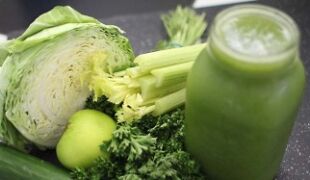
- artichoke, dandelion, black radish, eggplant, avocado, celery, chicory, cabbage, lettuce, green beans…
- apple, grape, mango…
- rosemary, turmeric, cumin…
Some amino acids are known to help the liver in its work: arginine, cysteine, betaine, taurine…
Medicinal plants have proven their action at this level. They are called « cholagogue herbs » those that activate the production of bile by the liver and its elimination by the gallbladder. Several are used in the development of medications, such as the milk thistle, great support for the liver used against hepatitis.
It mainly concerns the Desmodium, Chrysantellum, Artichoke, Dandelion, Boldo, Black radish in the West and Guduchi, Turmeric and Neem in Indian medicine, for example. It is indeed very interesting to see how Ayurvedic medicine views detoxification as a path to regeneration.
Intestinal drainage and cleanses
 With age, transit is often slowed down but certain causes can be addressed:
- maintaining good abdominal muscle tone,
- engaging in regular physical activity (walking, jogging, cycling, yoga…),
- drinking plenty of fluids,
- ensuring a good intake of fibre nutrients by eating plenty of vegetables…
When to drain the intestine?
The intestine eliminates poorly when transit is slowed (constipation) but also in case of an imbalance in the intestinal flora. The symptoms are:
- irregular, fatty stools,
- abundant gas and bloating,
- excessive fermentation or putrefaction with very strong odors,
- sensitive intestines, irritable bowel, colic, spasms, etc…
Which plants to activate the intestine?
Among the foods that help transit : agar-agar, prunes, oat bran, beetroot, persimmon, leek, zucchini, eggplant, plums, onion, blueberries, raspberries, and currants…
All the vegetables and fruits are rich in fibers that help transit and are capable of absorbing certain toxins themselves. Whole grains are also, however their fibers can be more irritating for already sensitive intestines, and most grains are already overconsumed in our modern societies.
Some plants can gently activate transit and intestinal elimination function: Dandelion, Flax, Aloe vera, Triphala (a great Ayurvedic classic), Milk Thistle, Fumitory…
Some plants have a distinctly laxative. They should only be used for short drainage courses (cleanses), and with caution: Senna, Cascara, Buckthorn, Alder….
Avoid strong laxatives that irritate the intestine. Instead, try to retrain the intestine with a diet rich in fiber, good chewing (which we often lack when eating too quickly), and regular walking. The psyllium seeds, apple pectin, prunes, or certain gums gently retrain transit and soften stools safely.
Phytotherapeutic drainage of the kidneys and urinary tract
The kidneys primarily eliminate nitrogenous waste from protein metabolism: urea, uric acid, creatinine but also medications, toxins, and pollutants (xenobiotics). These are substances soluble in water.
The kidneys atrophy starting around the age of fifty, and their elimination function is affected. This is even more pronounced if one has been exposed to renal toxins (certain medications, industrial solvents...) or in cases of diabetes, hypertension...
 When to drain the kidneys?
 When to drain the kidneys?
In case of increased acidic waste in the blood (urea, uric acid, lactic acid, oxalic acid...), in case of water retention (edema of the feet, legs, fingers, marked dark circles, and swollen eyes...).
Many people believe that draining the kidneys is important for weight loss. This is not the case. Taking diuretics for this purpose is unnecessary and can be dangerous (see more explanations in detox in weight loss: draining to slim down).
How to detoxify through the kidneys
The foods activating kidney function include dandelion, fennel, asparagus, garlic, beetroot, celery, cucumber, green tea, lettuce, lemon…
It is essential to drink enough water so that the kidney can dilute its waste. The waters low in minerals are the best for this (Volvic, Abatilles, Mont-Roucous…). They have a greater ability to dissolve toxins.
The classic plants for stimulating the kidneys have a mild diuretic effect. They are: pilosella, orthosiphon, meadowsweet, birch bark and, in Ayurvedic medicine: Guduchi (tinospora), Triphalaand others.
Drainage of the lungs and respiratory tract
The lung continuously eliminates carbon dioxide but can also expel other waste and undesirable substances such as alcohol, certain medications and solvents, volatile fatty acids, acetone…
When to drain the lungs?
When the respiratory mucous membranes secrete too much mucus: persistent sinusitis, persistent blocked nose, bronchial secretions and/or congestion more or less permanent…
How to detoxify the lungs?
Certain plants promote this elimination function: Marshmallow, Coltsfoot, Pine and in Ayurvedic medicine, garlic, holy basil (Tulsi), mullein ("white mullein" in Europe)…
Lung tissue tends to lose its flexibility and elasticity with age, especially if the glycation* is significant (binding of sugars to the body's structural proteins). Thephysical exercise (or respiratory) maintains this flexibility while atmospheric pollutants and tobacco worsen it.
Drainage through the skin and sweat glands
Skin drainage is an activation of the functioning of the sweat glands. The skin can eliminate heavy metals (lead, mercury, arsenic…), salts and minerals, crystals and colloids… The useful plants here are the Burdock, Soapwort, Nettle… In Ayurvedic medicine, the Ghee (clarified butter) is widely used.
When to drain the skin?
When the liver, kidneys, or intestines are overwhelmed by the amount of toxins to eliminate and the skin takes over, with strong sweating or even dermatoses, eczema, acne, etc…
Note that sweat glands generally decrease with age. The skin becomes drier, its vascularization tends to reduce. Poorly drained skin often secretes an acidic and unpleasant odor. It can also become too rough or scaly.
How to increase detox through the skin
It can be stimulated by the sweating (sauna, sweat boxes, long infrared, physical exercise…), the massages, friction and brushing but also with certain plants such as burdock, horsetail, meadowsweet… Ayurvedic massages use large quantities ofoils to drain or nourish the skin. These oils are different as they are adapted to the constitution of each person.
Detoxify in a "whole" way
 In anti-aging integrative medicine, drainage (or detoxification) often requires addressing several emunctories, and is done with products based on draining plants to which antioxidants and amino acids are added to be more effective (especially at the level of the liver).
Drainage phytotherapy (or "purging") is a part of detoxification in integrative medicine (widely used in Ayurvedic medicine). It is often associated with physical techniques for cleaning certain organs (sweating, massages, enemas…), moderate exercise, and especially an adequate hypotoxic diet.
An informed doctor will help you choose the products and techniques best suited to your case.


Neem is not clarified butter but a plant.
You are absolutely right. It was Ghee, the clarified butter (a momentary oversight). Thank you.
Great advice
A careful reading of your article and its links, as well as others (from naturopaths), allows me to understand in detail the functioning processes of the human body, and the imperative necessity of undergoing regular detoxifications, as you write, before any micronutritional intake. In other words: what’s the point of loading up on dietary supplements (often expensive, and sometimes of poor quality) on a clogged organism?
Thank you for this publication.
Regina
Thank you very much for this very interesting article.
I would love to receive your articles.
Thank you
Thank you for the information.
I am interested in all your articles, I am discovering them today. I am 75 years old, and I gained weight because I neglected myself to care for my husband who was affected by cancer. After his death, I considered my life to be over. Three years later, I regained the will to live, to lose weight, and to go dancing regularly (ballroom dancing) with friends. I lost 7 kilos (and I would like to lose another 5). Your advice seems wise to me. I want to receive your newsletter regularly. Thank you.
I do detox cures twice a year for 10 days and I can say that my health is much better, but one must not believe that taking plants is enough. One must also help with a bit of exercise, breathe in the fresh air, and above all eat well as you say. On your site, I understood that toxins are not just a figment of the imagination and it is indeed scientific. Thank you for that. Maria
I explain to my patients that to lose weight, drainage really helps, but not for everyone. Draining plants facilitate the elimination of water and toxins from the body. But be careful, if we eliminate excess water and toxins from our body… we do not lose fat by urinating! That’s why draining drinks are useful for those who have water retention. The same goes for cellulite: there are several types of cellulite.