


Our body inexorably deteriorates, more or less quickly, and we do not really know why. Nevertheless, the growing knowledge of the aging processes opens vast horizons, to the point that it has already been possible to reverse it in animals and even in human cells.
Research in this area has made enormous progress in recent decades. It increasingly uncovers the mechanisms of aging at the heart of our cells and our DNA, which translates into our shape and appearance. Let us try to explain to the layperson these fundamental data that could change our future and/or that of our children.
More than 300 theories have been proposed (1) and it seems that aging is quite complex and can have many causes. Overall, our aging leads to a decrease in our fertility and immune defenses, with an increased sensitivity to diseases. Our cells and tissues function less well, thus our organs are less efficient, and our health deteriorates. The risk of mortality increases. But why?
You will find here the theories on the causes (or at least some mechanisms) of aging that are most accepted today. Nothing is really certain. Science regularly teaches us more, and sometimes we also revisit certain theories.
It is still difficult to distinguish between the observed effects of aging and its, especially at the cellular level.
Scientists note that, overall, an accumulation of damaged cellular elements occurs over time (particularly parts of our DNA and the mitochondria* of our cells). These deteriorations are due to the environment (radiation, toxins, deficiencies, various stresses...) or to internal problems (errors in cell replication, oxidation, inflammation...).
The cells then function poorly, they "age". When they are too damaged, they can at best self-destruct (by apoptosis: a kind of cellular suicide). Otherwise, they can remain "abnormal", and this is, among other things, a pathway to cancer. They can also become senescent cells that no longer reproduce, no longer have their normal functions, become burdensome, and secrete toxic substances for neighboring cells, leading to inflammation in these aging tissues.
The body tries to eliminate these non-functional cells through its immune system. Unfortunately, as age advances, the latter weakens.
Recent research studies how to eliminate these senescent cells, which seems to be a major pathway in anti-aging, just like the epigenetic reprogramming which we will see later, and which consists of a kind of reversal of cellular aging.
The accumulation of damage in the cells of our body
Oxidation and free radicals
This is one of the major theories, proposed by chemist Denham Harman as early as 1956, although recently, there has been a reconsideration of the systematic use of antioxidants against aging. It is not that simple. Nevertheless, oxidation remains a phenomenon very involved in the deterioration of body tissues and in age-related diseases (3).
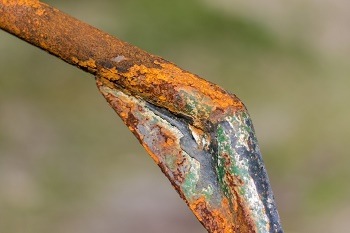 Like a piece of iron that rusts, our tissues naturally oxidize over time. Oxidation is the result of "combustion" processes and normal metabolic reactions that produce free radicals like a boiler produces harmful gases. This production mainly comes from our mitochondria, the energy generators within our cells.
We have systems antioxidants that help limit damage, but these can quickly be overwhelmed. Over time, free radicals can increasingly alter our tissues and create abnormal proteins, even cells, denature lipids, our DNA, etc…
It has been demonstrated many times that antioxidants can have positive effects on age-related diseases. However, lifespan is not really extended by antioxidants, and some studies have even found the opposite in certain cases. It appears that the production of free radicals by our mitochondria can actually trigger survival or cellular repair mechanisms. Therefore, it is not always necessary to increase antioxidant levels.
Conversely, when the body is overwhelmed by this production, or when "external" free radicals are introduced by the environment or food, and the "chain reaction" of oxidation spreads, antioxidants will be useful. Once again, it is all a matter of balance, and the middle path always seems the wisest. Nothing is all white, nothing is all black.
The deterioration of mitochondria
This other theory by D. Harman has gained more importance since the latest scientific advances. Mitochondria (on average a few hundred per cell) play a crucial role in generate energy for their functioning and thus, that of our body. These "little boilers" continuously burn nutrients (mainly glucose, but not only...) with oxygen.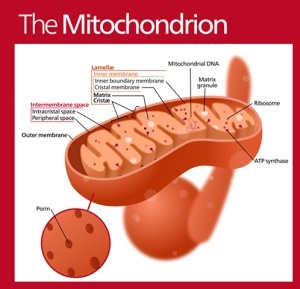
The oxidation reactions of this combustion produce a lot of free radicals which, if in excess, can damage the mitochondria itself (it is on the front line), and later, the cell's DNA, its membrane, or other elements...(4)
In this case, energy production decreases and metabolic reactions as well. The affected cells function less well, just like the tissues and organs they constitute. If the mitochondrial state continues to deteriorate, the cell will be led to self-destruct by "},{ apoptosis » in the best case. Otherwise, it may become a senescent cell that will unnecessarily clutter our tissues, causing them to age.
An alteration in cellular energy production has been described with age as well as an increased deterioration of mitochondria during nutrient deficiencies certain mineral and vitamin deficiencies. Recently, it has been shown that this deterioration occurs particularly during the lack of a coenzyme: and NAD+, close to vitamin B3). This is very involved in the production of cellular energy and decreases with age. Another avenue to explore…
The deterioration of proteins and glycation
Proteins are the elements that structure our body, our DNA, that form our enzymes, our hormones, etc… With age, our cells may produce improperly shaped proteins that then become non-functional.
On the other hand, they can combine with other molecules, which also makes them less functional, and leads to alterations in cells and tissues. The glycation (see here) is a particular combination occurring between our proteins and carbohydrates (sugars). The most affected tissues are, as in diabetics, the walls of blood vessels, the retina, and especially collagen which gives firmness to most tissues in the body… They lose their flexibility, among other deleterious effects. The tendency for collagen fibers to harden means that exchanges and nutrition of cells are generally slowed down. A body environment that is too acid would favor these combinations.
The reduction of sugars and foods that significantly raise blood sugar is a way to limit glycation.
Errors in cell replication and the deterioration of our DNA
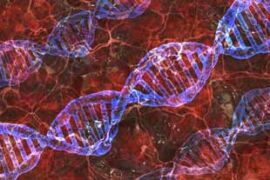 Small anomalies can be found after a certain number of cell divisions in our body. Moreover, our DNA undergoes daily deterioration from environmental chemical or physical factors (between 1000 and 1,000,000 lesions per cell that it will need to repair).
Today, certain genes are known to influence our lifespan (slow down aging), and are actually involved in the DNA repair. Despite this correction/repair system in our cells, an accumulation of errors can lead, over time, to the malfunctioning of our cells, to degeneration, senescence, or their death, and then to ours.
The progressive shortening of telomeres
Telomeres are a kind of protective cap at the ends of our chromosomes (strands of DNA). Their size decreases with each cell division and thus with age. Cell division allows tissues to maintain or regenerate themselves, just as skin reforms after an injury.
It is believed that after the disappearance of telomeres, genes on the chromosomes can be destroyed in turn, due to lack of protection, thus leading to cell death or the production of senescent cells or abnormal cells, which the body will have to eliminate.
Hayflick showed that there is a limit to the number of divisions of cells (about fifty). It seems that the discovery of telomere wear explains this. However, for certain "stem cells," the limit goes well beyond (up to 1000 times). In fact, these cells produce an enzyme (the telomerase) recently discovered, which can "repair" this shortening of telomeres. A priori, it is produced in the fetus but not in adults (except by cancer cells, which multiply excessively, and our famous stem cells).
However, the theory is far from perfect, and does not explain everything. Since then, scientists have found that this functioning can differ depending on the type of cells in the body, or according to species, for example. The correlation of long telomeres with cell longevity is not systematic.
The length of telomeres would rather be a marker of aging than a factor. Significant shortening is linked to poor immune defenses, degenerative diseases, and chronic stress… but it is not directly the cause. See here telomeres and telomerase >
A less efficient cellular repair system
All the phenomena mentioned above deteriorate our cells and become more pronounced over time. These cells have many repair mechanisms, but they become less effective. One of them, called « autophagy » is major, and has only been better understood in recent years. Its decline could be one of the main factors of aging. The good news is that we can stimulate it, just like the other repair functions.
We have just seen that a notion of accumulated damage in our cells, tissues, and organs emerges from these theories, associated with a decrease in the effectiveness of repair processes without which we would hardly age. This is indeed the case for certain animals that we will not detail here.
Toxic buildup
In our cells and around them, metabolic residues (waste) or external pollutants accumulate and can prevent their normal functioning.
The lipofuscin, in particular, is a degradation product of proteins that cells can no longer effectively "digest" and eliminate over time. Intracellular deposits of lipofuscin increase with age in many tissues. They contribute, for example, to the formation of brown spots on aging skin. They can generate diseases for cells in the body that multiply little or not at all (such as muscle and nerve cells), thus affecting the heart and brain. They are found in very large quantities in the brain cells of individuals with Alzheimer's.
Similarly, these toxic substances can accumulate between cells (intercellular medium), thus preventing the exchanges that ensure the nutritional supply of cells and the proper elimination of their waste. This is particularly the case for amyloid deposits known for the famous "amyloid plaques," abundant in the brains of people with Alzheimer’s. These are the most significant protein waste products from cells that tend to clump together. Their presence increasingly slows down the nutritional exchanges (from blood to cells) and the drainage of toxins (from cells to blood). The communication between cells is also becoming less effective.
It is known that autoimmune phenomena, theinflammation, glycation, pollution from heavy metals and excessively low levels of vitamin D promote these extracellular deposits, but the exact causes are not known. In any case, they contribute to damage to our DNA, which, in turn, promotes aging.
Reduction of methylation
Methylation is a biological reaction that generally decreases with age. Thus, certain functions beneficial to health will gradually slow down. For example, the repair functions of our DNA or our cells, and many others...
Scientists believe that decreased methylation is correlated with aging and many degenerative diseases.
Good methylation is linked to longer telomeres (markers of longevity).
Unfortunately, nothing really specifies why it decreases with age. However, it is always possible to ensure the necessary conditions for this methylation process or even to improve it.
Depletion of stem cells
 Stem cells are capable of dividing to give rise to new cells specific to a particular organ (for example: liver cells, skin cells, muscle cells…). They were believed to exist only in the embryo not so long ago. Today, we know that they are present in very small quantities in adult tissues. Some allow the generation of a single type of cells or for a single organ, while others (called "pluripotent") can generate various types of cells.
Their number, higher in children, decreases with age. As we age, we notice that cell renewal slows down. Conversely, the number of senescent or abnormal cells increases, as we have seen above. Organs become less efficient.
Research has improved the longevity of animals by increasing the number of their stem cells through certain treatments or through genetic manipulations. However, it should be noted that these treatments are far from unanimous and potentially dangerous, as a mutation in the DNA of stem cells can easily lead to a precancerous state of these cells.
Furthermore, recent studies tend to link this degradation of stem cells to that of their mitochondria, which aligns with the theory of mitochondrial aging (Pr Hongbo Zhang 2016).
Aging and programmed death in our genes
Our biological clock
According to this theory, our lifespan would be determined by a kind of cellular biological clock, which supports the survival of the human species. Here, it would be a program from conception to the death of the individual. Our aging begins at birth.
With evolution, certain genes may have been selected because they favor survival and reproduction (species conservation), but they could have a deleterious effect on longevity later in life (this is G.C. Williams' theory with the barbaric name of "antagonistic pleiotropy").
Elderly individuals, having been able to reproduce during their youth and becoming less useful to the species (even burdensome in terms of group survival), it is possible that nature has retained a plan for the programmed extinction of the oldest...
Let us not forget that, very recently for the human species (a few tens of thousands of years ago), the lifestyle, environment, and its permanent dangers meant that few individuals reached the age of 40 or 50. Evolution probably did not have time to adapt to the changes that allow us to live much longer on average today.
For example, we now know that the production of growth hormone (GH) promotes beautiful muscles but can reduce longevity. It is a useful function for survival and reproduction but not for living a long time.
Epigenetic dysregulation
Recently, studies have shed new light on this theory and would confirm its relevance. These are the epigenomic changes.
To put it simply, let’s say that some of our genes are involved in the aging processes (slowing it down or speeding it up depending on the genes). Our body can (under certain conditions) activate or deactivate them (notably through reactions of methylation, see epigenetics) triggering or not certain functions related to aging. Depending on the functions activated, this set of genes can then influence the process of cellular aging in one way or another.
For example, the hormones of stress such as cortisol can lead to epigenetic changes on the DNA of our cells, thus accelerating the aging clock.
But epigenetics is also a major pathway that we can control to improve longevity.
We already know many of these mechanisms and ways to modulate them to "slow down" aging. It remains to be seen precisely why, without intervention, all of this inevitably goes in the direction of aging…
Can we reset our body's clock to zero?
The discoveries about the Telomeres (see above), the methylation of DNA (which can modify the activity of our genes), the sirtuines, and the epigenetic reprogramming, could confirm this hypothesis.
Actually, all the cells of our body contain the same DNA. The difference between a stem cell and a liver, skin, or bone cell... lies only in the conformation of our DNA (essentially: the way our DNA is folded and compacted) and which can be modified. This is what we call the epigenetic program of the cell. The genes remain strictly the same; it is only their expression that would change with aging.
We know that with age, often deleterious epigenetic changes accumulate. Their observation at certain locations of the DNA can today predict an individual's longevity quite reliably. There are epigenomic biological age tests based on a blood sample. These changes, most often related to "methylations," modify the epigenetic program but not the genes themselves. Conversely, they can be undone (demethylations), improving our epigenome, thus reversing the aging of the cell (for example, caloric restriction, physical activity, or various experiments... can achieve this).
 Studies that have led to an extension of lifespan (in animals) are numerous despite this clock that seems impossible to stop. In fact, a human body, up to at least 50 years old, knows how to produce healthy and young cells, without any signs of aging: during procreation, two bodies made of cells several decades old (thus showing some aging) are capable of creating a completely young cell that will become their child.
Without this, our species would quickly decline! It has been shown that the woman's oocyte contained these rejuvenating factors. Unfortunately, no one has yet been able to use them in practice...
On the other hand, it is theoretically possible to‘reverse certain expressions of genes related to aging. The incredible challenge would therefore be to bring certain tissues or organs back to a previous state, "rejuvenated".
This has already been done on animals and on human cells that have been rejuvenated, back to their primary pluripotent stem cell stage.
It now appears that cell aging also corresponds to epigenetic modifications gradually settling into this program. In theory at least, this would be partially reversible as claimed by very advanced researchers (e.g. Pr David Sinclair or Pr Jean-Marc Lemaitre (8)(9)). Studies have confirmed it.
It is the reprogramming epigenetics of aging processes, which therefore consists of bringing cells back to an earlier (younger) stage, even to the stem cell they were originally. The certain advantage is that there is no genetic modification here. Let us remember that DNA and genes would remain intact. A vast program nonetheless!
For now, results are being obtained with very advanced technologies that are not without risks (retrovirus injection, use of gene therapies…). They are still far from common medical use, even if researchers anticipate this within the next 10 years.
Aging and traditional medicines
 Chinese medicine says that a quantity of vital energy called “ ancestral ” is born from the fusion of the egg and the sperm. It is given to us at birth and cannot be renewed. When it is exhausted, life ends.
In Ayurveda, aging is a natural phenomenon but one that can be mitigated with various care and behaviors to maintain oneself as best as possible. A whole branch of Ayurveda is dedicated to this, taking into account notably the elimination of toxins, nutrition, breathing… However, time is an integral part of all creation, as if a potential is defined and given at the birth of each living being.
Only practices of yoga and samadhi (the “awakening” stage) could allow highly conscious individuals to escape this, which would be almost impossible in the current world (6).
All of this relates to one of the most recent theories on the cause of aging (known as the “ disposable soma ” by Thomas Kirkwood), where vital resources are limited. The body allocates them between reproductive functions (essential for the survival of the species) and the maintenance of other tissues in the body (the soma). Thus, in the animal kingdom, it is generally observed that: the earlier reproduction occurs and the more numerous the offspring, the shorter the lifespan, as it does not contribute to the survival of the species.
Conclusion
At the same time, while our body knows how to repair most of these anomalies, it no longer does so correctly, particularly due to these changes in epigenetic program occurring with aging, which hinder the proper functioning of repair genes and others…
The question remains why are these modifications made: statistical chance, wear, imperfection, or perfect will of nature…? It may well be that certain data permanently escape a science that is too materialistic.
To know now the possible reversibility of certain of these modifications (at least up to a certain point) is certainly a great scientific advancement. Let us hope that it will be used well, which is another story.
In the meantime, knowing that lifestyle and environment can greatly modify the expression of our genes, and thus this epigenetic program, we can already benefit from techniques involving nutrition, theautophagy,hormesis, certain natural substances, etc… aimed at strengthening us, and which are described on this site.
See the effects of aging on your body >
Bibliography:
(1) MEDVEDEV Z. A., "An attempt at a rational classification of theories of ageing", Biological reviews of the Cambridge Philosophical Society, vol. 65, 1990, p. 375-398.
(2) PEARL R., The Rate of Living: Being an Account of Some Experimental Studies on the Biology of Life Duration, New York, A. A. Knopf, 1928
(3) HARMAN D., "Aging: a theory based on free radical and radiation chemistry", Journal of gerontology, vol. 11, 1956, p. 298-300
(4) BALABAN R. S., NEMOTO S. and FINKEL T., "Mitochondria, oxidants, and aging", Cell, 2005. vol. 120, p. 483-495
(5) Lapasset L, Milhavet O, Prieur A, Besnard E, Babled A, Aït-Hamou N, Leschik J, Pellestor F, Ramirez JM, De Vos J, Lehmann S, Lemaitre JM. Rejuvenating senescent and centenarian human cells by reprogramming through the pluripotent state. Genes Dev. 2011 Nov 1;25(21):2248-53. doi: 10.1101/gad.173922.111. PMID: 22056670; PMCID: PMC3219229
(6) Sastri K, Chaturvedi G, editors. Sarirasthan. Varanasi: Chaukhamba Bharti Academy; 1998. Agnivesha, Charak Samhita, Vidyotini; p. 834.
(7) KIRKWOOD T. B. L., "Evolution of ageing", Nature, vol. 270, 1977, p. 301-304.
(8) * Ferry Luc; Lemaître Jean-Marc. Healing Old Age. Ed. Humensis.
(9) * David Sinclair. Why Do We Age? Ed. Quanto


fascinating article. what a beautiful job. thank you again doctor. I am discovering all your texts on this site with delight
Thank you. The pleasure is all mine if all of this interests you. Enjoy your reading and stay healthy.
STRANGE,
WHEN I WAS 20 YEARS OLD, MY BODY LOOKED LIKE A YOUNG GIRL OF 12. TODAY, I AM 67 YEARS OLD AND I AM IN GREAT SHAPE. I WALK 3 TIMES A DAY AND MY BODY FEELS LIKE IT'S 45-50 YEARS OLD. EVERYONE TELLS ME SO. WHEN I WAS YOUNG, I HAD A PROBLEM WITH MY SPINAL CORD. MAYBE THAT AFFECTED MY BODY. NO IDEA.
Hello, I really like your way of seeing things. It is often said that the causes of aging are inflammation, a poor microbiome, a decrease in hormones, etc. But I believe, like you, that these are consequences and not causes of aging, and they then lead us towards illness. The true causes (or the cause of causes…) are certainly deeper, rooted in our cells. Perhaps they even follow a logic that we don't really want to see…
Thank you for your comment.
Yes, according to some scientists, we only know about 4% of the laws of this world. In medicine and biology, the more we explore, the more we discover increasingly subtle mechanisms and factors, but it seems endless. You are right, there may be a logic in all of this that surpasses us, invisible but omnipresent. Who knows? ;-)
A traditional medicine like Ayurveda has a more holistic view of things. It does not need to analyze every detail and it also includes the spiritual aspect. We would certainly benefit from looking into it a bit more in the West.
Thank you for your summary. You are a remarkable educator and therefore, as far as I am concerned, it is very inspiring, and it should be for people looking for a way to age more intelligently.
It would be interesting to address the great ambition of functional medicine (American pathway, that is to say inclusive) in such a synthetic and educational way.
Thank you very much. I'm glad that this somewhat "technical" theme inspires you.
I believe that the approach of integrative medicine or that of inclusive functional medicine are very close in that they both try to trace back to the deep origins of diseases (or symptoms) as much as possible, and consider the individual as a whole. In any case, that is what I try to communicate at my humble level, on the theme of healthy aging.
Superb article… Thus, Man can better understand his body by reading this site… and following its advice… In fact, man (in general) has lost the time to take care of himself, at least as much as of his car, his furniture, or his connected objects. When we think that, every minute, more than one hundred million cells are born and die, that we must "maintain" our more than one hundred thousand kilometers of arterioles and venules, that it completely rebuilds itself in two years (with variable speeds depending on the tissues), one can only be amazed and do everything to keep it in good working order. Quantum phenomena also occur in our body (biophysics) similar to microtubules, this cellular skeleton that is created at very high speed, allocating space in the cellular space for its organelles and ensuring that the appropriate metabolisms are maintained. And the mind is as important as the physical body for good health. See in particular https://www.antiageintegral.com/forme/entre_corps_et_esprit and other articles on the site. Take care!
Thank you Roger. Yes, when we think for a moment about what happens in a cell of our body, or about the formation of an embryo from a few cells, and what makes the growth of organs stop exactly where it should, etc… it is exhilarating. One can only wonder what the engine of all this is. And it could very well be the same one that manages our aging… There is much to meditate on this.
Thank you for this beautiful, thorough, and highly interesting article. Longevity in good health doesn't seem to be in the cards for me! Even though I have always eaten properly, exercised, and maintained my morale and motivation, I developed an extremely serious autoimmune disease (systemic scleroderma) since 2015 (affecting the lungs, heart, liver, esophagus, etc.)
I eat as well as possible, exercise every day, and keep a positive attitude through all challenges.
I am going to be 74 years old.
What can I do?
Good evening.
Thank you for your appreciation. It would not be appropriate to give you specific advice for your particular case here. Scleroderma is a debilitating condition, and I wish for your improvement. Your good lifestyle habits can only help. This disease is not specifically related to aging. Some forms begin very early.
As with most autoimmune diseases, you might want to check on your gut, microbiome, and intestinal permeability with a competent doctor. Best wishes.
Wow! Beautiful summary, dear colleague. I learned a lot. For my part, I believe that staying fit until the end is already a beautiful challenge instead of slowly deteriorating for decades. Extending life beyond 100 or 110 years, I believe there is something beyond our understanding in that, and researchers might well get lost in it!
Thank you very much. I completely agree with you. As I wrote earlier, the overly materialistic approach to aging could very well lead researchers to a dead end. Who knows?
having a calm life, eating moderately without overindulging, trying to prepare healthy meals, olive oil has always accompanied me even on my skin, organic honey is a medicine, it has contributed to the healing of an ulcer, a tablespoon in the evening before sleeping and of course not drinking afterwards, herbal teas with thyme regularly, and I will end by saying to help your neighbor...
thank you, I can finally see more clearly thanks to this article. It is true that science is advancing rapidly, but reading scientific studies is too incomprehensible. It is too technical. And what journalists report is often inaccurate.
thank you for your interest. It is indeed my wish to explain to laypeople even if sometimes it is necessary to use a slightly scientific vocabulary.