

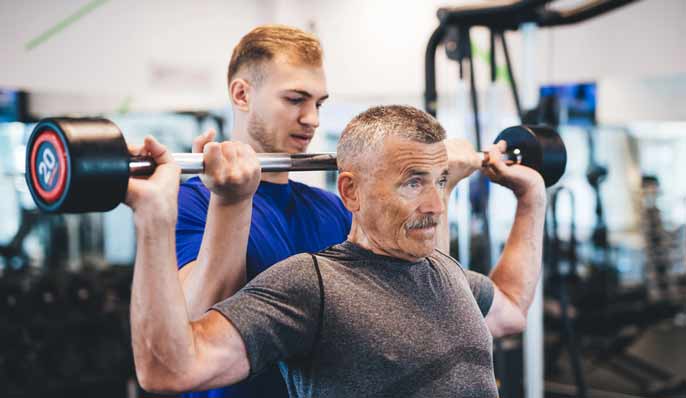
Building muscle lengthens telomeres
A recent study found a strong link between regular weight training and a slowdown in biological aging, measured at the cellular level. This study is based on a key concept: telomeres, a kind of protective caps located at the ends of our chromosomes (our DNA).
With each cell division, these telomeres naturally shorten. The length of telomeres is now considered a biomarker of biological aging: the longer they are, the more the organism appears "young" at the cellular level, regardless of actual chronological age. That’s why some use treatments intended to slow down the shortening of telomeres, or even to lengthen them.
People with more muscle have younger cells
In this research, scientists analyzed data from nearly 5,000 American adults aged 20 to 69. They compared the length of telomeres in those who regularly engaged in weight training with those who did not. They found that 90 minutes of weight training per week were associated with longer telomeres, which corresponds to about 3.9 years less of biological aging compared to sedentary individuals. In other words, this level of activity could make your cells comparable to those of a person nearly four years younger.
This result is partly explained by the effects of weight training on fundamental biological systems. Resistance training improves the insulin sensitivity, reduces chronic inflammation, increases muscle mass and basal metabolism and stimulates cellular repair pathways. These are functions that tend to slow down the mechanisms of aging.
Regular exercise
Many other studies already affirm that regular exercise, including weight training but sometimes short durations of walking, can positively influence biological (and epigenetic such as telomeres) markers related to age.
For a person motivated by longevity, these results suggest that incorporating regular weight training (for example, 2 to 3 sessions of ~30 minutes/week) into a balanced physical routine could help preserve cellular health, prolong the healthy lifespan, and potentially slow down internal aging.
The comprehensive anti-aging review
This study confirms that maintaining good musculature improves longevity. That said, there may apparently be alternatives to keeping muscles for a long time, according to other studies.
Some techniques, of varying intensities, such as HIIT (high-intensity interval training) for example, could lead to the same results in less time spent. See for example what is said in this article.
Is it possible to ask in a clinic (especially if you don’t have a family doctor) how long our telomeres are? How to know where we stand…?
You can find laboratories offering these telomere measurements on the web. Now, it’s an isolated test that is an indication but has its limits. The basis is first to test your physical and mental abilities to get an idea of your biological age. And you can do this for free at home: see biological age calculation here. Best regards
Well, I will try that. Thank you!
Hello
Doing some weight training around 70 years old, can it have a beneficial effect on telomeres, even if one has been inactive all their life?
Thank you for your response
In principle, there is no age to slow down the shortening of telomeres. And what is certain is that it is never too late to exercise and it is always beneficial. You just have to start slowly at first and then adapt to your capabilities, which will improve over time.
Hello Dr. Are we sure that having longer telomeres means we are rejuvenating?
Hello. Not really. It has been observed that shorter telomeres are correlated with more morbidity and therefore a presumably shorter lifespan. Conversely, it is difficult to assert that longer telomeres will make us live longer or rejuvenate us. Unfortunately, it is not that simple. However, it appears that it is preferable to have longer telomeres. So it is advisable to promote activities that go in this direction: exercise, meditation, good nutrition, etc…