

A few minutes of well-chosen exercises is already effective for your muscles. Science confirms it.
Even though, after the age of 30, we naturally lose muscle mass each year, we can maintain our muscles at any age, or even gain some. There's no need to live at the gym: short, but regular and fairly intense efforts already make a real difference.
Let's see how to take advantage of this without disrupting your schedule.
- Why maintaining your muscles is essential for healthy aging
- Exercise: do you really need to spend hours on it?
- The secret: properly working your muscles
- Effectively stimulating your muscles without wasting your time
- Which method to choose? The one you can stick to!
- What if you tried for 2 weeks?
- A little is already much better than nothing!
Why maintaining your muscles is essential for healthy aging
Our muscles are not just for movement. They play a crucial role in our health, such as regulating blood sugar and maintaining good insulin sensitivity, contributing to the strength of our bones, our balance, and our blood circulation… Several studies show that good muscle strength is associated with better longevity [1].
The problem is that over the years, we tend to use our muscles less. The less we use them, the more they weaken. A true vicious cycle can then set in: we lose strength, so we move less, and we lose even more muscle.
However, know that our muscles retain their ability to strengthen, even after 70 or 80 years [2] (see how to gain muscle here). It is therefore never too late to get started, and we will see that it is not necessary to dedicate a lot of time to it.
Exercise: do you really need to spend hours on it?
We are generally recommended to engage in 150 to 300 minutes of physical activity per week (WHO). This is surely good for health but not always easy to fit into a busy schedule.
What if we could gain benefits with much less?

Several recent studies support this idea. For example, people who concentrate their physical activity on one or two days a week (the famous « weekend warriors ») seem to benefit from cardiovascular protection comparable to that of people who spread their efforts throughout the week, with equivalent amounts of exercise [3].
Even more surprising: very short periods of intense activity often just one or two minutes at a time,, are associated with a reduced risk of cardiovascular diseases and mortality [4]. Quickly climbing a few flights of stairs or walking at a brisk pace can already be beneficial for your health.
However, these studies mainly focus on cardiovascular health and longevity. To maintain muscle and strength, they also need to be worked against some resistance. A few well-chosen exercises can be enough to get started.
The secret: properly working your muscles
To strengthen itself, a muscle needs to be challenged more than usual. It must adapt and becomes stronger.
For example, if you always climb the same stairs without effort, your muscles are used to it. If you climb them faster, or if you add a few more steps, you are asking them for extra work.
This is the principle of progressive overload : gradually increasing the difficulty of exercises to continue stimulating the muscles.
To start, there’s no need for 40-kilo dumbbells or a weight bench: getting up from a chair repeatedly, doing push-ups against a wall, or pulling an elastic band is more than sufficient. It’s not the number of repetitions that matters, it’s the effort. The last movements should become intense, without exhausting you or sacrificing technique. We seek the limit, we do not exceed it.
Last point, and not the least: muscles also strengthen during recovery. Let them rest between sessions.
Now let’s look at 3 ways to take action, even with a tight schedule.
Effectively stimulating your muscles without wasting your time
1. Slow exercises: fewer movements, more effort
Did you know that by slowing down your movements, you can work your muscles more intensely, without necessarily using heavy weights? This is the principle of «super-slow» strength training, popularized notably by the « Body by Science ». Instead of lifting and lowering a weight quickly, each movement is performed very slowly: about 10 seconds to lift and 10 seconds to lower. Without momentum, the muscle remains under tension longer.
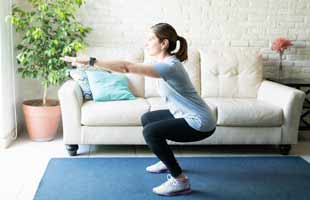 Just try this: sit on a chair, then stand up very slowly, in 5 seconds. Sit back down just as slowly. Repeat the movement 5 to 8 times, if you can. You will probably feel your thighs working more than when you stand up quickly.
Some methods suggest a single short and intense session per week. These low-volume workouts can improve muscle strength [5]. However, the superiority of extreme slowness over movements performed at normal speed remains to be confirmed.
The main interest is to learn to control your movements well and to engage your muscles without spending too much time on it.
To start, two short strengthening sessions per week, with simple exercises, already provide a good foundation.
The’isometric exercise (without moving) can come close to this provided that the position held is intense and long (up to its own limit), and if possible on stretched muscle (e.g. the chair against a wall for the quadriceps of the thighs.
2. HIIT: a few minutes of intense and intermittent effort
HIIT (High Intensity Interval Training) alternates short periods of intense effort with calmer periods. For example, you run quickly for 30 seconds, then recover by going slower for 1 or 2 minutes before starting again (see our article to learn more).
The interest? In a short time, you stimulate your heart, your muscles, and especially your mitochondria, those little energy powerhouses that provide energy to our cells.
A study from the Mayo Clinic showed that after 12 weeks of HIIT, the energy production capacity of muscle mitochondria increased by 69% in people aged 65 to 80 [6]. A particularly interesting result when we know that their functioning decreases with age (learn more about our energy production).
Other studies confirm that HIIT can also improve muscle strength and physical abilities in seniors [7].
How to try HIIT?
- 30 seconds of very fast walking, cycling, or climbing stairs…
- 60 to 120 seconds at a gentle pace to recover,
- Repeat 4 to 6 times, depending on your fitness.
This represents only 6 to 9 minutes, to which you should add a few minutes for warm-up and cool-down.
However, be careful: intense does not mean exhausting! Adapt to your current fitness level. If you are not well-trained, start slowly and gradually increase the effort. In case of known cardiovascular disease, seek advice from your doctor before engaging in this type of effort.
3. «exercise snacks»: a few minutes here and there
You can take advantage of small moments throughout the day to work your muscles, without even planning a workout session. This is the principle of exercise snacks, which could be translated as «exercise snacks».
The idea is simple: to multiply small efforts of 1 to 5 minutes throughout the day, rather than sitting for hours and betting everything on a single workout.
Several studies suggest that these very short exercises can improve physical abilities, especially in older adults [8]. They also provide a simple way to combat the effects of a sedentary lifestyle.
How to proceed in practice?
Take advantage of opportunities that arise:
- while the coffee is heating: stand up 10 to 15 times from a chair, without using your hands if possible,
- before the shower: do a few push-ups against a wall,
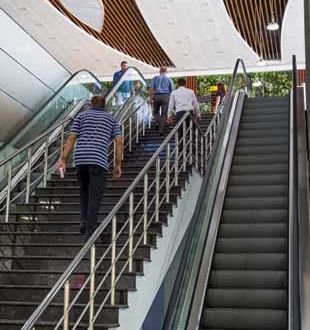
- during the day: walk up one or two flights of stairs, possibly a bit faster,
- after lunch or dinner: take a few minutes for brisk walking.
Nothing complicated, and you don’t need any equipment or sportswear!
Of course, these small efforts will not always replace a proper workout aimed at increasing your muscle mass. Nevertheless, they already allow you to regularly engage your muscles, and that’s an excellent start.
In fact, the best physical activity is the one that you can sustainably integrate into your daily life.
Which method to choose? The one you can stick to!
As always, there is no ideal method for everyone, and we appreciate the middle path. It all depends on your physical condition, your habits, and the time you have available.
Are you rather sedentary? Start with small «exercise snacks» throughout the day. A few chair stands, stairs, or a brisk walk…
Short on time? Try 2 short strength training sessions per week, lasting 10 to 15 minutes each. A few well-chosen exercises can be enough to start gaining strength.
Are you already active? You can add one or two HIIT sessions to your strength exercises to also improve your cardiovascular fitness and stimulate your mitochondria.
In any case, it's better to do a little regularly than a lot from time to time. Above all, there's no need to seek performance right from the start. The most important thing is to progress at your own pace, without getting discouraged.
What if you tried for 2 weeks?
Are you convinced but don't know where to start? Here is a very simple little program to do at home, without any special equipment.
3 exercises are enough to get started:
- 10 chair rises: sit down and stand up slowly, if possible without using your hands. Your thighs and glutes are working.
- 10 wall push-ups: standing, hands against the wall, bend and then extend your arms. A good way to strengthen the upper body. Later, you will do them in a more extended position.
- 1 to 2 minutes of brisk walking or climbing stairs: to stimulate your heart and circulation. You should feel a bit out of breath.
Start with 2 or 3 sessions per week, depending on your fitness level. If the exercises become too easy, gradually increase the number of repetitions or their difficulty. You can also add a few «exercise snacks» throughout your days.
After two weeks, take stock. Do you find it easier to get up? Are you less out of breath on the stairs? Do some movements seem less difficult? These are already encouraging signs; your muscles will respond afterward. The key is to get into the habit of making them work. Then, you will progress at your own pace.
Use our free tool to track your progress, with simple tests: « the biological age calculation.
A little is already much better than nothing!
The worst thing for our muscles is not aging, but not using them anymore. It happens far too often that we gradually stop, without thinking about it.
There's no need to accumulate hours of sports to remedy this. A few well-chosen exercises, sufficiently challenging efforts, and especially consistency: that's where the difference lies. The more you progress, the more you can step it up.
Also think about your plate and rest: enough protein and proper recovery. Your muscles rely on that too. So, start today; they are just waiting for it!

Hello Doctor,
Excellent article (and I add, as in each of my comments, «as usual»!) which, however, does not mention isometric work? Any reason for that? Olivier
Thank you Olivier. You are right. In the category of brief but effective workouts, isometric work is less often mentioned and would be less effective than movement. According to some studies, it can nevertheless increase muscle size if the held position is intense, long (up to its own limit), and preferably on an elongated muscle. I added a few lines in the «super slow» category which it resembles. Moreover, the wall sit held for several minutes is suggested by one of the proponents of superslow.
Thank you Doctor for all your beneficial advice!
It's as you say, doctor. The middle way!
So many people want to go from "no physical effort and total sedentariness" to "3 training sessions a week or more" and give up after a few weeks because they set their goals too high.
Personally, I have adopted Gourcuf's superslow exercises and I do this 1 or 2 times for 20 minutes a week (basically once for the upper body, once for the lower). At 71 years old, I have maintained my muscles.
Thank you for your articles that I read with great pleasure.
Thank you for your appreciation. Stay fit.
I find a good way to exercise every day without having to dedicate time to it is to primarily travel by bike (a classic, non-electric bike) to go to work, do grocery shopping, etc., making it your main mode of transportation.
This has been my case since I was a child (my mother, who primarily traveled by bike, took me with her). At 50 years old, I have never suffered from overweight, abdominal fat, or chronic disease, and I have good muscle tone, especially in my legs.
You add to that gardening (maintaining a vegetable garden, I can assure you, is physical and requires physical fitness), and thus you are already really working on your physical condition well, without having to run to a gym and dedicate hours of your time each week to sports.