

We host nearly 100 trillion bacteria, viruses, and microorganisms in our intestines. This collection of nearly 2 kg, called gut microbiome, is now considered a true organ in its own right.
For a long time, it was primarily attributed a digestive role.
Today, researchers attribute much broader functions to it: regulation of immunity, control of inflammation, metabolic balance, brain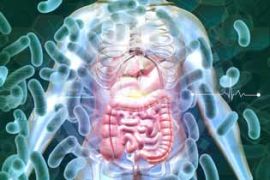 functioning, and even influence on the speed of aging.
One of the major biological markers of aging is what scientists call «inflammaging,» which refers to a chronic low-grade inflammation that gradually sets in with age.
However, the microbiota seems to play a central role in this phenomenon.
A less diverse microbiota means more inflammation
When bacterial diversity decreases, certain bacteria produce more inflammatory substances that can cross the intestinal barrier and continuously stimulate the immune system. This silent inflammation then promotes the development of many age-related diseases: diabetes, cardiovascular diseases, sarcopenia, cognitive disorders, and even Alzheimer's disease.
Note that these untimely passages of toxins are favored by what is called a «leaky gut» or overly permeable intestine (see our article).
In contrast, healthy elderly individuals and centenarians often have a more diverse microbiota that is closer to that of much younger adults. Certain specific bacteria even seem to be associated with better longevity.
The most recent discoveries go even further.
Intestinal bacteria that influence memory
Researchers at Stanford University have shown that age-related changes in the microbiota disrupt communication between the gut and the brain. In aged mice, restoring this communication improved memory capabilities and certain cognitive functions.
Other studies have shown that a «young» microbiota could limit liver inflammation and reduce certain mechanisms involved in liver aging.
A large international analysis published in 2026 even established a true global atlas of the aging microbiota, highlighting bacterial signatures associated with slower aging and better metabolic health.
To improve your microbiota
The good news is that the microbiota is one of the few organs we can influence quickly. A diet rich in fiber, vegetables, fruits, legumes, and fermented foods promotes bacterial diversity.
The intermittent fasting could also improve the microbiome by giving longer rest periods to the digestive tract.
Conversely, excess sugars, ultra-processed foods, chronic stress, lack of sleep, or repeated antibiotic therapies can gradually deplete this precious ecosystem.
Regular physical activity also seems to increase bacterial diversity and promote certain species associated with longevity.
Taking care of one's microbiota is therefore probably not just a digestive strategy.
It may be one of the simplest, most natural, and most effective interventions we have today to preserve our health and slow down certain mechanisms of aging.
After all, it is possible that part of our biological age is written not only in our genes but also in the billions of bacteria that have lived with us since our birth, and that need to be preserved.
Scientific references:
- Ghosh TS et al. The gut microbiome as a modulator of healthy ageing. Nature Reviews Gastroenterology & Hepatology, 2022.
- Garzon-Escamilla N et al. Mechanistic Links Between the Gut Microbiome and Longevity. 2026.
- Kim JY et al. Gut Microbiota, Probiotics and Aging. 2026.
- Stanford University, 2026: gut-brain axis and cognitive aging.
- Fu JX et al. Global metagenomic atlas of aging identifies a microbiota signature of longevity. 2026
Thank you, Doctor, for reminding us of this obvious yet little-known and often misunderstood principle. We are what we assimilate. AND that depends on how we digest in collaboration with our gut bacterial flora. Personally, I pay great attention to my digestion and at 75 years old, my condition is better than most people in their fifties!!.
My pleasure. You are right, digestion is at the heart of our health and well-being. I share that opinion as well. In Ayurvedic medicine, it is the digestive fire from which our body draws its vital energy. And for Hippocrates, disease begins in the intestine. It has been said for several thousand years by some ;-)