

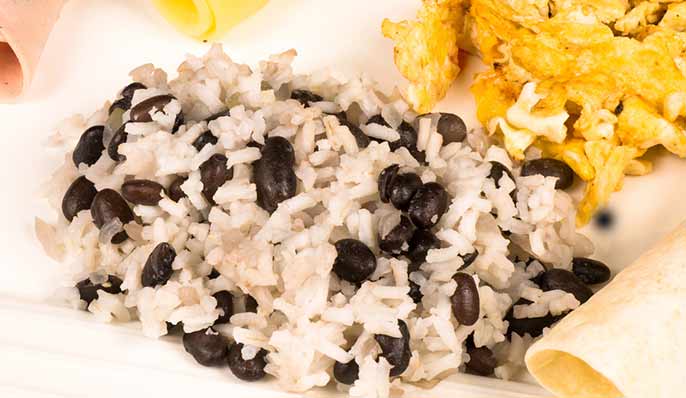
An article this month highlights the breakfast of Nicoya (Costa Rica), one of the famous "blue zones" where a proportionally high number of centenarians live. This is the conclusion of research conducted by longevity expert Dan Buettner, who specifically studied these regions rich in very fit centenarians.
A breakfast far from Western standards
In Costa Rica, this meal consists of:
- corn tortillas,
- black beans stewed with vegetables and herbs
- long-grain white rice.
According to the author, this breakfast could be one of the "healthiest in the world" because each of the ingredients plays a key nutritional role.
For example: corn tortillas would help reduce "bad" cholesterol, black beans to regulate insulin and blood pressure...
In any case, it seems sensible to prioritize an unprocessed breakfast, low in sugars, high in fiber, based on the combination of legumes + grains which ensures a balanced intake of amino acids, inspired by one of the longevity models. We are far from orange juice, bread or butter croissants with jam.
Nutritional benefits of the components
Corn tortillas
Corn is a grain rich in fiber, vitamins, minerals, and antioxidants. The traditional processing of corn with ash improves the bioavailability of niacin (vitamin B3) and proteins.
Well-prepared tortillas provide, in particular: magnesium, phosphorus, zinc, and B vitamins (niacin, B6)...
From an anti-aging / metabolic perspective, this means: support for energy metabolism (via vit. B3/B6 see our article on B3 and energy), good supply of minerals for bones and supporting tissues, and better quality carbohydrates (if they are minimally processed).
Black beans
It is a very good source of proteins vegetables and fibre (soluble + insoluble). They promote satiety, blood sugar control, and good transit.
They are rich in antioxidants (notably anthocyanins): these pigments provide protection against oxidative stress, inflammation, and cardio-metabolic and degenerative diseases. They also contain folates, potassium, magnesium, iron, zinc: which contributes to cardiovascular health, bone health, and overall cellular function.
From an anti-aging perspective or in functional medicine: black beans provide metabolic support (through fibers, minerals), cellular protection (through antioxidants), and a good glycemic profile (important after 35 years, see insulin resistance, scourge of the 2000s).
And the lectins?
The downside would be that corn and black beans are rich in lectins (see our article), and therefore not always very digestible for everyone. That said, preparation, soaking, and cooking methods can significantly reduce the concentration of these anti-nutrients.
Conclusion
The "Nicoya model" breakfast combines a traditionally prepared cereal (corn tortilla) + a nutritionally rich legume (black beans). This combination provides a meal:
- moderate in quick carbohydrates, rich in fiber and plant proteins, and therefore good for blood sugar regulation,
- rich in micronutrients and antioxidants, thus aligned with longevity and cellular health goals,
- minimally processed and culturally integrated, which helps with the sustainability of the dietary model.
Thank you, Doctor, for your letters and the information they contain, always so interesting!
Regarding corn, aside from the fact that it is often difficult to digest, is there still non-GMO corn available?
Thank you for your appreciation.
Yes, there are still non-GMO corn crops in Europe, with some countries having excluded them. In fact, it needs to be checked on a case-by-case basis, and it's not very easy. Take care.
the best thing is to skip breakfast. We all eat too much and poorly. At least it gives a little rest to our poor intestines. What do you think, doctor?
I mostly agree: yes, we generally eat too much and too often. Thus, intermittent fasting (2 meals within an 8-hour window each day) is generally very beneficial and often improves the microbiome. One could say that this is most often the rule, but again, it depends on the individual and the situation. Sometimes skipping the evening meal is better tolerated. In any case, already avoiding the standard breakfast of bread, butter, jam, pastries, or processed sugary cereals... eating fibers and proteins instead is already much better. After that, it’s on a case-by-case basis.
Can corn be considered a healthy food? Thank you
As always, the answer is nuanced. It depends: on the quantity, the method of preparation, and each person's digestive sensitivity (corn contains a high level of lectins, but they can be destroyed with proper cooking). Furthermore, regarding flours and like most cereals, their absorption can cause a spike in blood sugar, which can be detrimental for people with carbohydrate (sugar) metabolism disorders. Take care of yourself.