

The key to healthier aging is not found in an organ but is at the very heart of our cells. For some time now, aging biology research has increasingly highlighted a long-underestimated player: the efficiency of mitochondria, these tiny structures responsible for energy production in our cells.
Mitochondria: much more than "power plants"
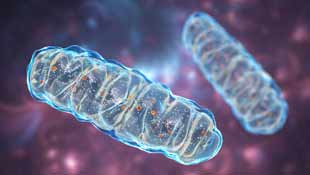
 Mitochondria are often described as the mini power plants of our cells. They convert nutrients (carbohydrates, lipids…) into an essential molecule: ATP, the true fuel for our body. As we age, this system becomes less efficient, like a boiler that gets clogged up:
- energy production decreases,
- oxidation waste increases,
- the cell enters a state of chronic "stress."
Ultimately, persistent fatigue gradually sets in, accompanied by decreased muscle performance, accelerated skin aging, and various disorders of vital, metabolic, or cognitive functions.
Recent discoveries show that it is not only the number of mitochondria that matters but especially their organization and efficiency..
When mitochondria work as a team.
Research has shown that some mitochondria can assemble into "supercomplexes.", a kind of optimized energy production chain.
When these supercomplexes function properly:
- energy production is smoother,
- there are fewer losses,
- and especially less oxidative stress (less free radicals due to oxidation).
A recent study published in Aging Cell (*) shows that genetically modified mice to assemble more supercomplexes have a longer life and improved health markers (more ATP, more NAD⁺, fewer free radicals…). This suggests that this optimization could slow down aging. A factor produced by the body (COX7RP) actually increases the formation of supercomplexes.
Conversely, with age or under the influence of an unfavorable lifestyle (sedentary behavior, excessive eating, chronic stress, lack of sleep…), this organization disintegrates. The cell becomes energetically inefficient, which accelerates aging.
This perspective profoundly changes our approach: aging would not only be about losing energy but also: misusing it.
An essential discovery for longevity
 More efficient mitochondria means:
- more energy available for muscles and the brain,
- better regulation of metabolism,
- a reduction in chronic low-grade inflammation,
- a better ability to adapt to stress.
Thus, mitochondrial efficiency directly influences the biological age that can be measured. Many researchers today consider the mitochondria as a central player in longevity functional: to remain active, independent, and fit with age.
Practical applications coming soon?
Even though this research is still ongoing, several concrete applications are already emerging.
1. A more personalized anti-aging medicine
It is becoming possible to assess the quality of mitochondrial function through energy, inflammatory, or metabolic biomarkers, in order to tailor prevention or care.
2. Targeted interventions on effectiveness, not just stimulation
Rather than "forcing" the cell to produce more energy, we will seek to optimize mitochondrial organization perhaps with this COX7RP molecule.
3. A key role of lifestyle
The data is already converging towards a clear message:
- regular physical activity (notably muscle work),
- the alternation between periods of abundance and energy rest,
- stress management and sleep
are already powerful means to improve mitochondrial efficiency. It is also possible that some techniques already known to boost mitochondria also promote the formation of these supercomplexes (see in our article: produce more cellular energy).
Live longer with more energy
These recent discoveries about mitochondrial efficiency suggest that aging may be highly correlated with energy optimization.
By learning to take better care of our mitochondria today, we are laying the groundwork for slower, more stable, and above all, more vibrant aging.
** Mitochondrial Respiratory Chain Supercomplexes – International Journal of Molecular Sciences (2022)
What are the dietary supplements to strengthen mitochondria?
You will find them in this article: https://www.antiageintegral.com/anti-age-revitalisation/make-more-energy-with-your-mitochondria
and there is also nutrition and other techniques that are described.
Thank you for this information, doctor. If I understand you correctly, before any hormonal or "anti-aging" treatment, we should improve our mitochondria. Is that right?
In short, yes, even though things are more subtle. We must first look at the most slowed down or degraded function of the body. But it is a fact that if the mitochondria are failing, nothing works well. The lack of energy is everywhere: hormone production, digestion, libido, muscles, etc... This cellular energy production must therefore be checked first to limit the effects related to aging, and improved if necessary. This often resolves many issues.