

At the end of May 2025, a German team from the Max Planck Institute for Biology of Ageing published a groundbreaking advancement: a cocktail combining rapamycin (an inhibitor of the mTOR metabolic pathway) and trametinib (an inhibitor of the MEK pathway) extended the lifespan of mice by up to 30%.
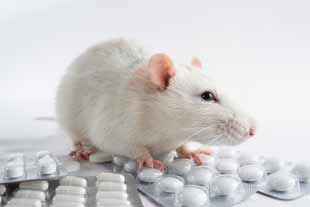 The effect is not limited to extending life: treated animals also benefited from better prolonged health, with less inflammation, a reduction in tumors, and an improvement in their physical abilities.
- Rapamycin is already being studied to mimic the beneficial effects of caloric restriction (including longevity) without needing to change one's diet.
- Trametinib, primarily used in oncology, targets the MAPK/ERK pathway.
- the two associated drugs act in an additive manner to slow down aging.
Chemical drugs with anti-aging effects
Aging is often linked to the excessive activation of metabolic pathways such as mTOR and the uncontrolled proliferation of certain cells (causing inflammation and cancers). The possible effects of rapamycin in slowing down aging were already known. By simultaneously blocking two key pathways, scientists observed a synergistic effect rarely studied before. The fact that it improves both lifespan and overall health in mice is a central point of this publication.
Moreover, a mention in the "2025 in science" report on Wikipedia confirms this discovery: May 28, 2025, tests on mice show an increase in lifespan of about 30%, with benefits in health uniformity (en.wikipedia.org).
Anti-aging effects through synergy
- Double inhibition — double impact : few studies combine these two molecules. The observation of an additive effect is rare and opens the way to rethink pharmacological strategies.
- Health and longevity : it’s not just about living longer but living healthier, with reduced inflammation and slowing down age-related diseases.
- Basis for humans : although mice are not humans, it is a necessary step towards clinical trials. Rapamycin has already been tested in human studies, which reinforces the realism of this combination.
A promise of longevity not yet for humans
It is abouta study in animals under laboratory conditions: there is currently no evidence of human efficacy.
Side effects are possible : rapamycin and trametinib are powerful medications, primarily used against certain cancers, and immunosuppressants. They can alter the immune system or cause side effects (diabetes, skin issues…) in humans.
Dosage & application : it is still necessary to transpose the doses from mice to humans and adapting a dosage from one species to another remains a major challenge.
However, this study offers the first clear demonstration that a duo of “geroprotectors” can act in additive mammals, which is already a remarkable advancement, even if there is no direct application in humans.
The next steps will be tests on closer animal models, with validated protocols, and then probably some preclinical trials in humans.
The comprehensive anti-aging review
Assuming that this type of treatment is applicable to humans, it will still be necessary to carefully weigh the consequences and possible side effects of long-term use, against the expected gains in longevity.
We are not there yet. And let us not forget that for the majority of us, there is, before that, much to be done in terms of improving lifestyle, environment, and natural care.
Original study and its detailed results (timesofindia.indiatimes.com)
A drug has proven effective in humans (diabetic). It is metformin that activates the amplified pathway and autophagy.
Very little for me these medications. Of all that has been discovered to extend life in mice, I am not aware of any drug that has proven effective in humans to date. Unless I am mistaken.
I prefer to stick to natural methods and a healthy lifestyle. That's already quite good and that's what we say on this site, right?
Yes, you have understood our approach well. Common sense and natural methods first. After that, we are not against specific remedies, provided they are effective and safe. Take care of yourself.
Chemotherapy drugs to live longer? ?? From what I have seen in my career as a caregiver, when cancer patients start this kind of treatment, their lifespan tends to shorten.
Thank you anyway for keeping us informed about what is happening with longevity researchers.