


Vitamin B3 plays a significant role in our health: it promotes the production of good fats, protects our arteries and brain, reduces inflammation… but it also has very interesting anti-aging properties, in several respects, as we will see.
Vitamin B3 and metabolic functions
Vitamin B3 (or PP) is water-soluble and exists in two distinct forms: nicotinic acid (or niacin) and nicotinamide (or niacinamide).
Main functions involving vitamin B3
As a vitamin, at normal blood levels, it assists:
- the functions of the nervous system, particularly in the metabolism of neurotransmitters,
- digestion and food metabolism,
- the production of hormones, especially sexual hormones,
- the formation of blood and skin cells,
- the vasodilation of blood vessels,
- and in particular, energy production in our cells, as we will detail further below…
Use of niacinamide in cosmetics
Beneficial effects on dermatoses or on the skin aging have been described for a long time. Many products so-called "anti-aging" cosmetics incorporate niacinamide. Some studies have also shown a reduction in fine lines and improved skin elasticity after this treatment applied locally.
Vitamin B3 and diet
Recommended daily dose
As an essential nutrient, the recommended daily intake is 14 to 16 mg of vitamin B3 per day. With normal digestion/absorption, this is quite easy to achieve by eating healthily, good products, fresh and varied.
Foods rich in B3
Vitamin B3 is found in many foods such as meat, fish, yeast, nuts, seeds, beans, potatoes, dried fruits, tomatoes, peas… Milk, green leafy vegetables, coffee, and tea also provide niacin. Animal products are much richer in B3 than plant sources (for example, the fish below often contain 20 times more B3 than dried beans).
| Main sources of vitamin B3 per 100g (in mg) |
|
| Rice bran | 34 |
| Liver, veal, cooked | 18,8 |
| Liver, lamb, cooked | 18,5 |
| Nutritional yeast | 18,5 |
| Tuna | 16,4 |
| Salted anchovies | 14 |
| Duck, breast, grilled/ pan-fried | 13,5 |
| Turkey, escalope, sautéed | 13,5 |
| Dried or dehydrated spirulina | 12,8 |
| Chicken, breast, meat and skin, roasted/baked | 12,7 |
| Breakfast cereals (average food) | 12,1 |
| Liver, chicken, cooked | 11 |
| Raw milk Camembert | 10,9 |
| Chicken, fillet, skinless, cooked | 10,6 |
| Veal, roasted, cooked | 10,1 |
| Smoked salmon | 10 |
Source: https://ciqual.anses.fr
When to take vitamin B3?

As always, the wise answer is: when we lack it.
Afterwards, as we will see, supplementation (doses higher than the so-called "normal" doses) is another matter and applies to specific cases. Thus, the eternal question arises as to whether the daily intakes recommended by health authorities are well justified. On what basis? Do they not vary according to individuals? It is quite possible, and many authors believe that these recommended daily allowances are often underestimated.
Signs of vitamin B3 deficiency
An insufficient level of niacin leads to numerous symptoms such as:
- fatigue,
- headaches,
- tingling and poor blood circulation in the extremities (fingers, feet),
- dry skin, even redness (erythema),
- loss of appetite,
- digestive disorders such as gastric ulcers, colitis, diarrhea,
- emotional instability or a depressive state…
Severe deficiencies are rare because vitamin B3 is found quite easily in foods. In case of serious insufficiency, a " pellagra" may appear. It is a disease primarily visible through its effects on the skin, which becomes dry and red, then develops dark pigmentation on the areas exposed to UV sunlight. These conditions are characterized by the 4 D's : dermatitis, diarrhea, dementia, and death. These are actually the deficiency disorders mentioned above, but exacerbated to the extreme.
Des major intestinal problems especially certain inflammatory diseases can reduce the absorption of this vitamin and create notable deficiencies. Most often, alcoholalso reduces the absorption of B vitamins. also reduces the absorption of B vitamins.

Vitamin B3 supplement
A too low level of B3 can be assessed by the set of deficiency symptoms mentioned above (see our vitamin level evaluator and essential nutrients), or can be objectified by a blood test. Supplementation can then typically improve these symptoms, as well as certain dizziness, poor circulation in small vessels, post-menstrual syndromes, certain neurological or mood disorders, some stress issues, or hyperthyroidism…
Niacin can be useful as a supplement for alcohol consumers who are often deficient, or for individuals with severe intestinal disorders.
NAD+, niacinamide, NMN, NR, energy production and anti-aging molecules
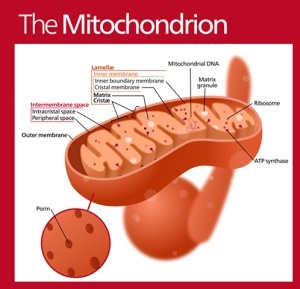 Vitamin B3 is particularly involved in the " cellular respiration", where the mitochondria of our cells produce energy byenergy burning nutrients with oxygen. As we age, our mitochondria function less efficiently and produce less energy, leading (among other things) to more cells degenerating, dying, or becoming senescent.
The niacinamide and derived or "cousin" molecules like NMN and NR convert into NAD+, a central and essential coenzyme in this body's energy production system. Furthermore, it is now known that the concentration of NAD+ significantly decreases with age in our cells.
As we age, several factors can contribute to a decrease in NAD+ production, including:
- an lower availability of nutrients essential precursors of NAD+: with age, the body's ability to digest/absorb or poor nutrition can be causes.
- The disruption of the oxidation/reduction balance in the cells. This balance can be disrupted with age, for example due to excess oxidation (oxidative stress) or toxins…
- the direct degradation of mitochondria (the energy centers of cells) by oxidation or circulating toxins…
- The deterioration of DNA, and theinflammation in general, which increases with age, divert the use of NAD+ for cellular repair…
Overall, this reduction in NAD+ production with aging may have implications for health and aging. Current research to raise NAD+ levels by various means is very active as the results observed, particularly in animals, are sometimes spectacular.
Recent studies have shown that by raising NAD+ levels (either through direct supplementation or by providing its precursors), it is possible to "rejuvenate" the muscles of old mice in a few weeks (Pr D. Sinclair, see this article and this one) but also extends the lifespan of animals, all of this notably by increasing the activity of our sirtuines (protective enzymes against aging, see here).
Other researchers have similar results but demonstrate a more specific action on the stem cells which, once their mitochondria are reactivated, will regenerate the tissues where they are located (Pr Hongbo Zhang 2016).
We are entering the realm of treatments capable of rejuvenating cells or organs, and more than just a simple slowing down of aging.
These results have made a big splash in the media and products (“cousins” of nicotinamide) like the NMN (nicotinamide mononucleotide) or the NR nicotinamide riboside have quickly appeared on the market without us really knowing if these effects were the same in humans. Some studies are striking but others contradict them. Their results always lead to controversy and according to the latest studies on humans, we can say that the action of NMN is unfortunately, in 2025, far from being a certainty. To be continued for now.
While waiting for more studies, we know that thephysical exercise and the fasting can increase NAD+ levels in human cells. Similarly, under certain conditions, niacinamide (a common form of B3) can promote the elevation of our NAD+ levels, and it is especially much cheaper, as it is not patentable (let's always remain vigilant about commercial aspects…). It can therefore easily be part of a long-term anti-aging treatment.
What needs to be understood:
Deficiencies (too low levels) of vitamin B3 are rare outside of intestinal absorption disorders (let's note that these are becoming more and more common due to often unhealthy diets). In this case, dietary corrections or a supplement of vitamin B3 bring levels back to normal and are sufficient to make deficiency symptoms disappear, with no risk.
In addition to this, the supplements of certain forms of vitamin B3 have specific, therapeutic, even anti-aging actions (increased cellular NAD+), at higher doses. In this case, it is important to dose carefully, and it is better to seek medical advice to ensure there are no contraindications and to avoid any side effects related to overdose.
Vitamin B3 supplementation
At high doses (500 to 4000 mg in studies), niacin improves atherosclerosis and thus cardiovascular diseases. It can improve the condition of arteries and small capillary vessels, as well as the oxygen supply to cells.
Similarly, taking niacin (nicotinic acid), at high doses (between 1 and 3 g), is capable ofimprove hypercholesterolemias by increasing the HDL (often called "good cholesterol") and by lowering the LDL.
It has been shown, in animals, a decrease in the excess liver fats (hepatic steatosis) thanks to B3 supplementation.
An anti-inflammatory action has been found for a molecule derived from B3: 1-methylnicotinamide (derived from nicotinamide). Similarly, one month of niacin administration would lower blood CRP, a classic marker of inflammation (see chronic inflammation and aging).
Niacin is finally suspected of reducing the risk of developing certain types of cancers such as leukemia, due to the increase in coenzyme levels that allow for DNA repair (notably the NAD+ , there it is again). People suffering fromHIV could also receive niacin supplements to alleviate symptoms and extend their lives, according to some studies.
Precautions for use
During pregnancy or breastfeeding, women should take niacin only under medical supervision. For children under 12 years old and individuals with kidney problems, B3 supplements are not recommended.
Interactions with other substances
The following medications may interact with B3:
- statins and cholesterol-lowering drugs,
- anticonvulsants and benzodiazepines,
- antitubercular drugs such as isoniazid.
Women taking contraceptives or estrogens have higher niacin needs because these hormones increase the synthesis of B3 in their bodies from tryptophan, which then becomes less available for other uses.
Side effects of vitamin B3
At high doses (generally, more than 300 mg), nicotinic acid (niacin) can cause uncomfortable effects such as flushing, redness of the face, neck, and chest, or headaches… due to its vasodilator (dilation of blood vessels) effect, but not the other form of B3, niacinamide. Stomach aches are also reported.
Very large doses (in principle, more than 3000 mg per day) can cause damage to the liver with the nicotinamide (niacinamide), as well as a decrease in the number of blood platelets, leading to coagulation problems.
People with liver diseases (including alcoholic cirrhosis) or diabetes are more likely to have issues with high doses of niacinamide.
Conclusion
Aside from specific diseases, deficiencies in "normal" intake of vitamin B3 are rare. Nevertheless, some classic symptoms of these deficiencies could be improved in certain individuals by increasing intake (through diet or supplements).
On the other hand, experiments clearly show therapeutic actions of vitamin B3 derivatives, as well as an effect on the energy production cellular levels that decrease with age, and on the longevity of animals, by acting on the aging of their mitochondria. One can only be very interested in this in anti-aging medicine.
Nevertheless, no rush. It’s a huge commercial market, and studies are often funded by supplement manufacturers. Some are disproven or moderated a few years later. Many authors and studies contradict each other. Finally, there is a very large gap between certain health benefits and the reversal of aging.
Therefore, we will need to follow upcoming larger-scale investigations in humans, be careful with dosages to avoid any side effects, and be vigilant in detecting commercial interests related to certain derivative products, which may be sold at much higher prices than they should be.


Yes indeed very good articles but wouldn't it be simpler to make a dietary supplement with a complete dosage of all essential vitamins...?
Yes, that's a good idea. I don't know the perfect supplement to stimulate the mitochondria. It actually depends on how each person functions. Personally, I give my patients (and myself) mixtures of nutrients tailored to the situation, to make on your own, which provide everything necessary for proper energy production. Best regards
Thank you very much for your quick response.
Your articles are gold mines, with simple explanations accessible to everyone.
See you soon, looking forward to reading you, and learning more and more.
Hello DR. OREL
First of all, a big thank you for your articles, all more fascinating than the others. My question is as follows:
Could you give me your opinion: taking a tablespoon of flaxseed oil per day for osteoarthritis pain. Danger, effectiveness low or none?????
Thank you in advance for your responses
Best regards
Hello and thank you for the compliment. It can be read that flaxseed oil is good for osteoarthritis. In fact, it would act on inflammation. Explanations: it is rich in omega 3 and we know that these counteract inflammatory processes while omega 6 promotes them (see here). It will therefore go in the right direction (moreover, we generally lack omega 3), adding it to one's diet is generally good, while avoiding other oils that are low in omega 3 and high in omega 6.
That said:
1. we cannot consider it as a "treatment for osteoarthritis" which is a multi-factorial disease (see our article here), with various therapeutic approaches that must be targeted according to each case.
2. also remember that plant-based omega 3 must be converted by your enzymes into EPA/DHA (which can be found directly in fish, for example) to be active. With age, this conversion weakens, which is why most omega 3 supplements are based on fish oils.