


Your body is designed to function well and repair itself, but for that, it must have all its essential nutrients available. Our diet serves this purpose. On the other hand, certain eating behaviors have known positive effects on longevity.
What should you eat to live longer? Many diets have been praised for their health benefits or longevity effects, but they can also contradict each other. No, the long-life diet is not vegan, nor paleo, nor ketogenic, nor carnivore, nor raw food, etc. Nothing is absolute or universal; what worked for one may not necessarily work for another.
Here are some basic principles that the majority of authors seem to agree on, but each of us is unique and will also need to adapt their diet according to their individual constitution (see here), their digestive capacity, their state of health, and the’environment environment in which they live (I explain this in detail here: the best longevity diet).
Choosing healthy foods
1  Favor natural, quality, and «real» foods
 Favor natural, quality, and «real» foods
The very first thing is to’avoid unhealthy foods, the famous junk foods, those processed products from the food industry, sometimes excessively, that we have been consuming a lot since the 1950s. It is true that they are «convenient»: ready-made or quickly prepared meals, lasting for years in plastic, pleasing our palate thanks to their chemical additives and sweeteners.
Eat real (and healthy), it means eating foods not or very minimally processed, organic (without pesticides) and locally produced if possible (thus more costs). This is to optimize the intake of micronutrients (vitamins, minerals, essential fatty acids, and amino acids…). Most industrial and processed foods are low in vitamins and essential nutrients, and loaded with toxins («trans» fats», sweeteners and hidden sugars, preservatives, and other food pollutants…). It is clear today that they gradually degrade our health.
In the same spirit, a food, once prepared, should be eaten within 2 hours according to Ayurveda, and not stored, reheated, and served later. Vitality is in the freshness of foods.
Getting closer to the diet of ancient hunter-gatherers (called «Paleolithic») seems well-founded if one does not overdo it on proteins and animal fats. Moreover, if we must eliminate foods that may pose problems according to various so-called «healthy» diets, only the fruits, vegetables, nuts and seeds, eggs, fish, and other animal products remain. Afterward, let's avoid any dogma and any excessive diet. This does not necessarily mean a very low carbohydrate or ketogenic diet.
 2 The foundation of a healthy diet: seasonal vegetables
 2
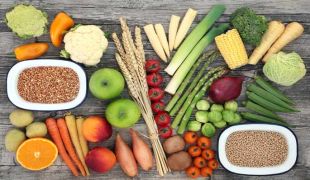
Without excluding quality animal products (organic), everyone agrees on this. Vegetables provide all the nutrients necessary for our body, some dietary fibers (prebiotics) and antioxidants, especially the beneficial ones polyphenols that fight against certain effects of aging and improve our gut microbiota.
Another harsh observation: today, our intake of colorful vegetables (especially vegetables) has become far too low for most people, despite public health incentives. On the other hand, we often eat too much meat and animal products (and especially of poor quality). From there to say that being vegetarian or vegan is the best solution, there is a big leap. Studies do not confirm that humans are made to be vegetarian but rather omnivorous. After that, it can be an ethical choice but that is not the subject here.
it seems that the intake of animal products should be adapted according to each case.
Above all, our modern diet is too rich in cereals : pasta, bread, pastries, baked goods, flours, pasta… These cereals, as well as certain fruits (including nightshades: tomatoes, eggplants, peppers…), are rich in pulses , substances that are difficult to digest (even toxic and inflammatory in high doses), especially for sensitive individuals or those predisposed to digestive disorders, and of course as we age. Note that the antinutrients, proper preparation of these vegetables (cooking, soaking, , etc…) significantly reduces their content of anti-nutrients (, fermentation, see our article for a better understandingFor carbohydrate-rich foods (“sugars” or carbohydrates), it is better to favor those that are).
3 Be careful with carbohydrates that cause your insulin to secrete too quickly
low high glycemic index , meaning that they do not raise blood glucose too quickly. The important thing is to avoid these, “spikes” in blood sugar «, a source of many health problems, especially with age. This exhausts your pancreas which, to lower blood sugar, must quickly secrete insulin., These fluctuations in blood sugar and insulin levels throughout the day are harmful. They pave the way for “.
« (excess blood fats, sugar, belly fat, insulin resistance, hypertension, fatty liver…). They can cause fatigue, mood swings, and variations in well-being. Indeed, our prehistoric ancestors rarely needed to lower their blood glucose levels because fast sugars (with a high glycemic index) are rare in nature. They therefore spared their pancreatic insulin production. The fructose in fruits (their sugar) is not quickly absorbed due to the high fiber content of fruits, although one should not overdo it with very sweet fruits or those that come from afar.« metabolic syndrome »However, modern diets are full of foods that quickly raise our blood sugar (especially with added sugars).
In the “. « , the body no longer responds well to this hormone, which leads, among other things, to obesity, diabetes, cardiovascular disorders… Moreover, insulin, which tends to increase at that point, promotes the« insulin resistance« , le corps ne réagit plus bien à cette hormone, ce qui mène, entre autres, à l’obésité, au diabète, aux troubles cardiovasculaires… De plus, l’insuline, qui a alors tendance à augmenter, favorise l’inflammation in general.
Sugar is a soft drug with harmful effects. The ideal is to wean oneself off it and avoid foods that contain it. It does not provide anything interesting from a nutritional standpoint, and causes our blood sugar (and thus our insulin) to spike, tiring our pancreas. If one really wants to replace sugar, the stevia seems to be one of the only safe sweetening substances.
In practice, the glycemic index (or even the glycemic load) of a food is certainly an indicator, but things are much more complex. For example, we rarely eat a food alone but rather combined with others in a dish (or in a meal), which can slow down the absorption of glucose. Without going into too much detail, to better stabilize your blood sugar, here’s what to remember:
- the worst is to put a food said to have a «high glycemic index» alone and directly into an empty stomach, especially in the case of «snacking»
- start meals with green vegetables (and thus fibers) or raw vegetables (but not starchy foods) or with proteins, and eat carbohydrate-rich foods at the end of the meal (after the vegetables and proteins)
- eat slowly
- take apple cider vinegar, cinnamon, berberine… before meals. They slow down the rise in blood sugar.
This is often more useful for subjects with catabolic constitution, from a certain age.
Note also that grains (especially refined) generally have a high glycemic index (thus: moderation), and that each person has a particular susceptibility to different types of carbohydrates.
Finally, to be sure of the effect of your meals on your blood sugar, it is possible to use a glucometer for a while, which will record your daily blood variations.
4 Let’s eat more fats, but good ones!
Lipids, fats, and fatty substances have been burdened with all evils to the point of being almost banned from the diet recommended by institutions since the 1950s. In particular, they are accused of promoting cardiovascular diseases. The most notorious would be saturated fats… People have therefore been encouraged to use vegetable oils richer in unsaturated fats. The idea wasn't too bad, but several things were forgotten:
– these oils provide, for the most part, a lot of omega 6 and little omega 3, contrary to what is needed (see below)
– cooking polyunsaturated fatty acids above 120° denatures them, particularly through oxidation which makes them rancid and unhealthy, and especially destroys omega 3
– the industrial vegetable oils and margarines (so praised at the time for their «benefits») are actually rich in «trans» fatty acids» toxins (see below)
– the very high temperature (smoke point) for unsaturated fatty acids can also generate trans fatty acids.
– the saturated fatty acids are nonetheless useful to our body (in moderation).
Result: today, our diet is most often deficient in omega 3 (a family of essential unsaturated fatty acids), and too rich in omega 6 : another family of essential fatty acids that promote inflammatory processes in the body.
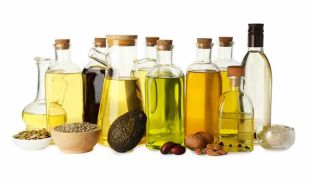
Therefore, we should not cook vegetable fats, except for olive, coconut, and avocado. The latter mainly contain monounsaturated or saturated fats that do not transform into toxic compounds with heat.
Eating animal fats is not a problem, and some withstand cooking very well (duck, goose, pork, butter, ghee…). The problem lies in excess, and also in the poor quality of some farmed animals today, in which hormones, antibiotics, and other chemicals concentrate in their fat.
Finally, let’s be cautious of these «trans» fatty acids» that are found in large quantities in foods from the food industry (canned goods, prepared meals, UHT dairy products, packaged pastries, chocolate bars, etc.). They are obtained by hydrogenation of fats at very high temperatures, a process designed to promote the long shelf life of packaged foods. Trans fatty acids are toxins dangerous, alas often present in modern food, and not always well indicated.
5 Fibers and ferments
Clearly, these two types of food are most often insufficient on our plates. However, they are very useful for the’balance of our microbiota and numerous studies have shown their benefits for health.
In particular, several studies have shown an improvement in longevity in humans, a diversification of their microbiota, less inflammation… by supplementing with dietary fibers, and by adding fermented products to the daily diet.
More fiber means more prebiotics to nourish our good bacteria, better transit, more stable blood sugar, less excess cholesterol, etc… To increase them, simply eat more plant-based foods (vegetables in particular, with some being richer).
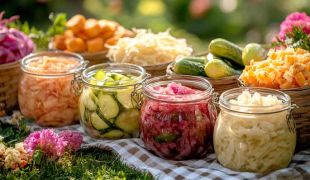
Fermented products include: sauerkraut, olives, pickles and other fermented vegetables in brine, miso, tempeh, kefirs, various yogurts, cheeses, kombucha, sourdough bread, fermented meats and fish, etc… They provide postbiotics, and enzymes that make them very easy to digest. Postbiotics are substances produced by fermenting yeasts and bacteria, having a beneficial effect on our intestinal flora, even if the microorganisms in the food are no longer alive.
6 Meats, fish, and poultry: quality over quantity
 About 0.8 grams of protein per kilogram of body weight per day seems correct for an adult (even less according to some anti-aging researchers, like David Sinclair). After 65, due to the typically poorer digestive absorption, this intake can be slightly increased. This is quickly reached with about 120 to 150 grams of animal flesh for an average-sized person (see this article on our protein needs). In most «blue zones,» famous for their many centenarians, people eat small amounts of animal protein.
Most often, modern diets provide animal products at every meal, and we are thus well beyond our needs. Moreover, animal proteins are richer in methionine, an amino acid whose moderation seems to improve longevity. Thus, let’s avoid excesses. Let’s not forget that’there are also proteins in plants, which reduces our needs for animal proteins.
A word about the animal products we consume the most: today they are muscles from animals, whereas in the past, the hunter-gatherer presumably ate the whole animal (tendons, skin, organs, cartilage, marrow…). These latter parts are rich in glycine, another amino acid that helps the liver detoxify methionine, and which we might therefore be lacking.
Thus, eating these less «noble» (but also cheaper!) animal proteins would be beneficial. The concern today is to find good products from well-fed animals (with their natural food: grass), and not too treated with chemical medications, hormones, and other antibiotics… Not always simple, I admit.
The way to eat healthily
In any case, the idea is never to radically change one's way of eating but to evolve towards better. The observation today, in our modern societies, is undeniable: our diet has deviated greatly towards excess, in quantity, in toxic substances, in sugars, in cereal products, in processed products… It has strayed far from the principles of a healthy diet since the 1950s. This is certainly a factor in the increase of chronic, autoimmune, and degenerative diseases that we are witnessing today in modern societies, particularly in Westernized ones.
1 Eat less and slowly
Simple caloric restriction allows different species to live longer according to scientific studies. This seems all the more reasonable when we know that our diet is generally, nowadays, too rich high in calories (and especially too sugary), and how much we lack physical exercise to burn them off. In the «blue zones» of the world, known for longevity, people eat less, more slowly, and less often than in our modern societies.
Eat slowly and chew will jointly improve nutrient absorption, digestion, and the balance of your intestinal flora, which is so important for your health, your immune defenses, and your longevity.
2 Cook less hard
The cooking at high temperatures destroys not only certain vitamins but also some valuable enzymes for our digestion. Cooking food at low temperatures, or even eating some raw (for those who can tolerate it), seems preferable.
3 Spice it up, spice it up, spice it up…
Herbs, fine herbs, and various spices mostly have antioxidant, disinfectant, anti-glycation, anti-inflammatory properties, etc… They mostly promote digestion. The most interesting common spices are the turmeric, basil, the Ginger, curry (turmeric plus pepper), the’ail, thyme, the rosemary, coriander, parsley, the cinnamon, cardamom, cumin, mustard…
Adapt your diet to your personal situation
The previous rules apply to most people, but each case is particular. Depending on one's constitution, digestion, and current health status, a person may lean towards a more specific way of eating that suits them well, at least for a certain time. In my opinion, all these «diets» are mainly tools to correct health issues (paleo, keto, vegan, SCD, high-protein, lectin-free, low FODMAP, etc…). They can yield excellent results but are not healthy diets for everyone.
The Ayurvedic medicine who considers longevity as paramount in health, carefully chooses the spices and plants to eat for each person, according to their individual constitution and the desired effects on their health. It goes even further by describing the best foods and those to avoid according to your constitution, in order to optimize health and longevity. Its advice is generally very relevant for personalizing one's diet.
Listen to your body and its reactions to different foods. This way, you will learn to limit or avoid certain foods if they make your digestion painful, cause allergic reactions, mental fog, mood disorders (yes, yes…), etc…
There is no need to systematically eliminate all foods rich in lectins (of which gluten is a part), or in FODMAPs for example, if you are healthy and have no digestive issues (see our explanations on lectin-free diets). This depends on each person's sensitivity (and history).
It is necessary adjust your diet to your constitution, your digestive capacity, your state of health, and the’environment in which you live.
You can use our health assessments to better adapt your diet and obtain personalized advice.
Hello
Following a vegan diet (that of Dr. Ornish – see his book »reversal heart disease») I have achieved very satisfactory results in terms of cardiovascular health (arteritis) I lost 10 kilos, but I walk much better without effort, blood and cardiovascular assessment very good: but problem of muscle loss and I absolutely want to work on this issue: which nutritionist, anti-aging doctor could help me or how to do an assessment to avoid mistakes on potential amino acid supplements or others (zinc etc)
Thank you
A vegan diet eliminates many foods that are risky for the cardiovascular system (saturated fats, processed foods, added sugars, etc...) so it relieves it all the more, especially if weight loss occurs at the same time. The downside is indeed the sudden decrease in protein intake and the difficulty of assimilating plant proteins for a certain period at least. This may be the cause of your muscle loss. You will find information on the subject in this article https://www.antiageintegral.com/forme/sport/garder-muscles-vieillissant and I can only encourage you to indeed find a competent doctor to take all these elements into account and support you. These are generally practitioners of functional medicine, or micronutrition, or anti-aging medicine.
good article!!!
Hello, is there a real risk of deficiency by eliminating dairy products of any kind? I tolerate them less and less (stomach aches among others) and have spontaneously lost 2 kilos of the 5 I have too many (61 for 1m72 but my TRUE ideal weight is 56 kilos, 57 maximum no need to beat around the bush I feel heavy, out of breath and uncomfortable in my skin past 58 – I have lost fat mass) since I have practically eliminated them. Personally, I have long doubted that this is a suitable food (in addition to ethical considerations but that topic does not belong here) and was only giving in to indulgence by consuming it.
Thank you for enlightening me on this point, information on this subject is often contradictory and what works for one does not necessarily apply to all.
There is no risk of deficiency if the diet is balanced with quality plant foods, rich in minerals. Several studies have shown that there is no less osteoporosis, for example, among consumers of dairy products. Not to mention the poor nutritional quality of industrial UHT sterilized milk, which is most often consumed.
Hello,
Thank you for your article.
On my side, I just discovered a fascinating book on the effects of micronutrition with a very comprehensive chapter dedicated to aging «rejuvenating your aging». It is the book by Jérôme MANETTA Micronutrition and Nutritherapy: General synthesis for health professionals. 2nd edition, Sparte edition, 2020. There you go, this can help some people who wish to deepen the field of anti-aging.
Have a good day and take care of yourself and your loved ones!
Hello! I would like to know what I can replace sugar and white bread with. Thank you!
You can replace industrial sugar in your dishes with fruits, fruit purees, juices, etc., as well as maple syrup and stevia. The best approach is to get used to having less sugar present in your diet. There are also all the sweet vegetables like sweet potatoes, pumpkins, etc. For white bread, you can replace it with whole grain bread (with various cereals) or semi-complete or complete rice.
See how people eat in Asian countries.
Have a nice day
this is a very interesting article