



Silicon is a natural mineral. It is the most abundant trace element in the human body (before iron, zinc, or copper…). It is very important for the structure of our body. In particular, it is used in the production of bone tissue, our collagen, and our elastin, the proteins that form fibers giving strength and flexibility to our tendons and skin.
It is observed that‘with aging, the total amount of silicon decreases in our body, presumably due to a decrease in our absorption capacities of this trace element and a decrease in the cellular metabolism of silicon.
Silicon and metabolic functions
It mainly participates, as we have seen, in the production of supportive tissues in bones, tendons, skin, connective tissue, vessel walls… It is useful for the synthesis of glycosaminoglycans, important components of cartilage and hyaluronic acid that is very present in our joints. It is known that as we age, the skin loses its flexibility and firmness due to progressive atrophy, just like other supportive tissues.
It would also play a role in the binding of calcium (a U.S. study in 2005).
Finally, it could serve our immune defenses. immune system. It is also very present in lymphoid tissues and our adrenal glands, which are known for their roles in immunity.
Although it is incorporated into the structure of some of our tissues, it should be noted that silicon mainly acts as an inducer of tissue production or regeneration, as a «catalyst» trace element. In fact, many of its actions remain poorly understood, although observable.
With age, the silicon content of body tissues, such as skin or tendons, can decrease by 80% (according to various studies). This may stem from our decreased ability to assimilate as we age (or even from a diet low in silicon: lack of fibers and plants…). This could be one of the causes of bone fragility (osteoporosis), cartilage and ligament fragility, loss of skin and hair tone, wrinkles, nail fragility, etc., related to aging.
According to traditional medicines, catabolic individuals (Vata type in Ayurveda, phosphorus longilinear in homeopathy) are more likely to lack silicon (see here how to know your constitution).
Silicon in foods

Silicon dissolves in drinking water. Some mineral waters that pass through sandy layers are more loaded with it. However, in this form of soluble mineral silica, its digestive absorption remains low (less than 10%).
Most tall, fibrous plants, and whole grains provide silicon nutritionally. The refining of grains leads to a loss of silicon content (and other essential nutrients). Bamboo, horsetail, and nettle are plants that are very rich in silicon.
| Main sources of Silicon per 100g (calculated in mg) | |
| Nettle | 380 |
| Oats | 18 |
| Dates | 16,6 |
| Brown rice | 16 |
| Dried fruits | 10 |
| Mussels | 9,5 |
| Bamboo shoots | 9 |
| Green beans | 8,7 |
| Nuts, hazelnuts, almonds | 7 |
| Sunflower, flax, sesame seeds | 6 |
Source: https://ciqual.anses.fr
Currently, plants mainly provide the «colloidal» form of silicon. These are molecules of ’orthosilicic acid which, by binding to carbohydrate molecules (carbohydrates) or proteins, form an «organic» compound: colloidal silica. Molecules of organic silica would also be present in plant sap but are difficult to highlight. They would remain in this form for a short time and would be quickly metabolized into other complexes.
Thus, the assimilation capacity of plant silica is quite difficult to establish. It could reach 44% according to some studies for green beans but only 4% for bananas (7).
Stabilized or colloidal orthosilicic acid remains the well-absorbed reference forms.
When should it be taken?
Our daily intake of silicon would be satisfactory. We would need 20 to 40 mg per day that should be in our diet. In fact, this remains somewhat unclear. There is not really a well-defined deficiency threshold nor a necessary daily dose in our diet provided by health authorities. Moreover, individual needs are certainly variable depending on constitution. Catabolic subjects (tending to be demineralized) would presumably need more than others.
In micronutrition and alternative medicine, it is common to give silica supplements in the following cases:
- osteoporosis, decalcification,
- tendinitis,
- osteoarthritis,
- cardiovascular diseases,
- slow healing,
- decreased immunity,
- brittle nails,
- certain types of alopecia (hair loss)…
Plants rich in silicon are traditionally used for these indications in alternative and natural medicine.
… and organic silica?
In contrast to mineral silicon, it is a particular form of silica: mono methylsilanetriol (MMST) which 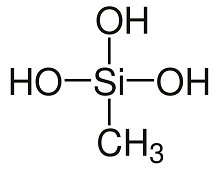 would provide a soluble silicon, containing a methyl group like in other molecules found in living organisms (i.e.: «organic»).
Organic silicon was actually invented and synthesized in the late 1950s. It has generated a lot of discussion and led to significant controversies. Presented by some as a nearly «miraculous» remedy and by others as a baseless scam, this product has been taken up by many manufacturers and sellers, sometimes unfortunately without scruples. Nevertheless, it must be acknowledged that a large number of people have used it and continue to use it with good results for joint and tendon issues, atherosclerosis, and to improve the quality of skin, nails, and hair... In our medical practice, we have often observed its results, regardless of its actual mode of action.
MMST can be found in the sap of plants and on grains of sand (produced by microorganisms), but its identification is not easy. Scientific studies on this molecule are few, as it has now fallen into the public domain, making it difficult to find investors to fund research.
Organic silicon is said to be perfectly assimilable by our body (as opposed to the silicon found in drinking water, which is of mineral origin). In addition to digestive assimilation, it would directly cross our mucous membranes and also penetrate through our skin. The aforementioned British study (7) shows an absorption rate of 64% for MMST (curiously the same as for non-alcoholic beer (!)). Other authors report absorption rates as high as 70%.
The virtues attributed to it would therefore be linked to this assimilation criterion, assuming that poor assimilation of silicon is more common than one might think. Its effects stem from the role of silicon in the body. It would therefore act on:
– the improvement of joint condition
– the protection of supporting tissues, tendons, and ligaments
– the tone and flexibility of the skin and hair
– the quality and flexibility of arterial and venous walls.
These are particularly common indications in anti-aging medicine.
Ultimately, the effectiveness of this product is therefore subject to controversy. Even some scientific studies contradict each other. While its use remains widespread, with many convinced of its benefits (including doctors and scientists), there are unfortunately few conclusive clinical studies to date.
Conclusion: which silicon to take?
If our body needs it (as with any essential nutrient), it may be reasonable to increase our intake of silicon. How to proceed in practice?
Plants rich in silica have been used for a very long time in traditional medicine for the indications mentioned above related to a lack of silicon. Even though the absorption of this trace element is relatively low in this form, this method has proven itself over time with plants like bamboo, horsetail, nettle, willow... Fossilized diatom shells provide several forms of silica and are transformed into orthosilicic acid after digestion. The necessary intakes being poorly defined, it is not said that a lot is needed for them to be effective.
The «organic silicon» synthetic form (which may seem paradoxical) is appealing due to its high absorption capacity and does not present potential toxicity. Although it is subject to controversy, one cannot deny the abundant testimonies and observations of results in medical practice. So, why not?
It should also be noted that organic silicon was the active ingredient in an injectable medication for a long time (and even reimbursed by social security): Conjonctyl°. It was widely used in mesotherapy.
If one decides to use organic silicon (or methylsilanetriol), it is important to stay away from snake oil salesmen, and to inquire about its origin and manufacturing quality. It is by no means a panacea, and it is wise to remain within the scope of conditions where it has proven effective in patients.
We will therefore remember that the supporting tissues of the body lose their silicon as they age, and that all means to recharge them are generally welcome.
If you are looking for
>>>
Bibliography:
(2) Creac’h P., Adrian J. : The silicon in the food chain and its location in the body. Med. Nut., 1990, 26 (2) : p. 76-84.
(3) Henrotte J.G., Viza D. et al : The regulatory role of the silicon in cell division. C. R. Acad. Sci. Paris, 1988, 306 : p. 525-528.
(4) Yokoi H., Enomoto S. : Effects of degree of polymerisation of silicic acid on the gastrointestinal absorption of silicate in rats. Chem Pharm Bull, 1979, 27 (8) : p. 1733-1739.
(5) Schwartz K. : Silicon, fiber and atherosclerosis. The Lancet, 1977, p. 454-456.



hello thank you again for this article; could you tell me if the dissolvurol drops 0.25% sold in pharmacies is the silicon you are talking about in your article. If so, at what dosage should it be taken
this is colloidal silica. it is yet another form. The dissolvurol laboratory states that it is very well absorbed by the body.
Silicon is not less well absorbed with aging, it is less well utilized by the body which is different. Silicon is used by the body in anabolic processes that are altered or even abolished with aging….To regain its role, one must use a plant-based silicon that contains remineralization cofactors…
Organic silicon is pure chemistry, no living organism links silicon to carbon! Silicon is a mineral of oxygen chemistry which gives it this very specific role.
Thank you for your relevant comment. It allowed me to deepen this article 😉 . I have added some bibliographic elements on this subject (studies). You are certainly right, the metabolism of silicon must be among the most altered with aging. Regarding organic silica, please note that I often use the conditional because indeed the studies are quite few and controversial. However, it cannot be overlooked. If you have studies on the decrease in the utilization of silicon with aging, please share them with us. It’s interesting.
Unfortunately, there are few studies on the causes of the decrease in physiological utilization of silicon during aging. However, all tissues with aging undergo a decrease in silicon levels, become rigid, and have a hydration deficit. Bone, cartilage, or blood vessels are spectacular examples. Simple additional intakes of silicic acid are not enough to reverse the situation. Silicic acid is undoubtedly the silicon of «youth» and with aging the response must be more subtle. It remains very bioavailable but is eliminated very quickly.
Chronic inflammation related to age likely plays a role as well as the decrease in growth factors. The silicon-zinc association seems a more suitable response, the source of plant-based silicon is then interesting.