


As we age, our body accumulates cells that have become «old» and are functioning poorly: the « senescent cells«. This is one of the major causes of aging and decreased performance. However, it may be possible to eliminate them for a rejuvenating effect…
Article updated on 01/08/2024
Research today shows us that’it is possible to reduce their number and thus achieve true rejuvenation of tissues and organs. This could also help prevent degenerative diseases and increase longevity… It could be one of’the main pathways to combat aging. Interesting if this is confirmed. This is what we will explore here.
Senescent cells in our organs
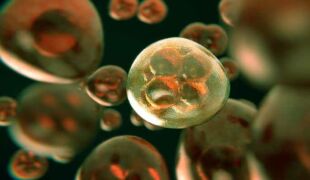
Our cells age at varying rates. Additionally, they can suffer damage to their DNA, or experience excessive physical or chemical stress. This normally leads them, over time, to stop dividing to renew themselves, and then to enter cell death through a kind of «cellular suicide» (called apoptosis). When they do not eliminate themselves in this way, the cells remain present in our tissues and organs but no longer function well: they are senescent cells.
In principle, the body knows how to eliminate these unwanted cells when they accumulate, thanks to its immune system but, with age, immunity weakens. The body then struggles to manage the process of «cellular senescence.» It becomes overwhelmed. It ages.
Characteristics of senescent cells
Senescent cells secrete substances that can be measured in the laboratory. They have markers that allow them to be identified. They are known to have certain characteristics:
- Their DNA shows abnormalities: it is more or less altered and the chromatin that gives it its structure also becomes abnormal. The telomeres of this DNA (see here) are often too short, which is indeed a well-known marker of aging.
- Their mitochondria* are deficient, and produce too many free radicals, an additional cause of accelerated aging.
- Senescent cells no longer respond to growth factors.
- They secrete substances that promote the’inflammation.
Effects of cellular senescence on our body
In fact, the accumulation of senescent cells in our tissues leads to the well-known effects of aging (detailed here). Thus, it has been shown, in mice, that the increase in senescent cells induces degenerative health disorders and, conversely, reducing their number improves this degeneration (for example, in osteoarthritis) and enhances longevity (1)(2).
When they are too numerous, senescent cells, which have become toxic to neighboring cells, unnecessarily clutter our tissues and make them less functional (they become «old»). In particular, these cells create an’inflammation, and the performance of our organs is affected. For example, aging skin loses its elasticity, tone, thickness, and radiance… largely due to the senescent cells that accumulate with age.
It has been found that the increase in the number of senescent cells is correlated with chronic diseases related to aging, and with a weakened immune system, unable to eliminate them properly.
In recent years, the study of cellular senescence has been increasingly talked about, as treating it with « senolytics« has allowed us to reverse various processes related to aging.
What is a senolytic or anti-senescent treatment?
A « senolytic » is a recent avenue for combating the effects of aging, as are the fight against oxidation or glycation, the protection of our telomeres or our DNA, the regeneration of cellular proteins through autophagy, the stimulation of stem cells, etc. This approach can even be classified among treatments capable of rejuvenating and reversing aging.
Today, we know several substances, chemical or natural, that can promote the elimination of senescent cells. In recent years, many scientists studying human aging have been increasingly focusing on these senolytics. There are two interesting pathways to date:
- making senescent cells active again
- restoring sufficient elimination of these old cells, for example by improving immune defenses.
Our immune system: the number one anti-senescent
This is shown by a study from the Weizmann Scientific Institute on mice. By promoting the accumulation of senescent cells, through weakening the immune system, the rate of age-related diseases increases. Then, by injecting a drug called ABT-737 (a senolytic), the treated mice show a marked improvement in their physical condition and performance.
 The study proves that the immune system plays a crucial role in the elimination of senescent cells, and that its degradation can lead to the development of age-related pathologies. It is also known that our defenses weaken with age, especially after 60.
It therefore appears that’improving our immunity is already a royal path to moving towards processes of natural rejuvenation of the body.
Studies have already shown the importance of immune defenses for longevity, and even for reversing aging, as discussed in this article where it talks about regenerating our thymus.
Furthermore, Ayurvedic medicine describes one of the major principles of health: «Ojas,» the essence of life present throughout our body, which gives it vitality. In its description, Ojas is closely linked to our immune system, and Ayurveda teaches us how to preserve it through traditional techniques that we now find in anti-aging medicine.
Thus, maintaining good immunity is one of the ways to improve longevity and delay the onset of age-related diseases.
Physically rejuvenated mice with senolytics

A study that promotes hair regrowth
Other researchers have been able to reverse the aging process in rodents by eliminating their senescent cells. The treated mice were able to run twice as far as the untreated mice, their fur regrew, they became more active, and their kidney function improved (see this 2017 study) .
The limitations of the study
This is intriguing! Here, these senescent cells were eliminated with an experimental drug (FOXO4-DRI) capable of «waking» them up and forcing them to destroy themselves through apoptosis (the famous cell suicide). However, since this is a synthetic compound from research, its use in humans remains uncertain.
As early as 2016, results had been obtained based on this principle of eliminating senescent cells with another synthetic molecule (see here), which allowed for a 20% increase in the lifespan of the mice. However, this result remains modest when we know that simple caloric restriction in mice can make them live 30 to 40% longer.
In contrast, the physical improvements, the regrowth of fur (which is a true effect of «rejuvenation») are impressive in this study, which caloric restriction did not demonstrate.
Since then, some are making plans for FOXO4-dri because, having shown no undesirable effects when applied to mice, it may be the most effective and least risky senolytic. This is a matter to follow…
Senolytics rejuvenate at least mice
Other researchers have used a senolytic treatment combining 2 products: the quercetin (a known antioxidant) and the dasatinib (a cancer drug). They were thus able to destroy senescent cells and reduce the inflammation they caused. The lifespan of rodents was increased by 36%, with fewer diseases (2) see the article in the journal Nature.
Towards a new anti-aging treatment?
It is exciting to see that the removal of these cells can reverse aging in several ways. We will need to see what the actual effects are in humans, and above all, the absence of undesirable side effects. In fact, the question is: how to eliminate these old, cumbersome cells through natural and health-respecting methods?
Let’s not get too carried away like some media that have already seen in these products a new remedy for hair regrowth. Even if we can think about it, that’s another story.
Reducing our senescent cells does indeed seem very promising, and various studies have shown a true rejuvenation of tissues that then regain better functions.
Interestingly, and even better: the previous study notes that the body's immune system's ability to eliminate its senescent cells comes from 30% of its innate genetics and 70% from environmental factors, which is lifestyle. So this gives us reason to pay particular attention to it.
 To be seen in humans…
 To be seen in humans…
As for treatments, their effectiveness and possible side effects still need to be evaluated in humans. This has already begun in this study. Although conducted on subjects with serious illness, the results would nonetheless be encouraging.
It seems that at an advanced age, up to 15% of our cells may become senescent, and that we should destroy about one third to achieve tangible results (6)
The rapamycin, known for extending lifespan and reducing the incidence of degenerative diseases in studies on mice, could prevent senescent cells from secreting their toxic substances (13). This substance has been extensively studied in anti-aging. However, it is an immunosuppressive drug that can lead to serious side effects.
Aside from experimental molecules and heavy medications, it is worth noting that’a treatment with metformin would have senolytic activity (3). It is an antidiabetic used for decades, with few undesirable effects, and recent studies have shown that it could improve longevity. Metformin works by neutralizing the toxic secretions of senescent cells but does not eliminate them.
What natural products are senolytic?
While we wait for the molecule capable of destroying our senescent cells without any danger or side effects to be discovered, we will focus on natural substances that have proven effective, as there are some.
Fisetin
Recently, researchers from the University of Minnesota and the Mayo Clinic found that a plant molecule present in many foods (including strawberries and certain algae) could improve longevity by helping the body eliminate its aged and damaged cells. This is fisetin, a member of the flavonol family (antioxidants), found in fruits and vegetables, and it is indeed a senolytic.
Scientists were able to treat aged mice, improve their health status, and extend their lifespan. The most interesting part is that these positive results were obtained on animals at the end of their lives. They did not need to be treated throughout their existence to achieve these longevity benefits. In other words: an even advanced state of aging can be improved in this way (in mice, at least).
It remains to be seen whether this result can be applied to humans, at what doses fisetin could reduce our senescent cells, and whether it does not cause undesirable effects (even if it is natural)…
A protocol has been established by the Mayo Clinic, tested in humans for several years. It involves monthly 3-day high-dose fisetin treatments over several months.
Quercetin
It has mainly been used in combination with dasatinib, but it has also shown an effect when used alone (5). It is a flavonoid antioxidant derived from plants (particularly apples, onions), commonly used as a dietary supplement.
It seems that a daily dose of 50mg/kilo of body weight in humans (about 3g/day) reproduces the same concentrations in tissues as those obtained in the mouse study, having a senolytic effect.
Quercetin is also known to protect against certain cardiovascular diseases (strokes, heart attacks…) (7) and reduce allergies.
Its action could be enhanced by resveratrol, which is known for its numerous anti-aging properties. (9)(8).
Other natural senolytic treatments
Among the few molecules for which senolytic activity has been demonstrated, piperlongumine (a molecule derived from long pepper) has the advantage of being very low in toxicity and easily absorbed through the digestive tract. It is capable of inducing apoptosis, meaning: forcing senescent cells to self-destruct.
The curcumin and similar molecules are also capable of this, according to some studies (11)(12).
The Japanese herb ashitaba traditionally used against hypertension and digestive disorders, would do the same.
Let us also note that the ’hydroxybutyrate, produced notably by our body during fasting or during a state of ketosis (achieved by restricting dietary carbohydrates), also has a senolytic effect (see the study).
Recently, the senolytic effect of the ’oxygen therapy hyperbaric (oxygen chambers) has been highlighted.
Know that the ’autophagy can stimulate the elimination of senescent cells (15), particularly through fasting, even short-term.
The stimulation of stem cells would also go in this direction. Everything is connected, in fact.
Finally, physical exercise can also have this senolytic effect. It would stimulate our immune system's ability to recognize and destroy senescent cells (14). In a study on mice fed a «fast-food» type diet, the accumulation of senescent cells is less significant when exercise is practiced (10).
In conclusion: first immunity
Eliminating senescent cells is very appealing. It is a path still little explored in anti-aging medicine but seems very interesting. Until now, the focus has mainly been on combating oxidation, chronic inflammation, glycation... stimulating our cellular regeneration mechanisms and energy production but not on eliminating these cells that make our body age and wear out.
The hunt for «zombie» cells is therefore open.
Experts in the field, such as Dr. Judith Campisi, explain, however, that senescent cells also seem to play a beneficial role when they are not too overwhelming, particularly in tissue healing, tumor reduction... The right measure would be, as always, to find a balance between «too much» and «not enough.».
While waiting for senolytic treatments, which would be specifically dedicated to «rejuvenation,», boosting one's immune defenses appears to be an excellent solution (see how Ayurvedic medicine proceeds here, or with adaptogens, or even with some hormesis techniques). We already know that the ’regular physical activity and fasting improve our immunity, and thus promote the elimination of excessive senescent cells. This is already a very good start.
After that, we can indeed consider using natural products as a complement, as mentioned earlier. This is a possibility that is already relevant because these substances are easy to find. As for their actual effectiveness for humans, we will certainly know more in the near future…


Try and perhaps adopt it
Can we already participate in an experimental test on rejuvenation, or
are we still in the theory phase, here in France?
Thank you for all your very interesting information.
Thank you for your interest. There are constantly researchers conducting all kinds of experiments, especially on animals.
If you are talking about new molecules or therapies under trial, there are sometimes options for humans (in this case, one must be in contact with the researchers). Now, it must be understood that these are treatments that apply to 1 process of aging (for example, senolytics here). Aging is more complex and multifactorial, and no treatment, to my knowledge, is capable of reversing it alone in humans.
That said, there are already many safe levers to use that can greatly improve aging, and which are described on this site. Stay healthy.
Lylia.
As a result, can this treatment also help couples who wish to have children after 45 years old, right?
Has the treatment already been tested on humans? Or are these just early studies to date?
Thank you
Hello. Yes, senolytic treatments have already been tested on humans. Saying that senolytics can help "older" couples have children is a bit hasty, and nothing proves it to my knowledge. But maybe… We can estimate that the improvement of functions should occur at the level of all tissues, including reproductive tissues. To be confirmed…
Darius
Malheureusement il y a bcp de subjectivité ds l interprétation des études qui présentent bcp de biais statistiques.
Highly specialized studies are completely incomprehensible even to doctors.
So let's wait to have some perspective without falling into interpretation.
You are right, especially when there are very few studies or when they are initiated by the one selling the product in question. That’s why I remain moderate and speak conditionally in this article.
After all, when a technique is natural, without side effects, and several studies show the same effect, there is no reason to deprive ourselves of it if it can do good (especially if it is also described in traditional medicines). Thank you for your input.
Okay, but intermittent over what period???
It says that survival is increased by 36% POST TREATMENT, which means they stopped the treatment at some point, so they were not administered it their whole life, right?
I don't necessarily know how to interpret a study, but that's how I interpret it.
As I specified, it is throughout their life. The details of the study are here: https://www.ncbi.nlm.nih.gov/pmc/articles/PMC6082705/ . Congratulations on your interest in science.
Thank you for providing me with the study, it's clearer that way 🙂
A priori what I understand is that only mice aged 24 to 27 months were administered until their death.
The 12-month-old mice were only administered for a short period if I'm not mistaken, it's in another study that the 12-month-old mice were administered.
In any case, it's interesting, I would have liked to see what it does on young mice with an age equivalent to 20 years in humans.
Thank you anyway for the link to the study 🙂
Hello,
Is it the total or residual lifespan that was increased for the Quercetin + Dystanib mice?
Thank you in advance
It’s the lifespan after taking the treatment, but the results are identical in older mice as in young mice where we artificially increased the senescent cells.
Okay, so it’s after a course, but in that case, were they administered throughout their life or just during a period?
Because otherwise it doesn't make sense that fasting mice lived so long since senescent cells accumulate throughout their lives 🤔
Yes, it is an intermittent treatment, so, in principle, throughout their lives. For more details, you can see the study here
Please do not stray too far from the 'basic layperson' with sometimes complicated articles that might discourage us, that would be a shame
Thank you for remaining accessible despite the complexity of the topics addressed (difficult, I admit)
In any case, your articles are always very interesting. Thank you
You are right, thank you. I have revised this article a bit for easier understanding by the layperson. Of course, I still need to include the scientific foundations that contribute to its credibility. The middle way ;-)