



Since 2009, vitamin D (cholecalciferol) has been in vogue. Studies highlight the importance of deficiencies, particularly in northern populations. At the same time, many doctors have started to prescribe it widely. Are we really in danger? Let's try to clarify: what are the facts?
Role of vitamin D for health
This vitamin (cholecalciferol) is fat-soluble. It dissolves in fats, not in water. Primarily, it regulates the metabolism of calcium and phosphorus: absorption in the intestine, bone fixation, blood levels, and renal elimination… These minerals are useful for proper mineralization of bones, cartilage, teeth, etc… On the other hand, their blood concentration is involved in numerous metabolisms, particularly neuromuscular. 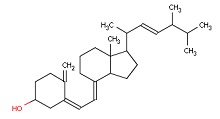
Vitamin D deficiencies can lead to bone decalcification, rickets, neuromuscular excitability disorders, tetany, spasmophilia… With age, and also menopause, vitamin D deficiency promotes osteoporosis.
It is only in the last twenty years that we have understood the multiple roles of cholecalciferol at the level of the cells in our body. They exceed the calcium metabolism that was known until now. Vitamin D also plays a role in:
- immune defenses
- thyroid function,
- blood pressure,
- the protection of neurons and atherosclerosis,
- insulin production…
It is often referred to as a hormone rather than a vitamin because:
- it is produced in the body (in the skin), from cholesterol like steroid hormones
- it must be activated in calcitriol to act on tissues
- there are specific receptors for calcitriol in the intestines, kidneys, bones, and other tissues, particularly to control calcium and phosphate levels.
Diet could cover one third of the needs but it is our skin that produces the largest part when exposed to daylight.
Few foods contain significant amounts of vitamin D. These are mainly fatty foods such as fatty sea fish (the famous cod liver oil). Vitamin D is also found in small amounts in meats, offal, mushrooms…
What scientific studies say
In some little sunny countries, Belgium, Sweden, Canada…, the lack of vitamin D would affect nearly 90% of the population. In theSuvimax study, it was observed that 74% of men and 78% of women had less than 31 ng/mL of Vitamin D, thus an insufficient level.
Recent studies show that a good level of vitamin D would decrease the risk of certain cancers and cardiovascular disease. Others emphasize that it would play a role in the prevention of diabetes, musculoskeletal diseases, autoimmune diseases…
Musculoskeletal diseases
A well-established scientific consensus affirms the beneficial effects of vitamin D on bone health and the prevention of rickets, osteomalacia, and osteoporosis. Numerous studies (thousands) confirm its essential role in calcium regulation and bone mineralization.
Immune function
Hundreds of studies support that vitamin D may have beneficial effects on the immune system, helping to reduce the risk ofrespiratory infections and modulating the inflammatory response.
There is also a growing interest in studying its potential role in the prevention of autoimmune diseases. For example, in multiple sclerosis (3). This area is still under exploration.
Cardiovascular diseases and vitamin D
The American Heart Association in 2009 shows that the risk of death from cardiovascular disease is correlated with vitamin D deficiencies with very low levels (below 15ng/ml of blood).
Vitamin D would protect againstatherosclerosis (1) and would be involved in the blood pressure (2).
Cancer and vitamin D
The WHO and the International Agency for Research on Cancer recognize that the link between cancer risk colorectal and vitamin D deficiency is well documented by numerous studies.
Many studies have also shown that sufficiently high blood levels of vitamin D reduce the risk of cancer colorectal but also of the breast, prostate… Similarly, a U.S. study from the National Cancer Institute shows that populations living in sunnier areas have a lower risk of prostate and breast cancer than others.
Another study has indeed demonstrated that taking 1100 IU of vitamin D per day for 4 years reduced the risk of cancer in 1180 postmenopausal women.
Other diseases related to vitamin D deficiency
The Canadian Pediatric Society states that "vitamin D deficiency is linked to theosteoporosis, to theasthma, to autoimmune diseases (such as rheumatoid arthritis, multiple sclerosis, and inflammatory bowel diseases), to diabetes, to a disruption of muscle function, to resistance to tuberculosis, and to the genesis of certain cancers.
It has been shown that vitamin D may also play a role in the modulation of autoimmune diseases such as multiple sclerosis (3).
Studies show that the risks of neurodegeneration (senile dementia, Parkinson's disease, Alzheimer's...) are higher in individuals deficient in vitamin D.
Controversies about its usefulness
Other scientists do not share the same opinion.
Dr. Sylvie Demers (« The myth of vitamin D – Restoring the truth about hormones ») believes that we focus on measuring the storage form of vitamin D (calcidiol) and not its active form (calcitriol), which would be more sensible and more significant according to her. She claims that deficiencies in active vitamin D are actually rare and that the studies are mostly observational studies and not clinical studies, thus providing little scientific evidence.
Some studies are contradictory regarding the protective effect of vitamin D and sometimes show no benefit at all (6)(7). However, they are few in number and mainly concern the cardiovascular field and cancer.
It has also been demonstrated conversely that very high levels this vitamin would promote the onset of prostate cancer.
It's difficult to say to what extent these claims are relevant or not. Nevertheless, the results of studies, in general, should be taken with caution. In particular, observational studies can be biased. For example: who says that subjects deficient in vitamin D are not generally deficient in other essential vitamins or nutrients? Could the health problems mentioned also be related to these other deficiencies, or to other correlated factors?
In any case, noting levels that are too low of vitamin D is always interesting.
Sun and vitamin D
 Let us remember that vitamin D is primarily produced from our cholesterol, in the skin, under the effect of UV rays from the sun. The summer-only exposure of many of us creates a small stock, depleted after 1 or 2 months.
Moreover, anti-sun campaigns teach us about the risks of excessive sun exposure and encourage us to hide from it. The problem is that there is a world of difference between spending hours by the water in the middle of summer and regular exposure of a few dozen minutes throughout the year. Let's not swing from one extreme to the other.
It is clear that today (and even more so in Nordic countries) the exposure of our skin to the sun is no longer what it has been for humans for millennia.
The ancestral man did not lack vitamin D. He did not lie in the sun for hours in August but lived mostly undressed, even nearly nude. He spent most of his time outside where he was more or less exposed to UV depending on whether he was in the forest or not.
One minute of full body exposure to the sun equates to a synthesis of 1000 IU of vitamin D. This shows how important this production is.
In practice, 15 minutes of exposure to sunlight on a part of the body, 2 to 3 times a week, would be enough to meet our needs for clear skin (a bit more is needed for darker or black skin). Let's stop demonizing the sun and exaggerating its harms. At these doses, it is beneficial. We must clearly differentiate this from the real excesses due to certain climatic conditions or vacations at the beach or in the snow.
So, when should we take vitamin D?
What is the right level of vitamin D?
There is no real consensus on optimal blood levels. Opinions differ on the type of dosage. In functional medicine, it is commonly said that levels would be too low below 60 ng/ml of blood, whereas classically the norm would be just above 30 ng/ml.
A meta-analysis on vitamin D (Garland 2007) shows that above 52 ng/ml the risk of cancer is reduced by 50%.
When and at what doses?
As in all medical fields where studies may contradict each other, we recommend returning to safe values:
- first, we must respect nature and a healthy lifestyle, particularly with outdoor activities,
- when we strongly suspect a deficiency (according to symptoms such as decalcification, hypothyroidism, tetany, osteoporosis, spasmophilia, etc…) or when it has been confirmed through repeated blood tests, it is legitimate to supplement with vitamin D,
- we will consider this when the diet is very low in animal fats, and especially in individuals little or not exposed to sunlight (especially in winter and in cold countries). Note that aged skin synthesizes vitamin D more slowly.
We can eventually consider the risks of developing diabetes, cancers, and cardiovascular diseases (family history, previous conditions, environment…). That said, systematically taking vitamin D3 to prevent cancer, myocardial infarction, or the flu… is absurd if one does not check for a deficiency beforehand.
The risks of overdose calciferol are low (only above 30,000 to 40,000 IU per day over long periods). However, we do not really know the effects of high levels in the very long term. So let’s remain moderate.

Recommended daily intakes (RDI – DRV)
Although they have been revised upward three times (0.015 mg instead of 0.005 mg in 2016), these recommended daily amounts seem still well below reality for some scientists and doctors.
Researchers from the University of California believe that the amount of 400 IU per day (recommended in France not so long ago) was largely underestimated. Prof. C. Garland (California) even thinks that the daily dose of 4000 to 8000 IU would reduce the risks of diseases such as multiple sclerosis, diabetes, and certain cancers by half. It is common to recommend 6000 to even 10000 IU/day in functional medicine. These are opinions among others.
Sources of vitamin D intake are quite rare (especially fatty fish, butter, animal liver…) and the amounts of vitamin absorbed are low. The sun would therefore be, in a way, our most reliable source of vitamin D, natural and free.
Here are the recommended intakes in Europe in 2017 (1 µg = 40 IU):
|
Age group |
Recommended intakes (µg/day) |
| Children 1-3 years |
10 |
|
Children 4-12 years |
5 |
|
Adolescents 13-19 years |
5 |
|
Adults |
15 µg (or 600 IU) |
|
Elderly people |
10 |
|
Pregnant and breastfeeding women |
10 |
Food sources of vitamin D
| Main sources of vitamin D per 100g (calculated in mg) | |
| Cod liver oil | 250 |
| Cod liver, raw | 100 |
| Smoked cod eggs | 27,2 |
| Smoked herring, natural | 22 |
| Baked trout | 15 |
| Soft cheese | 15 |
| Fried mackerel | 12,3 |
| Grilled sardine | 12,3 |
| Grilled/pan-fried herring | 10,8 |
| Sardine in oil | 10,8 |
| Salmon, steamed | 8,7 |
| Mackerel, roasted/baked | 7,72 |
| Mackerel, marinated | 7,3 |
| Smoked salmon | 5,45 |
| Mushroom, chanterelle or girolle | 5,3 |
| Farmed trout, smoked | 5,2 |
| Tuna, in its natural state | 5,08 |
| Duck, turkey or chicken fat | 4,8 |
| Salted anchovies (anchovy paste, semi-preserve) | 4,6 |
| Cooked fish (average food) | 3,54 |
Source: https://ciqual.anses.fr
Conclusion: the middle way again and always
Blaming a possible lack of vitamin D for all ailments is, of course, exaggerated even if this vitamin is involved in many functions of the body. Dismissing its supplementation as a fad is equally absurd.
It is therefore appropriate to not underestimate this deficiency and to verify it. One must evaluate and monitor the effects on the symptoms experienced: is there improvement or not? Medicine and health are not reduced to numbers. We treat a person as a whole and their condition, above all.
Finally, in the face of sometimes contradictory studies, it is advisable to refrain from any dogmatic behavior, to be open to the fact that each person is unique in their health status and functioning, and that the "norms" in dosing as well as in administered quantities are more variable than one might think.
References
- Latic N, Erben RG. Vitamin D and Cardiovascular Disease, with
Emphasis on Hypertension, Atherosclerosis, and Heart Failure. Int J Mol
Sci. 2020 Sep 4;21(18):6483. doi: 10.3390/ijms21186483. PMID: 32899880;
PMCID: PMC7555466. - McMullan CJ, Borgi L, Curhan GC, Fisher N, Forman JP. The effect of vitamin D on renin-angiotensin system activation and blood pressure: a randomized control trial. J Hypertens. 2017 Apr;35(4):822-829. doi: 10.1097/HJH.0000000000001220. PMID: 28033130; PMCID: PMC5893307.
- Galoppin M, Kari S, Soldati S, Pal A, Rival M, Engelhardt B, Astier A, Thouvenot E. Full spectrum of vitamin D immunomodulation in multiple sclerosis: mechanisms and therapeutic implications. Brain Commun. 2022 Jun 30;4(4):fcac171. doi: 10.1093/braincomms/fcac171. PMID: 35813882; PMCID: PMC9260308.
- Constans T, Mondon K, Annweiler C, Hommet C. – Vitamin D and cognition in the elderly. Psychol Neuropsychiatr Vieil. 2010 Dec;8(4):255-62. Review. French. PubMed PMID: 21147664
- J.Yves Dionne: The benefits of vitamin D, a myth?
- Bolland MJ, Avenell A, Grey A. Should adults take vitamin D supplements to prevent disease? BMJ 2016;355:i6201
- Theodoratou E, Tzoulaki I, Zgaga L et al. Vitamin D and multiple health outcomes: umbrella review of systematic reviews and meta-analyses of observational studies and randomized trials. BMJ 2014 ; 348 doi: http://dx.doi.org/10.1136/bmj.g2035
- Kara J. Pepper, Suzanne E. Judd, Mark S. Nanes, Vin Tangpricha – Endocr Pract. Author manuscript; available in PMC 2009 May 18. Published in final edited form as: Endocr Pract. 2009; 15(2): 95–103. doi: 10.4158/EP.15.2.95 – EVALUATION OF VITAMIN D REPLETION REGIMENS TO CORRECT VITAMIN D STATUS IN ADULTS


Vitamin D is mainly formed when we expose our body to the sun (of course without excess and with good sun protection). Vitamin D is essential for bone mineralization and growth; this vitamin helps to fix calcium in the bones.
It is important to have a healthy life by choosing a light diet but rich in fruits and vegetables, fatty fish (salmon, tuna, sardines), carrot juice, and especially to get fresh air regularly.
It is also important to be active, which is good for the bones and helps maintain tone.
Hello, regarding sun exposure, is 15 minutes enough to trigger pigmentation spots? I've always had issues with that, so I only go out very covered, which is very detrimental, I am aware of that :/ and is sunscreen on the face a problem? Thank you
Pigmentation spots do not appear in 15 minutes but over the years and with theaccumulation of UV exposure. The face and hands are exposed much more than the rest of the body, so they are more affected. Some skin types also pigment more than others. It makes sense to protect sun-exposed areas that are pigmented, but one can still expose (without excess, of course) the rest of the body. Sunscreen is only a problem when it contains substances that have health repercussions (like allergens or endocrine disruptors, etc...).
For personal but medical reasons, I take 80,000 units of vitamin D every 2 months. I have read several times in publications that it is better to absorb daily doses of vitamin D through supplementation instead of large doses like I am currently doing. What do you think?
It's true, normally vitamin D is provided daily through diet. The ideal, to respect the laws of nature, would indeed be to take it regularly. That being said, the body knows how to store it, but be careful of overload.