


If you want to cook and prepare certain foods, you know that you should cook without excess and at low temperatures.
But you also need to pay attention to the oils you use so as not to harm your health.
Cooking oil and smoke point
Imagine yourself in the cooking oil aisle of the supermarket, with an almost infinite choice. A recurring mention catches your attention: «high smoke point.».
Not one to trust labels, you connect your smartphone to the Cleveland Clinic website and read: «an oil heated above its smoke point produces toxic fumes and harmful free radicals.».
The message is clear: we avoid dangerous molecules by choosing the highest smoke point possible.
In fact, this logic doesn't hold up. Oils with high smoke points are advertised as very healthy, but shouldn't we ask more relevant questions when choosing our cooking oils?
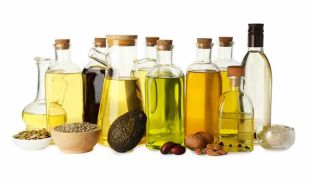
Opinions differ on oils with the highest smoke point, but it can be observed that refined oils always have higher smoke points than their unrefined counterparts. These refined oils sold under the label «high smoke point» are: avocado, grape seed, canola, coconut, peanut, safflower, sesame, soybean, and sunflower.
Choosing your oil: virgin or refined?
Someone refined is elegant, cultured, and even respectable, but do refined oils deserve the same respect?
Refining an oil involves the use of hexane solvents, high temperatures (180 to 220 °C), bleaching, and deodorization. All of this is not very healthy, especially the residues of hexane, trans fats, and the destruction of polyunsaturated fatty acids by heat.
There are three types of fatty acids:
- saturated,
- monounsaturated
- polyunsaturated.
Most fatty foods contain all three but are richer in one of the three. Butter and coconut, for example, are mostly saturated. Olive and avocado oils are primarily monounsaturated. Seed oils, including corn, grape seed, soybean, and sunflower, are primarily polyunsaturated. When heated, they become chemically unstable and then degrade, leading to oxidation and a chain production of free radicals.
In other words, refining oils, despite the increase in the smoke point that results, severely denatures its polyunsaturated fatty acids.
Moreover, oxidative damage occurs during cooking, even when oils are heated below their smoke points. The chain production of free radicals follows, promoting inflammation and various degenerative diseases.
Omega 6 and cooking: the road to inflammation
 You may know that some scientists are working on a unified field theory of physics, a theory to explain everything. But did you know that medicine has its own unified field theory? Increasingly, scientists recognize inflammation as the common thread linking almost all diseases.
In 2003, the American Heart Association and the Centers for Disease Control published a historic statement saying that heart diseases primarily stem from inflammation. It is interesting to note that some polyunsaturated fatty acids are significant sources of inflammation.
There are two varieties: omega 6 and omega 3, known as «essential fatty acids,» meaning they are indispensable to our body. We need them on our plate but in small quantities. The Omega-3 fatty acids reduce inflammation, but excess omega-6 is increasingly recognized as a primary factor in the inflammation of heart diseases, cancer, and other degenerative diseases.
Let’s return to our oils with a high smoke point, mentioned earlier. We see that many are rich in omega-6. This mention of the beneficial smoke point raises many questions. Should we eat foods rich in omega-6? Should we consume polyunsaturated fatty acids that have been heated? Is high-temperature cooking really necessary?
Source
|
Saturated
|
Monounsaturated.
|
omega-6 |
omega-3 |
| Safflower Grapeseed Sunflower But Soybean Sesame Peanut Hemp Avocado Olive Coconut |
7 10 11 14 16 15 18 8 12 15 92 |
15 17 20 29 24 41 48 64 74 76 6 |
78.4 73 68 56 53 43 34 19 13 8 2 |
0 0 0 1.2 7.1 0.3 0 9.4 1 1 0 |
The right choice
Fat is an essential nutrient (lipid) but it provides 9 calories per gram, compared to 4 for proteins or carbohydrates, so we need to be careful and we should choose the healthiest oils and consume them raw or lightly heated. A large portion should be given to saturated and monounsaturated fats.
 Thus, for cooking (always at low temperatures), I use saturated fats that are stable at heat, mainly butter and virgin coconut oil.
Of course, it has long been said that saturated fats promote heart disease, but modern science increasingly shows that this is not the case (beyond major excesses, of course). On the other hand, replacing saturated fats with omega-6 rich fats actually increases the risk of cardiovascular diseases.
For my part, I enjoy regularly eating steamed foods with generous amounts of healthy fat (rich in omega 3), added after cooking. My main sources of fats include coconut, butter, olive oil, avocados, and quality dairy products. de qualité fermentés (yogourt et kéfir).
À mon avis, la mention du point de fumée sur les huiles donne l’impression au consommateur que les graisses poly-insaturées raffinées sont saines, et qu’une alimentation riche en oméga-6 est facteur de bonne santé. La science suggère tout simplement le contraire Nous sommes en général excédentaires en omega 6 qui favorisent l’inflammation, contrairement aux oméga 3.
Peut-on utiliser l’huile d’avocat pour cuisiner ? merci :-)
oui cette huile est censée supporter les températures de cuisson. Sans fumée bien entendu
Hello,
Avant tout, merci pour la qualité de vos articles ! Ils entraînent cependant une demande de précision de ma part. Vous dites – quelque part sur le site…! – que seules les huiles de coco et d’olive peuvent être utilisées pour la cuisson. Habituellement, on parle aussi des huiles de pépin de raison et surtout de tournesol. Maintenez-vous votre position ?
Merci du temps que vous consacrerez à une réponse; bonne réception,
Olivier Francou
C’est assez simple. La plupart des autres huiles végétales (comme pépins de raisin, tournesol, noix, noisette, colza, etc…) sont riches en oméga 6 et plus ou moins riches en oméga 3 (à condition d’être pressées à froid et vierges). Oméga 3 et 6 sont des acides gras insaturés essentiels. C’est donc un apport d’oméga 3 intéressant si vous les ajoutez crues sur vos légumes par exemple. Si vous les chauffez au delà de 100-120° vous transformez ces acides gras essentiels en acides gras hydrogénés qui sont mauvais pour la santé. Ainsi, si vous voulez cuire avec du gras, il vaut mieux utiliser olive, coco, beurre (ou ghee) ou graisse animale qui sont surtout constituées d’acides gras saturés (stables à la cuisson).
S’il faut bien sûr éviter l’excès de ces graisses saturées, elles ne sont pas mauvaises pour la santé et il nous en faut.
Mon conseil, cuisez si possible à faible température, faites frire peu souvent, et ajoutez les bonnes huiles riches en oméga 3 sur vos plats, avant de les manger, sans les chauffer.
Et merci pour votre appréciation.
Hello,
Intéressant article, toutefois il manque une colonne de chiffre dans le tableau des huiles qui du coup n’est plus lisible :-/
nous avons bien 4 colonnes de chiffres. quel est votre navigateur svp si vous ne les voyez pas ?
A priori elles s’affichent aussi sur un écran de téléphone.