


We present to you THE longevity or super-shape diet? In fact, it does not exist. Certainly, there are some fundamental principles, but "eating well" means eating right, that is to say what is right for your body, for YOU. So it's up to you to search a little, and with our help, to find…
More and more of us are interested in what we eat, to achieve the best possible health. Problems and misunderstandings arise when we notice that according to authors, even according to scientists, recommendations diverge. Let's try to simplify things and see more clearly, with a bit of common sense.
Longevity diets… and trends
Cretan, Okinawan, Mediterranean, ketogenic, paleolithic, vegan, raw food, low-carb, gluten-free, fruitarian, vegetarian, pescatarian, SCD (specific carbohydrate diet), etc… are often presented as THE right diet to be fit and stay that way for a long time. They often lead to more or less trendy effects. They have common points but they cannot suit everyone. We do not live in the same places, the same environments. We do not all function the same way, it is evident.
These diets can have remarkable effects on certain people for various reasons:
- They generally allow those who adopt them to break away from unhealthy modern Western diets and their "junk foods" (sweets, "trans" fats, sodas, overly refined products, ready-made meals...), and to reduce processed products from the food industry that are loaded with more or less toxic substances.
- They are often accompanied by parallel changes, moving towards a better lifestyle and higher quality foods. Indeed, those who decide to change their eating habits are often taking charge of their health and generally seek to improve their way of life.
- They frequently lead to a overall reduction in caloric intake. Thus, a lighter diet is more digestible and healthier.
However, in the long term, they can sometimes lead to poor states of fitness and health if they are not suited to the individual.
It is important to position more specific regimens like the ketogenic, the SCD, the Fodmap… rather as temporary diets in the context of treating certain health disorders, or for individuals with particular genetics and activity. The universal (or almost) foundations of a good diet
There is great interest in comparing the diets of regions where centenarians are numerous (the famous
 blue zones ) and the diets presented by their proponents as the way to follow for thriving health. One can thus discern common points, representing the foundations of a healthy diet. Here they are:light
- diet light and without excess. This would mean that our modern Western diet is too rich and too large in its quantities,
- a large part of vegetables,
- less grains and their derivatives,
- products that are low or processed foods, local and seasonal,
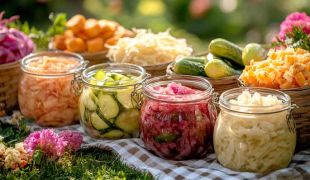
- products fermented,
- and of course, less sugars…
It is clear that for many of our fellow citizens, eating according to these principles will already bring a great improvement. These are general principles that you will find in more detail in this article: healthy eating.
In parentheses, one should not think that the long life observed in blue zones is solely due to diet. Their inhabitants lead peaceful lives, close to nature, remain active and useful for a long time, have good social relationships, and are inclined to help one another.
Eating according to one's constitution (or genes) to be fit
If we consider on one side traditional medicines and on the other the latest scientific discoveries, we can often find the same elements.
The concept of individual constitution Individuals are described in very ancient medicines such as Ayurvedic or Chinese medicine, as well as in naturopathy, homeopathy… Foods are recommended or discouraged for each person depending on whether they promote balance or bring imbalance to health.
A person's constitution is reflected in their physical traits, character, abilities or weaknesses, and their way of functioning. It is what they are at their core, since birth, and what they will always be. One can liken it to their genetics, of course.
Today, science has confirmed to us, for example, that some specific genes will allow some to digest lactose but not others. The same goes for the metabolism of sugars or saturated fats, which show great variations from one genetic type to another, with also different risks of diseases related to aging.
It is possible (but not always easy) to conduct genetic tests, and adjust one's diet according to the results. Thus, one should avoid dairy products if one does not have the lactose digestion gene, for example. Other genes like apoE or AMY1a are also interesting regarding the body's tolerance to saturated fats and carbohydrates.
 On this subject, Ayurvedic medicine is very clear: it classifies people according to their constitution and offers a choice of foods accordingly. It describes properties based on the character of foods, particularly their taste, which can balance or not the constitution of each individual. It is therefore quite easy to understand and follow (without making it an obsession, of course). In practice, those who adhere to these principles generally feel much better.
A very simple example: people with an anabolic constitution (earth and water in Ayurveda) tend to be overweight. Heavy, dense, and sweet (sugary) foods should be avoided as they accentuate this tendency. Light, bitter, and acidic foods should be favored as they reverse it.
See here how to assess your constitution then you will find some general principles summarized below. Note that the preparation of foods is important, as is the way they are cooked and combined.
Catabolic constitution (Vata in Ayurveda)
 Spices like basil, coriander, pepper, ginger, cinnamon… can make foods more digestible for catabolic individuals.
Dry, cold, hard, and light foods are generally discouraged while the heavy and dense nature of foods is favorable.
The sweet (sugary) flavor is good for catabolic individuals in moderation (obviously no excessive refined sugars), as are salty and acidic flavors.
Vegetables are good for Vata but raw vegetables and green salads should be moderated. Cabbages can cause flatulence here.
Fruits, nuts, seeds and oilseeds, most whole grains and flours (except corn, buckwheat, and rye), vegetable oils… are beneficial. Dairy products (of good quality, organic, not cold, nor frozen) are fairly well tolerated by catabolic subjects.
Legumes are less well digested and can promote flatulence.
Metabolic constitution (Pitta for Ayurveda)
 Gentle cooking or steaming can make foods more digestible for metabolic individuals. Spices such as cardamom, turmeric, rosemary, coriander… are welcome.
Hot, fatty, and spicy foods are generally discouraged (fried foods), while the light and fresh nature of foods is favorable.
Vegetables in general (a little less so for red ones) are good here, especially green ones, raw or lightly cooked. Fruits are very good for metabolic individuals.
Bitter, sweet, and astringent flavors are favorable for Pitta.
It is preferable to limit vegetable oils except for coconut and hemp. Ghee is good too.
Anabolic constitution (Kapha for Ayurveda)
 Spices like pepper, chili, cumin, ginger… cooking can make dishes more digestible for anabolic individuals.
Heavy foods, rich in fats and sugars, are generally discouraged (as are white flours in general), while the light, low-density, spicy, and warm nature of foods is favorable.
Vegetables are good for Kapha, especially when warm and prepared with spices. Fruits should be consumed in moderation, except for citrus fruits which are well tolerated.
Grains should be strongly moderated (avoid refined, white flours), as they promote stagnation of lymph and clogging of mucous membranes in anabolic subjects.
Well-prepared legumes (soaking, cooking) are favorable but oilseeds are heavy for Kapha, to be limited.
To learn more about these constitutions and the hygiene-dietary advice for each, see this article.
Eating according to one's sensitivities
Evaluate the quality of your digestion of fats and carbohydrates (sugars, grains…) and find the right balance
Observe your digestion. How do you feel after meals rich in fats? Similarly, how do you feel after a meal rich in sugary foods or with a high glycemic index? Do you experience bloating that could be a fermentation of excess carbohydrates that are poorly digested, for example?
Next, make sure to respect your sensitivities and determine your overall amounts of fats and carbohydrates/grains that make you feel good. There is no one-size-fits-all rule; each person is unique.
In parallel, everyone can have intolerances (or classic allergies) to certain foods. Of course, these must be respected. These intolerances can be genetic (constitutional) like lactose intolerance, gluten intolerance, or milk casein allergy, etc. They can also be acquired over time, due to dietary mistakes, or a weakening digestion... Unlike the former, acquired intolerances can disappear if the causes are corrected, and after a period of avoiding the food for a few months.
Not everyone is necessarily subject to intolerances. Some foods are more often responsible for intolerances: gluten-containing grains, dairy products, certain nuts, egg whites, shellfish... See if some generally do not sit well in your meals. The search for food intolerances can also be done through a blood test (see this article).
Eating according to one's health
 Beyond genetics comes epigenetics: our habits and lifestyle will determine whether certain genes are expressed or not throughout our body. Similarly, these habits, if they are poor, can gradually degrade our health, and if they are good, can optimize it.
In general, people start paying attention to their diet when they have health issues or feel unwell. In this context, certain specific diets can be interesting to aid in healing (for example: hypotoxic diet, ketogenic diet, SCD, Fodmaps, avoidance of lectins, raw foodism, etc. Most often, they will be used for a given time, until health balance is restored, then stopped in favor of a long-term, healthy diet adapted to the individual.
The so-called "hypotoxic" diet of Pr Jean Seignalet, and its variants, have shown very beneficial effects in diabetes, joint problems, autoimmune diseases…
Going a little further, the avoidance of lectins, including the gluten and thewheat agglutinin are part of (see this article), is also proposed to treat chronic health disorders such as certain rheumatism, cardiovascular issues, diabetes, autoimmune diseases… although there are still controversies about this, the scientific arguments are interesting, and many patients report very favorable effects on their health by limiting lectins.
Once balance is restored, a healthy diet will take over. However, some individuals with a high sensitivity to certain foods rich in lectins will need to continue avoiding them.
Diet and longevity in practice
- Adopt the foundations of a healthy diet
- Favor foods that balance your constitution
- Evaluate the quality of your digestion of fats and carbohydrates, and find the right measure
- Identify your sensitivities to certain foods, and avoid them (at least for a few months).
Finally, always remember that without good digestion, even a perfect diet won't solve everything. Therefore, it is important to maintain (or regain) effective digestion (see " how poor digestion can affect ageing).
Salut bro, le bon sens évidemment, comme dab’. Je rajouterais la nécessité d’une denture en bon état et l’importance d’une mastication suffisante et efficace. (broyage+salivation) Beaucoup « engloutissent » le bol alimentaire; sa digestibilité s’en trouve affectée.
Oui bien sûr. Dans tous les cas, une bonne mastication favorise la digestion et donc l’assimilation, sans gaspiller trop d’énergie. Je le dis régulièrement mais pas dans cet article qui est plutôt axé sur le choix des « bons aliments » pour chaque cas. merci pour le commentaire.
Finally!! Everything becomes clearer with this blog. I was completely lost with all these diets. I understand how I should proceed now. A big thank you, doctor
Clear, simple, and concise article. Congratulations! This is all common sense. Why don't we read these arguments more often?
Thank you very much. You can find these arguments being used more and more often nowadays. After that, I only make a synthesis that seems logical to me. And above all, I must say that I like to avoid dogmas ;-)