

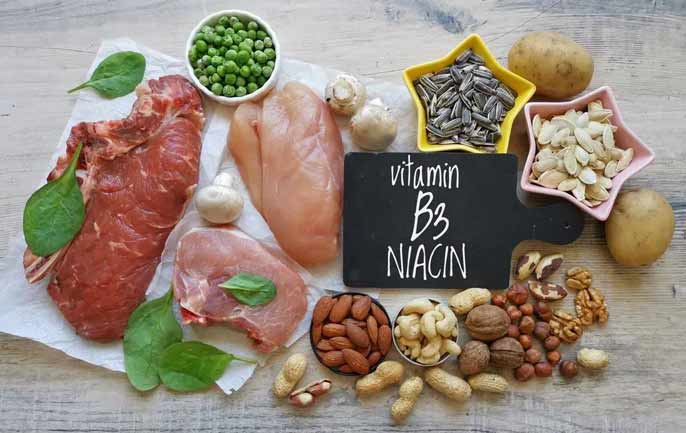
NAD+ is a central molecule in our cellular energy production, and it decreases with age. In longevity medicine, raising NAD+ levels would be one way to maintain good cellular energy production. Several products (often expensive) are promoted in this regard, such as NMN and NR.
A recent study published in Nature Metabolism earlier this year provides interesting insights into the comparative effectiveness of these main NAD⁺ precursors: nicotinamide riboside (NR), nicotinamide mononucleotide (NMN), and also plain nicotinamide (the classic form of vitamin B3).
These molecules are widely used in anti-aging strategies aimed at supporting cellular NAD⁺ levels, a key cofactor in energy metabolism and longevity.
A study comparing the 3 molecules
In this controlled trial conducted on healthy adults, researchers compared the impact of these three forms on the blood levels of NAD⁺. Unsurprisingly, NR and NMN showed a significant and sustained increase in circulating NAD⁺ after two weeks of supplementation. In contrast, nicotinamide did not lead to a notable elevation in the medium term, despite a transient effect observed in the hours following intake.
However, a detailed analysis brings a major nuance. The authors highlight a central role of the gut microbiota: NR and NMN would largely be converted into niacin (the other form of vitamin B3) by gut bacteria before being used to produce NAD⁺. In other words, a significant part of the observed effect may not be directly related to the administered molecule but to its conversion into a simpler form of vitamin B3.
This observation raises an important question: are expensive forms like NMN or NR really necessary? In practice, niacin (nicotinic acid), available at low cost, could play an equivalent role in increasing NAD⁺, provided it is properly metabolized. This aligns with older data showing that classic vitamin B3 is an effective precursor of NAD⁺, although sometimes limited by side effects such as flushing or temporary skin redness.
Nicotinamide, for its part, seems less effective in the long term, possibly due to negative feedback on certain key enzymes like sirtuins. This could explain why its effect remains transient despite good bioavailability.
What to understand in practice?
In practice, this study invites a reconsideration of certain supplementation strategies. Rather than systematically favoring innovative and expensive molecules, the reasoned use of simpler forms of vitamin B3 could represent a relevant alternative, particularly in a functional approach that integrates the microbiota. Note that the niacinamide form has very little flushing effect.
The limitations of the study
However, there are still significant limitations: the duration of the study is short, it concerns relatively young adults, and the measurements concern circulating NAD⁺ in the blood, not in the cells, and long-term clinical effects are not evaluated.
Additionally, further work will be necessary to clarify the respective roles of each precursor in anti-aging strategies.
The takeaway
In the meantime, this publication counters earlier publications. It reminds us of a fundamental principle in medicine: sophisticated (and therefore expensive) products are not always clinically superior.
Don't rush to the latest trendy dietary supplement following a study showing positive results. There are many parameters at play, including age, even gender, nutritional status, how the supplements are taken, etc.
On the other hand, it seems that the use of vitamin B3, in combination with other supplements including some antioxidants, may yield more effective results at a lower cost.
To learn more about vitamin B3 and NAD+ booster, see this article.
Can we transmute our gray hair back to our natural color?
Thank you very much, doctor
To date, hypotheses have been proposed to prevent hair graying, such as antioxidant treatments, but nothing that truly promises this result, unfortunately.
Best regards
I take high doses of vitamin B3 with quercetin and antioxidants. It works well for me, at a modest cost. I can exercise without being exhausted like before. Thank you, doctor.