


Dr. Dominique Rueff is renowned for his knowledge of immuno-nutrition. He has written about food intolerances and the harmful inflammatory reactions caused by non-tolerated foods, starting from our intestines.
Gluten found in many foods is among the most concerning. Here’s how to enjoy gluten-free.
The long list of forbidden foods
Gluten is found in cereals: wheat, oats, barley, rye, mainly, which we remember thanks to the trick of the hoof. The letters of the word hoof correspond to the first letter of the names of the most common gluten-rich cereals:
S: Rye
A: Oats
B: Wheat
O: Barley
T: Triticale (a hybrid of rye and wheat).
The complete list of cereals containing gluten can be found in chapter 3 of Julien Venesson's book. Therefore, you will find gluten in bread, flour, biscuits, cakes, pastries, pasta, hamburgers, pizzas, breaded meat and fish, potato croquettes, sausages, sauces, bouillon cubes, seasonings, malt vinegar, but also in preparations and thickeners containing flour or starch (which is almost always the case).
 In practice, you will therefore be required not only to avoid the foods mentioned above but also to give up prepared dishes and canned vegetables, which almost always contain gluten or traces of gluten.
Regarding the foods to avoid, there are so many that an anxious question arises: «But what will I eat then?».
How to enjoy gluten-free
It’s very simple! Caviar, foie gras, lobster, smoked salmon, and shellfish at every meal! All washed down with Champagne or a good Château-Lafite.
No, I’m joking of course. But it was to emphasize an essential point: the most delicious, refined, and flavorful foods usually do not contain gluten. This is the excellent news that will hopefully encourage as many people as possible to try, at least for a time (12 weeks), the gluten-free diet to see if their health and energy levels improve (which will happen in many cases).
When you think about it, flour and starch have no taste. Foods rich in gluten don’t have much taste either. What gives them flavor is the sugar added and the toasted flavor obtained by cooking them (the crust of bread, pastries, caramelization…). But if you have followed my recent letter on aging, you know that this toasted flavor is a sign of the presence of glycated proteins, which are very harmful to health because they age the skin, arteries, and vital organs (eyes, kidneys, etc.).
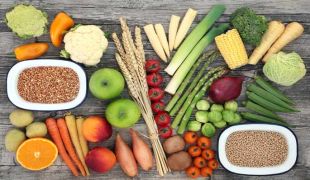
 Eating gluten-free means consuming fresh fruits and vegetables, meats, artisanal charcuterie (many industrial charcuteries and prepared dishes also contain gluten!), eggs, fish and seafood, oils, legumes, dried fruits and nuts of all kinds (walnuts, hazelnuts, almonds, Brazil nuts…), butter, cheese, peanuts if you are not allergic.
Of course, you are probably used to consuming all these products accompanied by gluten-containing products. But believe me, from my experience, one can very well adapt to eating meat accompanied by a green salad or green beans instead of pasta, or cheese and charcuterie without bread.
On the other hand, there are still several gluten-free foods that are rich in carbohydrates and therefore filling, to accompany your meals if you are really starving: potatoes, rice, corn, etc., which I do not recommend, however, because their glycemic index is generally high (eating them is almost like biting into pieces of sugar as they quickly turn into glucose in your stomach, raising your blood sugar levels). If you consume them, prefer semi-complete basmati rice, sweet potatoes, and buckwheat, which are interesting foods if you engage in regular physical activity.
You also have a whole range of unusual food products, which are mainly sold to people eating gluten-free: quinoa, millet, soy-based products for the most common.
But be careful, do not fall into the common trap of wanting to replace your bread with gluten-free bread, your pasta with gluten-free pasta, your pastries with gluten-free pastries, etc.
A regrettable, frequent, and costly mistake
It is indeed a very common mistake made by beginners on the gluten-free diet. Gluten, as mentioned, is a protein that allows breads, brioche, and cakes to have a soft, puffy, and crispy appearance. It is thanks to gluten that bread is enjoyable to eat.
Gluten-free bread, pastries, and cookies are now sold commercially, but they are very poor quality and horrifically expensive. For me, it borders on a scam. When you start a gluten-free diet, the first step is simply to convince yourself, as I tried to do in the previous section, that you do not need bread, pasta, cakes, and cookies to live.
Foods rich in essential nutrients, good for health and tasty, are mostly gluten-free anyway. It is true that we have a habit, deeply rooted for generations, of always having gluten on our table. But the fact is that it is absolutely not necessary. Eating gluten-free is therefore primarily a matter of psychological adjustment, a change in the way of viewing life and nutrition.
The proof: many of you are convinced that the best breakfast (in taste) consists of eating pastries with coffee with milk, or cereals with orange juice and a bowl of chocolate milk for the children.
And you will enjoy much more, and feel much better, and so will your children, if you choose instead to prepare a beautiful platter for your breakfast with:
half an avocado with olive oil, lemon juice, salt, and pepper (if you are not afraid of calories): two soft-boiled eggs; a banana, an apple, or an orange; a green tea that you complement with nuts, almonds, hazelnuts, and prunes or dark chocolate if you are still hungry.
 As for me, I go even further with unusual foods (in France) for breakfast because I also regularly eat for breakfast:
a well-seasoned sliced tomato, with mozzarella, basil, canola oil, olive oil, and apple cider vinegar,
– olives
– a slice of cured ham
– smoked fish (herring, mackerel, etc.)
– a spoonful of honey
– eggplants or peppers in oil
– an omelet with mushrooms, onions, bacon, peppers…
All this to say that, when you start eating gluten-free, the first thing you will notice (besides feeling better, most likely) is that you will eat much more varied and flavorful foods.
Finally, let's not forget that «eating gluten-free,» if your intolerance test indicates that you are hypersensitive to it, is only part of the journey towards health. There's no need to replace gluten-free foods with others containing eggs or dairy if you are also hypersensitive to those.
In this case, nothing is better than following the advice given to you after your test results.
For more information:
– read the book IMMUNOMINCEUR by Dr. Rueff, published by Josette Lyon
– visit the website immunosante.fr (source of the article)


Leave A Comment