


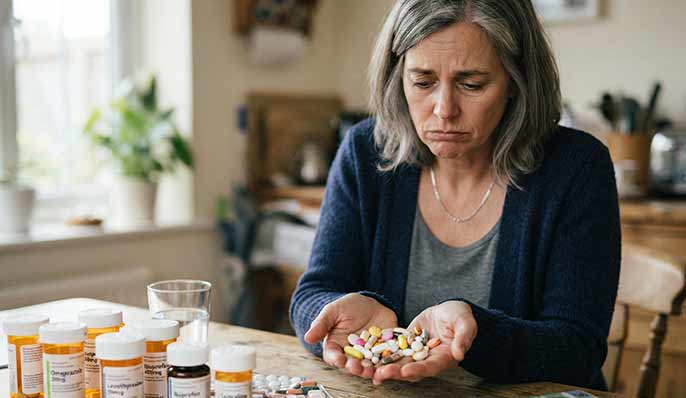
The dosage of a dietary supplement is as important as its choice. Too much or too little, and the effect is not achieved, or even sometimes reversed. For substances that have been used for decades or are traditional, we know quite well the useful doses, which can be adjusted according to each person. However, we cannot always say the same for new products that regularly appear on the longevity market. You will see contradictory studies and learn how to choose your supplements wisely.
These products sometimes create trends and more or less justified anti-aging care protocols. It is not uncommon to see the recommended dose increase or decrease significantly after a few years of use.
To the question of whether we can trust the recommended doses, I respond immediately: not always. First, I take the example of these numerous products called «anti-fatigue,» «energizing,» or «multivitamins» with impressive marketing, whose content of certain minerals or vitamins or antioxidants is well below effective doses.
Next, here is a very interesting example with spermidine, which has been widely discussed in recent years. On paper, it can slow down aging, stimulate the’autophagy, be antioxidant and much more… Various studies prove this, but can spermidine in capsules really be effective?
Spermidine, the promise of longevity
 Spermidine (a polyamine) is naturally produced in the human body and found in many foods such as fermented cheeses, mushrooms, legumes, certain cereals… It plays an important role in many metabolic processes, particularly in regulating cell growth and their division/reproduction. With age, spermidine levels in the body tend to decrease, correlating with certain aspects of aging and age-related diseases.
Scientific studies have shown that spermidine intake could help prevent or delay these diseases, although more research is still needed to confirm these benefits.
Absorbed spermidine is not found in the blood
A 2023 study (1) was conducted on 12 healthy volunteers, randomized in a triple-blind manner, against placebo. The dose of spermidine administered orally was 15 mg per day.
Blood and saliva samples were taken, where spermidine, spermine, and putrescine were measured. These 3 polyamines are present in every living cell and are essential for their functioning.
The results show that spermidine supplementation significantly increased the levels of spermine in plasma but did not affect the levels of spermidine (nor putrescine). As for saliva, no effect on polyamine levels was observed.
It therefore seems that dietary spermidine is quickly converted into spermine, which is then found in the bloodstream. It is of course possible that the observed effects of spermidine are, at least in part, attributable to its derivative: spermine.
While most spermidine supplements recommend a daily intake of 2 to 5 mg, the researchers conclude that it is unlikely that doses lower than 15 mg/day could be found in body tissues and exert short-term effects. The question is also raised whether spermine supplements might be more appropriate.
Contradictory scientific studies?
 Yet a study by Eisenberg, T. in 2016 showed in mice, in addition to interesting effects on health and longevity, increased levels of spermidine in tissues such as the heart, brain, muscles… after administration orally (2). The effects of spermidine were therefore attributed to its increased presence within these organs.
Thus, these two studies contradict each other on an important point: the increase in spermidine levels in the body after oral absorption.
What should you take away from this?
Without questioning the effects of spermidine on aging-related phenomena, we can ask about its action and use by the human body. Today, there is a growing number of studies in humans that confirm positive effects of spermidine, but we can already see two things:
1. it is still difficult to fully understand the effects of molecules that have been studied for a short time on human health and longevity (a few years is little).
2. we do not know well the fate of products recently offered on the market in the body, and the doses generally recommended are not necessarily very reliable.
Regarding spermine, its effects on longevity have also been studied, like those of other polyamines. In particular, the way these polyamines influence various biological processes associated with aging and longevity has been observed. Its action on growth and cell renewal, stimulation of autophagy, antioxidant effects... Some animal studies have shown that increasing spermine levels can extend lifespan.
The choice of anti-aging supplements in general
- Quality and origin : choose products that are clearly labeled. Prefer those that are certified for their quality, tested by third parties and widely used, or those whose use is traditional and validated today by science.
- More detailed information is recommended for products that do not have several decades of use.
- The useful dosage : in general, the recommendations of serious manufacturers are valid but especially to avoid any overdose. On the other hand, it is common for the proposed protocols to be below the effective dose. For example, many functional or anti-aging doctors use vitamins B, C, or D, certain antioxidants, etc., at doses well above standard recommendations.
- The opinion of a healthcare professional : it is crucial to personalize the dosage according to your specific needs. Especially when it comes to products that act on hormonal levels. Be careful!
- Monitoring and adapting treatment : an anti-aging treatment is always done in the long term. Its effects must be evaluated on specific markers, on perceived benefits, as well as on any potential side effects.
- Stay informed about the latest research on the recent products you are taking.
- I would add from experience (just a personal opinion) that the more issues or functions the product is supposed to act on, the better.
This approach will help you get the most out of anti-aging dietary supplements while minimizing risks.
Conclusion: vigilance and information
In the case of spermidine, further research is needed to better understand how it and other polyamines can be effectively used in anti-aging medicine, and to promote longevity. While interesting effects are now being explored in humans, its distribution in tissues and organs is mainly observed in animal models.
More generally, the cited studies highlight a relative lack of knowledge (particularly regarding the fate after absorption of the proposed molecules) in the’use of relatively recent anti-aging supplements, which do not have a long history of use. Caution, therefore, and circumspection for you as a consumer, especially regarding the recommended doses by dietary supplement sellers.
Remember that a vitamin, a nutrient, or a plant extract does not have an effect simply by being present in a capsule but only by the correct and sufficient dose (neither too much nor too little) which must also be adapted to each individual's constitution.
On the other hand, this article will explain to you which nutrients may be interesting to check through analysis, to supplement without the risk of overdose.

Thank you for this insightful advice. It is certain that most people know nothing about it and take supplements without understanding, just after reading some random blogger.
Dear doctor, I want to say this. You corrected my doses for different supplements that I was taking without much result. Now, I take fewer products but at higher doses. Since then, everything has changed. Thank you again.
Thank you Vivianne for your recognition. The pleasure is all mine. The effectiveness of a substance depends on its relevant choice but also on its proper dose or dosage (not forgetting to adapt it to each individual). Best regards.
in any case, spermidine is not cheap and if you have to take more than 15 milligrams per day, it really adds up!!!
Indeed. Aside from any considerations about spermidine, a complete anti-aging supplementation treatment can sometimes be quite expensive. Therefore, it is important to be well-informed to spend this money wisely.