


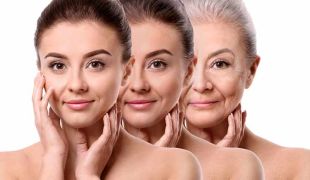
Skin laxity, thinning, and loss of elasticity are related to age and, in particular, to hormonal decline and the accumulation of sun exposure.
How to combat it?
Question from an internet user
How to fight against skin aging (whole body) that becomes flaccid? I regularly take omega 3, 6, and 7, I do a bit of sports but at 56 years old can I do more?
Doctor's response
 The problem of skin laxity
Related to aging, it is mainly due to the alteration of the connective framework of the skin which diminishes, particularly with a decrease in fibers of elastin, an alteration and a decrease in fibers of as it ages (thus there is less fibrotic reaction). Consequently, the hardness of cellulite decreases. Very hard cellulite areas become softer. This is partly an improvement, but in fact, a, a reduction in blood microcirculation, sebum production, and hydration.
While we can stimulate collagen production at any age, it is much more difficult to produce new elastic fibers. Indeed, the body would produce very little elastin (which represents 90% of the elastic fibers in the dermis) after 40 years, or even after growth according to some authors. Subsequently, our stock of elastin gradually decreases with aging, our skin thins, loses its suppleness and elasticity.
Intense sun exposure significantly degrades these elastic fibers by increasing the processes of’oxidation, especially when «sunburns» occur and add inflammation.
How to fight against skin laxity?
First of all, by avoiding what damages our skin's elastic fibers: ultraviolet (UV), the free radicals and especially the glycation, as we will see.
You tell us you take omega 3 (essential fatty acids). It is certainly a good idea because our modern diet often lacks omega 3. These are useful for all our cell membranes in general. However, they do not specifically act against skin laxity (or its wilting) but rather for its hydration and against inflammation.
To maintain your skin and best preserve its elasticity, it is especially important to ensure you do not lack essential nutrients necessary for the production of collagen and connective tissue. In particular:
- vitamin C,
- vitamin A,
- silicon,
- essential amino acids,
- magnesium…
Moreover, these are mostly antioxidants that limit the oxidative damage caused over time by free radicals. The famous «age spots» on the skin are an example.
The glycation accelerates the loss of elasticity of the skin (and body tissues in general). It is particularly linked to the consumption of sugars so-called «fast» (or high glycemic index), and more generally to excess carbohydrates (carbohydrates). It is known that carnosine protects the degradation of our proteins and thus our elastin and collagen fibers. This seems more efficient than omega 3, even if the latter remains useful. You will find here other natural substances capable of limiting glycation of your tissues.
Next, there are stimulation techniques for the production of collagen and elastin at the skin level. These involve the application of physical agents (radiofrequency, electric currents, ultrasounds, lights…) or mechanical (micro-shocks, manual or mechanical massages, micro-needling, body brushing…). They can slow down (or even improve) skin laxity. However, it will be more about a gain in firmness and thickness than in skin elasticity.
If used excessively, these techniques can lead to a «wax face» effect, thickened and less expressive.
Another very important element: the hormonal terrain. Indeed, hormonal impregnation affects the quality of the skin, hair, nails… In particular, levels of testosterone, estrogens, progesterone, DHEA, and thyroid hormones are important. The blood level of all these hormones tends to decrease with age.
Anti-aging medicine focuses on best preserving the hormonal terrain:
- either by stimulating hormone production,
- or by sensitizing tissues to their actions,
- or by providing additional hormones (bio-identical if possible, that is to say those that the body normally produces).
How to practically address loose skin?
There is no miraculous technique. The effects vary depending on individuals, their age, and the degree of skin laxity, which should not be too advanced. It is better to start as early as possible.
We could summarize what seems most important to us as follows: it is essential to prevent skin degradation and preserve its elasticity capital. Damage is difficult to reverse and prevention is very important (notably by reducing sugar intake).
Avoid accelerating skin aging
It is wise to limit sun exposure and UV rays, especially intense or prolonged exposures. Other accelerators of skin aging are:
- irritants (alcohol, cosmetic agents, weather conditions…),
- oxidation,
- glycation (particularly from excess sugars in the diet, from cooking food too long or too high),
- toxins (medications, alcohol, tobacco…),
- air pollution, electromagnetic pollution, screens, etc…
It is therefore good to favor foods anti-glycation and antioxidants and to add, if necessary, dietary supplements such as carnosine, resveratrol… (see our article).
Do not miss essential nutrients
One must ensure to provide all the essential nutrients to the body every day (vitamins, minerals, essential fatty acids and amino acids). In particular, as mentioned above: vitamin C, A, E, silicon…
Best preserve hormonal balance
A good hormonal balance allows for proper production of skin constituents. It also promotes the production of sebum and the’skin hydration. This is even more evident in women after menopause when estrogen levels will suddenly drop. See here how to preserve hormonal balance despite aging. Treat your skin against sagging.
Traiter sa peau contre le relâchement
First, it is essential to protect your skin, nourish it, and hydrate it locally with suitable creams or oils. Then, there are techniques for skin stimulation to promote the production of collagen and elastin (by fibroblasts). You should choose the method that is most suitable for your case and as natural as possible. Among these:
- LED lights
- manual or mechanical massages
- micro-injections of nutrient mixtures for the skin (mesolift and microneedling)
- radiofrequency (with or without micro-needles)
- high-intensity ultrasound
- intense pulsed light and non-ablative lasers…
However, as mentioned earlier, all these treatments will mainly stimulate collagen production (and little elastin after 40 years). Therefore, skin firmness will improve, but not its suppleness and elasticity. At worst, excessive use may thicken the skin and make it cardboard-like, somewhat like that of a boxer who has produced a lot of collagen from taking hits.
Moderate exercise, good for the skin
At any age, physical exercise is always beneficial. It will improve hormonal balance through the production of hormones (especially growth hormone), blood circulation, and tissue oxygenation. It will also stimulate antioxidant defenses and immunity.
Hello, HRT is contraindicated for me, does a good lifestyle (but no aesthetic techniques, out of my budget, only massages) allow for good results against sagging? I am also prone to a double chin not for weight reasons but simply because mine is very small, can I fight effectively without a facelift?
Thank you for your informative and accessible articles that truly mention all solutions regardless of the budget available.
I have noticed regarding the skin that hydration and circulation are indeed essential. Breathing too. Moving outdoors and drinking plenty of water really changes the appearance of my skin for the better. In any case, it is necessary to move. For the hands or other areas like the neck or elbows, some simple and easy-to-find products are really good: castor oil, flaxseed oil, creams based on beeswax, I also use hand cream on my forearms up to the elbow and on my neck, it is a rather effective and inexpensive solution.
You are right, natural treatments and those from within can improve skin quality, especially when restoring levels of certain essential nutrients that are too low. And hormones are not always necessary. Far from it.
For the double chin, the most radical solution is liposuction. No scar, quick, possible under local anesthesia, and significantly less expensive than a facelift. Take care.
Hello
I am 67 years old. I have always taken care of my skin. Vitamin A acid injections of hyaluronic acid. But for the past 2 years, my face has been very saggy, what should I do?? What treatment should I take?
Hello. Yes, senolytic treatments have already been tested on humans. Saying that senolytics can help "older" couples have children is a bit hasty, and nothing proves it to my knowledge. But maybe… We can estimate that the improvement of functions should occur at the level of all tissues, including reproductive tissues. To be confirmed…
Indeed, skin sagging and thinning affect us all sooner or later. Sagging is not treated with hyaluronic acid injections, let alone by puffing up the face to tighten the skin. It can start well before the sixties. There is no specific treatment (nor miracle unfortunately) to take. Everything is explained in the article. To date, we have moderately effective techniques, then facelift, which is much more radical. Continue to take care of your skin and ensure you avoid nutrient deficiencies, and what promotes. glycation and oxidation
Thank you very much, Doctor
Very good comments. Thank you
Hello, I am 54 years old and my skin has suddenly sagged
What do you think about LPG sessions? For the body? For the face?
Thank you for your feedback
Mechanical stimulations are part of the techniques that can combat skin sagging. The earlier it is treated, the better. Prevention is very important here (avoiding sugars and glycation...)
Hello, is there a significant risk of skin sagging after stopping menstruation without hormone replacement therapy in the case of a weight loss of no more than 5kg? (It is wiser to know this beforehand... I am not really overweight but with almost 25% body fat I prefer to try to get rid of it as long as it is not impossible)
Thank you
The risk is low if you lose this weight slowly (1 to 1.5 kg/month) and if your diet remains balanced in micronutrients, without deficiencies.
Perhaps the best solution is to accept aging and thank my body for allowing me to be active.
Je suis de votre avis : il faut de toute façon accepter de vieillir et ne pas s’en faire une angoisse ni une obsession. Ceci étant, il est possible d’agir pour vieillir le mieux possible, en santé et actif. Autant en profiter, et surtout éviter tout ce qui accélère les effets du vieillissement. C’est possible quand on est informé et c’est l’objet de ce site.
les possibilités de traitement sont justement décrites dans cet article. A ma connaissance rien de nouveau ni révolutionnaire à ce jour. Et oui, bien sûr, vous tenir droite ne peut qu’aider à rendre le ventre moins plissé.
Hello,
J ai 55 ans (hélas!) depuis l age de 49 ans. Je prend un THS . J ai toujours fait très jeune et d un naturel sportif et bonne vivante, mon poids a souvent varié de +ou- 10 kilos. L an dernier j ai perdu 10 kilos avec peine et au sortir du confinement m a peau s est particulierement relâchée comme si quelque chose de définitif s etait produit. J etais si fière de ma tonicité. Ca m inquiète terriblement cet effet coup de vieux global…Pensez vous que je puisse « reparer » encore la peau de mon corps qui semble « commencer à dégouliner » de partout ? Et, si oui comment ? Merci
les prises et pertes de poids consécutives ne sont pas très bien vécues par la peau à qui on demande un effort de distension/rétraction à chaque fois. de plus, au fils du temps votre taux de fibres élastiques diminue, ce qui rend la rétraction suite à la perte de poids plus difficile. Enfin, le confinement a pu donner lieu à des carences nutritionnelles, ou une moins bonne hygiène de vie… tout cela réuni fait que la situation est aujourd’hui différente. Essayez toutefois d’améliorer ce qui peut l’être, n’oubliez pas l’activité physique. Les différents traitements cités dans cet article peuvent aussi être utilisés.
merci pour les conseils. Vieillir c’est un peu la décrépitude du corps. J’ai un problème, mon ventre se ride et la peau est distendue quoi faire c’est pas beau. peut être que je me tiens pas trop droite vu mon mal au bas du dos.
J’ai 72 ans, dans le visage ca ne paraît pas mon âge, mais pour mes bras et jambes c’est autre chose!! Je me demande qu’est-ce le TSH? Est-ce que ca pourrait m’aider? Je mets mon costume de bain juste chez moi, car je suis gênée de mon corps qui plisse… merci d’avance pour conseils mimi xx
le TSH est le traitement substitutif hormonal. Cela peut effectivement aider mais en principe il se commence plus tôt après la ménopause. vous avez un bon article ici, du Dr Emperaire
Le fait d’être musclée crée du volume sous la peau, ce qui n’est pas si mal, mais cela n’empêche pas la peau de perdre son élasticité, surtout si elle a été souvent au soleil ou si trop de sucres rapides dans l’alimentation on favorisé le processus de glycation.
J’ai 43 ans et j’ai la peau qui se relâche un peu au niv des cuisses je ne comprend pas je suis muscle au niveau des cuisses
Bonjour je prend du TSH ça me va bien mais j aurais voulu savoir si je peux prendre un complément alimentaire contre les rides merci
Vous pouvez mais, à ma connaissance, il n’y a pas vraiment de complément alimentaire efficace contre les rides. C’est plutôt en corrigeant vos carences, si vous en avez, que vous améliorerez votre peau (et votre santé en général).
J’ai 69 ans et jusqu’à il y a un n ma peau était impeccable je dois avouer que je prenais du feneston (hormones) depuis mes 40 ans.
A l’âge de 67 ans un médecin m’a conseillé de ne plus prendre de femeston. Ce que j’ai fait.. En deux ans j’ai pris 10 ans… Rides visages, relâchement peau bras plus rides mes mollets se rident aussi.. Soit la catastrophe. Je reprendrai bien me hormones mais n’est ce pas trop tard ???
A priori, sauf contre-indication particulière, il n’est pas trop tard pour prendre un TSH mais seulement avec des hormones bio-identiques (oestradiol + progestérone). LA DHEA peut éventuellement aider aussi. Le plus important est d’ajuster les doses selon votre cas (à voir avec un médecin compétent dans ce domaine)
Hello,
Merci pour cet article clair et précis. N’ayant absolument pas les moyens de recourir à la chirurgie et la médecine anti age (sauf peut etre des injections, est ce vraiment efficace sur les plis nasogéniens et pour donner du volume à un menton trop petit ?), il reste les méthodes naturelles je fais donc régulièrement de l’exercice, et suis depuis quelques années avertie au sujet de la glycation, un peu tard mais j’ai eu le temps de freiner les dégâts. Concernant les nutriments essentiels j’ai peu d’argent pour me nourrir et les fruits et légumes sont rarement bio vu leur prix. Est il quand meme possible de couvrir ses besoins avec une alimentation végétarienne (et meme de plus en plus végétalienne pour moi) très basique (les produits vraiment essentiels et assaisonnés aux herbes et algues) et est il nécessaire de prendre des compléments alimentaires et si oui, lesquels ?
Merci :)
il ne faut pas se priver des solutions naturelles et d’une bonne hygiène de vie. Ca devrait être la base. Et oui, les injections marchent bien pour les sillons nasogéniens et le menton (si elles sont bien faites bien entendu)
Si votre peau des bras n’est pas trop relâchée, c’est mieux pour pouvoir en traiter la cellulite.
Le THS améliorera probablement l’hydratation et la texture de la peau globalement et elle ralentira son vieillissement. Ceci dit, il ne faut pas en attendre un effet de réversion du relâchement de la peau et, en tout cas, rien de comparable à un lifting hélas
Hello,
Je suis ménopausée depuis 4 ans et ne m’en suis pas vraiment inquiétee ne ressentant rien de particulier sur le coup mais depuis 2 ans je suis de plus en plus déprimée et démotivée et au niveau cutané je me suis assez vite retrouvée avec des bajoues un double menton et un gras gélatineux et flasque un peu partout sur le corps qui dégonfle sous l’effet du froid mais en ete ça revient et me gêne beaucoup. Et impossible de déloger la cellulite des bras bien qu’ils soient fermes et que l’aspect flasque ne concerne encore que le bas du visage aggravé par un menton fuyant. Est il encore temps d’envisager un THS et peut on espèrer une amélioration de la peau ? Je n’ai pas les moyens financiers pour un lifting…
Thank you!
bonjour a toutes , j ‘aie bientot 42 ans et j ‘aie aussi constate un relachement cutanee !!! pourtant je fait de l’aquagym du running et du fitness plusieurs fois par semaine !!!!! Mmeme en faisant de l’exercice physique le vieillissement cutanee est reel c ‘est un peu demotivant et c’est dur de se sentir belle et desirable !!! j’aie notemet la peau sous les bras qui se relache je trouve ça degueu !!!! Mais bon on doit toutes y passer un jour c ‘est comme ça !!!! je continuerais a faire du sport autant que possible!!!!! bon courage a toutes
Hello
J ai 25 ans et j ai la peau plissee , j aimerais savoir comment la rendre lisse
Thank you
Bonjour, j’ai 42 ans et ma peau du visage commence a se relacher légèrement . Je voudrai savoir si les complements alimentaires du style biocyte elastine ont une efficacité meme légère ou si ce n’ai que du marketing;pouvez vous me donner des mons de complements ayant une réelle efficacitée. Merci de votre reponse.
Les compléments pourront avoir une certaine efficacité si vous en manquez (vitamines, omega 3 et 6, sélénium, silice, acides aminés, antioxydants…). Pour le reste, genre élastine, collagène, acide hyaluronique par la bouche, rien d’extraordinaire. Notez que bien souvent, notre alimentation moderne manque de l’acide aminé glycine. Un apport de celui-ci peut améliorer les tissus comme peau, cheveux, tendons, cartilages…
Bonjour j avais le ventre un peu rond. on m a conseillé le coolsulpting mais depuis, j ai la peau du ventre relâchée. Maintenant on me conseille le vénus frezz. j ai beaucoup déjà donné est ce que ça va me donner des résultats ? j ai 55 ans merci mais depuis je ne me sens encore moins bien dans ma peau
j ‘ai 65 ans ,une ménopause précoce à 37 ans .la peau de mes cuisses est remplie de capitons et le relachement est important .je fais de la marche régulièrement de la gym douce malheureusement pas d’amélioration .
j’ai fait de la radiofréquence du lpg je n’ai plus de solution hormis celle du lifting des cuisses..n’est ce pas trop tard pour ce genre d opération ?
merci de votre reponse
Il n’y a pas vraiment de contre-indication pour cet âge là. Après, c’est le chirurgien qui vous dira si l’opération en vaut la peine, en fonction de l’état de votre peau, de votre poids, de votre santé, etc…
Bonjour j ai 66 ans j ai eu un lifting des cuisses vers la 50 aine ,cela a amélioré le haut de mes cuisses mais au-dessus des genoux ma peau plissé toujours et ce lifting m a laissé 2 longues cicatrices à l intérieur des jambes,elles se sont atténuées avec le temps,si depuis votre post vous avez eu recours à la chirurgie, pourriez vous SVP me dire si vous en êtes satisfaite. Merci
J’ai 53 ans je suis ménoposée depuis 3 ans. Il y a 4 ans j’ai suivi un régime qui m’a fait perdre 12 kg. Aujourd’hui je suis très mince je pèse 48 kg mais j’ai la peau des bras qui forment des plis surtout au niveau de l’avant bras c’est horrible j’ai les bras d’une personne de 80 ans. Je suis sous THS j’en ai parlé à mon gynécologue qui m’a augmenté le taux afin de redonner de l’élasticité à ma peau mais à ce jour rien n’y fait. Pourriez vous me dire si cela vient vraiment du fait que je sois ménoposée ou c’est dû à mon amaigrissement.Pourriez vous me dire quelle crème ou huile dois je prendre pour nourrir ma peau et si le fait de prendre des compléments alimentaire pour raffermir la peau peut aider tout en sachant que rien n’est miraculeux.
Thank you for your reply.
Votre relâchement de peau est dû à votre perte de poids importante après 40 ans. En effet, à 50 ans le corps ne fabrique plus d’élastine (qui donne l’élasticité à la peau) et vit sur ses réserves. Si, en plus votre peau est fine et peu tonique à la base, cela ne l’arrange pas. Le TSH peut aider à maintenir l’état de la peau, sa production de sébum et son hydratation mais difficile d’espèrer un retour en arrière, hélas.
Même chose pour les compléments alimentaires : entretenir et préserver, améliorer un peu si vous combles vos manques en nutriments essentiels. Il n’y a pas de complément alimentaire miracle pour retendre la peau. L’exercice, les bains et douches froides, le brossage après la douche avec brosse en poils de sanglier peuvent améliorer un peu. La radiofréquence également. Cela dépend du degré de relâchement. Ensuite, il reste toujours la solution chirurgicale si c’est trop gênant.
Je vous remercie infiniment de vos précieux conseils.
J’ai 68 ANS. La peau de mon visage n’est pas trop ridée mais, en revanche, malgré un poids qui n’a jamais varié (50 kg pour 1m60), je trouve que la peau de mon corps se plisse de plus en plus, face interne des bras, les jambes. Je n’ose plus porter de maillot de bain. Ce vieillissement est-il inéluctable ? Merci de m’avoir lue.
Oui, le vieillissement cutané est à ce jour, inéluctable, notamment car le corps ne fabrique plus d’élastine après 42 ans environ. Aussi la peau perd peu à peu son stock d’élastine et son élasticité.
Pour limiter cela au mieux, il faut éviter surtout 2 phénomènes majeurs du vieillissement : oxidation and glycation.
En pratique : éviter le soleil, les polluants et toxiques (tabac, alcool…) et les sucres dits « rapides » et les aliments à index glycémique élevés qui favorisent la glycation. Ainsi il faut surtout essayer de prévenir le relâchement de la peau car aujourd’hui les techniques traitant ce relâchement sont limitées et ne redonnent pas cette fameuse élasticité d’avant 40 ans.
J’ai la peau sous les bras flétris , je ne mange pas de poisson suite a des alergies à l’iode , je le vis tres mal car n’ose pas mettre des tenue sans manche , j’ai 62ans que dois je faire car celà me rend mal
Le fait de ne pas manger de poisson n’est pas un problème. Pour améliorer vos bras, l’essentiel est dit dans cet article. Sinon il reste la technique chirurgicale qui consiste à enlever l’excès de peau. Radicale mais il y a des cicatrices conséquentes.
Je souffre d’apnée du sommeil je dois donc porter un masque nez bouché puisque j’ai une PBCO. Ma peau depuis le port la nuit de ce masque, abîmé vraiment ma peau. Celle ci est flétrie et ridée à l’endroit même du masque alors que je n’ai pas de rides ni au front ni au cou ni sur le haut des joues. Seul autour de la bouche à l’aile du nez et le dessous des joues. Que puis je mettre comme creme traitante car prendre des compléments alimentaires ne peut être envisagé car j’ai des traitement médicamenteux assez lourds.
Merci de me donner un conseil car vraiment l’état de ma peau me déprime.
Tout d’abord essayez d’adapter votre masque : moins de pression sur l’élastique et mettre des mousses sur la partie qui appuie sur le visage. Ensuite mettez une huile type rose musquée le matin en massant assez longtemps l’endroit abimé. Les compléments alimentaires n’auraient de toute façon pas d’effet sur ce problème qui est d’origine mécanique.
Hello
j’ai 53 ans et ma peau est plissé sous les bras ! les cuisses!
je ne prend pas oméga! pouvez vous me donner plus d’indice pour prendre soins de ma peau de l’intérieur comme l’extérieur? a quoi sert oméga ? quelle crème mettre sur mon corps ? quelle sport pratiquer ?
merci beaucoup
Les réponses à vos questions sont dans cet article. Je l’ai rectifié pour essayer de le rendre plus simple à comprendre. Vous pouvez cliquer sur les liens en vert qui vous donneront plus d’explications (par exemple sur les oméga 3, la glycation, etc…).
Les techniques cosmétiques ou médicales contre le relâchement de la peau sont décrites dans la section Médecine-Antiâge -> Médecine Esthétique : « Améliorer la peau ». Voir ici : https://www.antiageintegral.com/category/esthetique/peau-et-teint
Pour le corps je préconise les huiles végétales type (amande ou jojoba), les huiles ou extraits de romarin combattent la glycation.
Enfin tous les sports sont bons, en particulier la natation qui raffermit les tissus et apporte un massage de la peau pendant l’effort.
Hello doctor
Vous parlez d’extrait de romarin
Est ce de l’huile essentielle ?
Par ailleurs vous proposez de prendre de la carnosine à quelle dose préconisez vous la prise quotidienne?
Thank you
O
il s’agit d’extrait de romarin qui n’est pas l’huile essentielle et ne contient pas les mêmes actifs.
Pour la carnosine : d’après les études 1 gramme par jour pour avoir un effet mesurable.
Bonjour,suis a un aminssiment de 70 kg , j ai la peau de coup qui relâche plus d élasticité
Que puis-je faire
Cordialement Mme heresaz Véronique
Chère Madame. Cette article répond globalement à votre question (ainsi que les articles indiqués par des liens). Après, chaque cas est particulier et chaque traitement doit être adapté en fonction des besoins. Bien sincèrement.
Merci docteur, super conseil