


Human sciences aim to demonstrate that social interactions are important for humans. But recently, it is scientific research that corroborates empirical data and even establishes social relationships as one of the key elements allowing for an extended lifespan.
«Man is a social being; nature made him to live with his peers»: Aristotle. One must believe that the Greek philosopher was already right.
It is empathy that works best
In our Western societies, everything pushes towards individualism, competition and personal enrichment, often to the detriment of others. But are we any happier for it? The answer is not obvious when we know that in France, 5 million people suffer from loneliness every year. This is a fact that increases with age.
That is why psychologists from the University of Würzburg and the Max Planck Institute in Leipzig (Germany) have looked into the study of prosocial behaviors. Prosociality refers to the set of behaviors aimed at helping, supporting, or improving the physical, social, or psychological well-being of others. An attitude that often involves empathy as well as giving, sharing, or cooperation.

The study published in Scientific Reports, shows that prosociality is malleable and can be subject to daily training. This would allow individuals to more easily acquire a benevolent attitude towards others, ensuring a well-founded social bond. This same social bond greatly promotes health and longevity as we will see.
Here is the study: the scientists gathered a group of participants whom they subjected to mental training exercises:
- The first developed a state of awareness anchored in the moment through the bodily sensations.
- The second, skills of order socio-affective such as compassion, empathy, or gratitude.
- The third focused more on the cognitive skills of the person and their ability to understand the other person's point of view.
At the end of this study, the researchers demonstrated that only module n°2 («empathy/compassion») allowed participants to adopt a true altruistic behavior (aiming to improve the well-being of others). Generally speaking, they were more generous and more attentive to the person in front of them.
Social ties to better maintain health
Adopting prosocial behavior can therefore be learned, but also forgotten. Hence the importance of maintaining quality relationships with one's surroundings to foster lasting bonds that can have serious consequences on our health.
This is certainly what a U.S. study published in the journal Proceeding of The National Academy of Sciences. The researchers wanted to highlight the impact of social ties on maintaining health throughout life. Indeed, for them, the earlier the established ties, the better the health status.

They were thus able to demonstrate that at the beginning and at the end of life, social interactions were much more important. In the case of adolescents as well as that of the elderly, isolation and loneliness would be risk factors leading to inflammatory mechanisms. The risks increase towards the end of life and can be dangerous for health, more so than diabetes or hypertension. «The relationship between health and the degree to which people are integrated into large social networks is strongest at the beginning and end of life.».
By using data collected from four national surveys covering the lifespan of the studied individuals, they assessed three dimensions of social relationships:
- social integration
- social support
- social constraint.
They have thus highlighted that social relationships play a role in abdominal obesity, inflammation, high blood pressure, heart disease, strokes, and cancers. «Over time, a lack of interaction can lead to chronic aging diseases. Cancer is a prominent example…» the researchers state. They add that their various analyses should attract more attention from health professionals.
A good social life leads to a longer life
The facts
Ultimately, people who have good social relationships and are well surrounded live longer and healthier. These are now recognized facts by the medical community.
This is also the conclusion of Julianne Holt-Lundstad, the lead author of a study conducted by Brigham Young and Chicago universities that once again established the correlation between longevity and social life. Published in «Plos Medicine,» it gathers 148 reports on health and social relationships involving more than 300,000 people. The results show that on average, a rich social life increases life expectancy by 50%. And even by 60% in some individuals favoring social support (people you can count on) and social integration (frequent social interactions). Incredible figures!
A fulfilling social life would therefore be a key factor in increasing longevity. Even more striking: it would be more effective than engaging in sports, or quitting smoking or alcohol! «These results indicate that the influence of social relationships on the risk of death is comparable to well-established mortality risk factors, such as smoking and alcohol consumption, and exceeds the influence of other risk factors, such as physical inactivity and obesity…».
How social ties increase longevity
From a physiological point of view, social interactions promote the production of neurotransmitters which increases self-confidence and the feeling of well-being. This is particularly due to the production of oxytocin (the hormone of social bonding and attachment) and of the dopamine (neurotransmitter of pleasure and reward) that allows for the reduction of the stress hormone (cortisol).
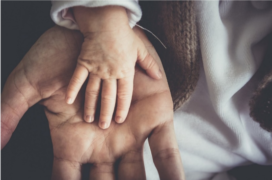
For researchers, several avenues may also explain these results. Beyond enriching one's knowledge, boosting morale, and sharing good times with others, the presence of a loved one can also encourage self-care. Circumstances that «force» in a certain way to set daily goals and keep the elderly person alert. «When someone is connected to a group and feels responsible for other people, it translates into this feeling of responsibilities and the willingness to take better care of oneself and avoid risks» explains Julianne Holt-Lundstad.
Moreover, the surrounding people are also likely to better detect potential health problems and thus promote quicker care.
More connections, less stress, more health
It is known that the stress response prolonged (and the production of « stress hormones«is a major factor in health problems and accelerated aging (see our article explanatory). It may even be the most important today.
This reaction of the body, in our modern world, is no longer really triggered by brief situations of great vital danger, but rather by poor relationships with others: at work, in couples, with neighbors, or by isolation and lack of relationships. Thus, it is a stress that persists, very harmful to health and longevity.
It seems logical that by creating more connections or improving (or even eliminating) certain relationships, we simply reduce this stress, allowing the body to implement its natural processes of self-healing and regeneration for better longevity.
The effects of «living together» on the body
Knowing you are well surrounded limits the effects of stress
In order to corroborate these recent findings, other studies have emerged. One of them, in particular, confirms the importance of social relationships and surroundings in stressful situations. Indeed, when we are accompanied by a loved one, our blood pressure and heart rate tend to increase less than if we were alone. Observations highlighted by brain imaging show an activated reaction in the cingulate cortex for a person alone and diminished for a person accompanied. Similar results have also been observed in children allowed to talk with their mother after a stressful encounter.
Our social life strengthens our immune defenses
Finally, one of the most famous experiments on social life and health, conducted by Sheldon Cohen from Carnegie Mellon University, shows that participants who developed strong social ties find it easier to fight off illness. The study involved exposing hundreds of healthy people to the cold virus. After several days of quarantine, those with many friends showed a more active immune system than those who are alone.
Populations rich in centenarians have a happy social life
In the famous «blue zones,» these regions of the world where communities abound with centenarians and live healthier than average (like Okinawa for example), there is a strong social fabric rich in exchanges.
This phenomenon can also be observed in Scandinavian populations whose lifestyle greatly promotes social connection and the art of well-being (more details in this article).
The aging person often continues to work (at a slower pace), which maintains relationships with others. Family ties are stronger and elderly people are not excluded from the group. This is further proof of the importance of the relational aspect in longevity.
How to maintain a social life and connections
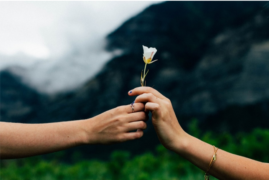 Until now, the lack of scientific data on the subject did not allow doctors to emphasize the importance of social support as a factor of good health, on par with quitting smoking or regular physical activity. Now, recent evidence should raise awareness among health professionals as well as the general public on the issue.
Already, researchers emphasize the importance of maintaining a social environment throughout our lives. As mentioned above, it is not so much the quantity that matters but the quality
- Maintain our relationships on a daily basis, whether they are family or friendly, and be active in them (suggest outings, events, meetings…)
- Provide social support to others and thus practice prosocial behavior
- Be truly present in human relationships and be able to disregard the distractions around us (work, computer, television…)
- Develop your sense of touch (touch) which helps to enhance the feeling of well-being and self-esteem
- Reach out to others to expand your circle of friends
- Cultivate feelings of gratitude and appreciation to train our brain to focus on the positive things in life. Expressing it to our loved ones strengthens the bonds that unite us through shared emotions.
«We do not have time, so brief is life, for quarrels, excuses, animosity, calls for accountability. We only have time to love and not a moment more, so to speak, than for that» – Mark Twain
With the collaboration of Claire Joinier


PS Aside from the sense of touch because not everyone appreciates being touched and having to kiss perfect strangers or people to whom one is completely indifferent just to say hello when it should be reserved for close ones, I really DID all of this thinking it was up to me to contribute, and I came away with the unpleasant feeling of having been plundered and emptied most of the time. Subsequently, I found myself isolated in the face of difficulties that I had to solve alone, or that I could not solve at all due to lack of advice or support. I have no intention of starting over.
I sincerely believe that salvation is not in the network but in autonomy. Not depending on anyone as much as possible is the first health gesture one can make for oneself.
Hello,
Are there alternatives? Because really, this is a field in which I am absolutely not gifted, and my attempts (without calculation or ulterior motives or for health purposes or anything else) at social life for the relationships themselves have truly and probably definitively dissuaded me from venturing there again. I have researched the subject a lot to compensate for the fact that it is not innate for me, and since then the idea of a relational network somewhere between symbiosis, transaction, and social score repulses me more than ever, I find it really frightening; I feel stuck, evaluated, and rejected at the same time. Should I prepare to die of old age in the next 2 years?
Your situation will not trigger any of that, especially if you are coping well. Each person is a particular case. There is no absolute norm.
This article concerns various studies that show that, in general, people with more relationships age better and more slowly than isolated individuals. This would therefore be positive, and one could have suspected it because human beings generally live better surrounded by their peers than alone and without contacts. Thank you for your interest.
Hello,
On the other hand, when suffering from generalized anxiety and social phobia, when one is very far from this ideal network that guarantees healthy aging, when one cannot interpret facial expressions and never knows when it is their turn to speak or how to behave, even in the presence of long-time friends with whom one is on good terms and enjoys their company and vice versa, it generates enormous stress.
Does this mean we are ripe for the hospice ;P?
It generally has repercussions on quality of life and the journey, and it is not uncommon to find oneself completely out of sync with affluent individuals who are perfectly adapted to material life and who will have appropriated what life has left us, with more means. Few people are interested in or want to associate with someone who «cannot keep up.» In this case, it is difficult to take the risk of maintaining relationships; one has nothing to offer in return. (And if one is somewhat lucid, they will avoid associating with someone as lost as themselves, which cannot bring anything good) This advice can benefit many people but not everyone. However, for my part, I am lucky because to be in this case, I have friends, few in number but sincere; it is indeed quality that matters.
Fortunately, there are equivalents without having to relate...
What to do when one does not appreciate social interactions or company and feels good only alone? Try again with friendly people and friends, or is it possible to replace it with meditation?
Some people are very isolated as well; what can they do?
Thank you! Interesting article, and logical.