

Aging is considered an inevitable phenomenon that we must simply adapt to. However, for several years now, a revolutionary idea has been regularly emerging in laboratories: what if aged cells could become young again?
One approach, called cellular reprogramming, is probably one of the most fascinating advances in longevity medicine.
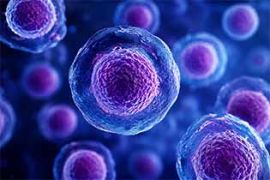 It all started in 2006 when Japanese researcher Shinya Yamanaka discovered that it was possible to transform adult cells into stem cells (the original cells, like those from embryos, capable of transforming into any cell for a particular organ) by activating just four specific genes. These genes, now known as " Yamanaka factors ", earned their author the Nobel Prize in Medicine in 2012.
Researchers have, however, understood that a complete use of this technique completely erased the identity of the cells. A skin cell would then cease to be a skin cell and revert to being a stem cell.
Another idea then emerged: what if we only partially reset the cells?
A partial rejuvenation of the cells
This technique, called partial epigenetic reprogramming, aims to help cells regain certain characteristics of their youth without losing their original function.
In animals, the results obtained are impressive.
Research teams have shown that it is possible to:
- improve muscle regeneration,
- to reduce certain scars,
- to promote cardiac repair after a heart attack
- and even to improve certain cognitive functions in aged mice.
Research has also shown a significant increase in residual life expectancy in very old mice treated with this approach.
Trials on the optic nerve in humans
The year 2026 marks a historic milestone: the first clinical trials using this technology in humans have been authorized in the United States. An American biotechnology company is currently testing a therapy based on three of Yamanaka's four factors to assess its safety in patients with age-related optic nerve diseases.
The initial goal is not yet to "rejuvenate" the entire organism but to verify if aging tissues can regain some of their functional capacities.
Specialists now speak of biological restoration medicine rather than repair medicine.
Should we therefore think that we will soon have an injection capable of erasing twenty years of aging? Probably not.
Unresolved questions
Many questions remain to be resolved regarding long-term safety, prevention of excessive cell proliferation, or the theoretical risk of promoting certain cancers.
But for the first time in the history of medicine, human trials will attempt to answer a question that seemed to belong to science fiction only a few years ago:
Is aging really reversible?
The definitive answer will certainly take more time. Some researchers now believe that aging is no longer just a fatality but a biological process that science is gradually beginning to understand and perhaps one day control. This remains to be seen…
In the meantime, see our article " How to activate your stem cells", and without genetic intervention!
Scientific references:
- Takahashi K, Yamanaka S. Cell. 2006.
- Yamanaka S. Nobel Prize in Physiology or Medicine 2012.
- Macip CC et al. Gene Therapy-Mediated Partial Reprogramming Extends Lifespan in Aged Mice. 2024.
- Paine PT et al. Partial cellular reprogramming: an emerging rejuvenation strategy. 2023.
- FDA clearance of first human cellular rejuvenation trial, 2026
thank you very much. keep your genetic transformations for sick people who have no other means of treatment. why not. but to live forever is very little for me. Let's start by eating less processed foods in plastic and moving our butts.
thank you doctor and I am sure you think like me ;-)
You are absolutely right. I think it is pointless to go that far if we do not start by improving our lifestyle. After that, we need to see if we are sure not to incur immune risks, or cancer, or other unknowns…
Best regards