


To be full of vitality, energy, and to remain radiant, one must produce as much Ojas as possible in our body. It is the subtle essence of life, the final product of our digestion/assimilation processes, as described by Ayurveda. Explanations:
In Ayurveda, there are 3 major principles that condition the health of the body and mind:
- Agni : the digestive fire which allows us to digest well, and thus to properly assimilate everything that nourishes us: food, water, oxygen, thoughts, human relationships…
- Ama : representing waste and toxins that gradually clog the body, and that can lead to disease
- Ojas : the subtle essence of life that brings energy, vigor, clarity of mind, and good immune defenses.
For perfect health, the individual must be in harmony with their environment, with the foods they consume, with the people they associate with, and lead the life for which they are made, according to their personal constitution. In a word: to be well adapted.
Their digestion/assimilation is then good. They do not accumulate toxins. Ojas, the essence of vitality, is produced in large quantities, and circulates well in the various tissues of their body: the «dhatus». Two particularly important notions that we will detail and relate, as usual, to our Western view of anti-aging medicine.
Ojas: the essence of life and the strength within
 Ojas means «the one who strengthens», who brings vitality, vigor, keeps us young and fit, and also makes us radiant. Ojas allows the’energy to fill our body (the famous « prāna).
According to Ayurveda, Ojas is the final product of the digestion of our food. This begins in the mouth, then the stomach as we know, but Ayurveda describes, more broadly, a duration of about 30 days of 'digestive refinement» within the different tissues of the body. At its end, the production of Ojas (the supreme and subtle substance, the life force) is completed and distributed throughout all the tissues of the body.
Ojas is therefore the result of progressive transformations within these 7 bodily tissues that we describe below. It is not limited to our digestive tract. However, effective digestion is the foundation without which the production of Ojas is compromised. For Ayurveda, this good digestive function depends on’Agni (or «digestive fire») which allows for the correct transformation of food.
The dietary supplements you take will be less effective if your digestion is not performing well. This is often overlooked…
The production of Ojas is very easily disrupted by stress, when it is too high (just like digestion). Knowing how to manage your mind, the various stress factors, staying calm and detached, will be just as important to preserve our energy.
Ojas is also correlated with our immune defenses, and strengthens our psycho-emotional adaptation.
In tradition, Ojas can be seen as what binds and maintains our cells together to organize them into a living body. The more Ojas is present, the more alive we feel, and vice versa.
Just as we can correlate digestive fire with our production of enzymes and digestive juices described in Western medicine, we can relate Ojas to the functioning of our mitochondria*, which produce the energy with which everything operates in our body (an article is dedicated to the stimulation of our mitochondria).
In this combustion within the mitochondria, a substance is produced: the’ATP, which will be used in all the functions of the cell that require energy. Thus, we can make a link (5) between Ojas and the ATP produced in our cells, capable of releasing energy, even if it is somewhat reductive.
Modern science has recently described the fundamental importance of mitochondrial work for health, and how oxidation related to aging can disrupt them. It has highlighted links between the poor functioning of our mitochondria and many degenerative diseases (or others), including cancer, chronic fatigue, accelerated aging…
Ojas and physical form
Here is what we can observe when Ojas is well present in a person:
- Radiant skin
- Clear and sparkling eyes
- Clear and powerful voice
- Pink and clean tongue
- Good body odor
- Energy present from the moment of waking
- Joy of living and dynamism
- Light and alert body
- Problem-free digestion
- Very rarely catching a cold or the flu…
Without Ojas, the immune defenses are deficient. Doctors with both Ayurvedic and Western training, who connect Ojas with our mitochondrial function, also link Ojas with the activity of our T lymphocytes (a type of white blood cell that protects against infectious agents…), and also with the «tone» of our neuro-endocrine system which commands and transmits information to our cells. Ojas is also described in Ayurveda as the substance «between the physical body and the mind.».
Today, we well understand the importance of mitochondria (energy producers) in the regulation of our immune system and notably of immune cells like lymphocytes (3).
Ojas and mental form
At the level of the mind, we can consider that Ojas is the fruit of the digestion of our various thoughts, just as it is the result of the digestion of food at the body level.
When it is at its optimal level, the person demonstrates:
- good self-awareness,
- good control of their body,
- attention towards others, love,
- clear mind and lucidity,
- peaceful mind, adapting and resisting various forms of stress.
The Dhatus: the 7 tissues of the body
The Ayurvedic tradition describes seven tissues that are nourished and strengthen one after the other over a period of 30 days from the digestion of nutrients.
In this view, after an initial transformation of food in the mouth (saliva) and in the stomach, most of the nutrients are absorbed by the small intestine to go towards the first tissue (lymph), and the waste forms stools in the colon, which are then expelled.
The absorbed nutrients are then transformed by the liver, and the 7 tissues are successively nourished, while at each step, a small amount of ojas is produced, increasingly refined. Each tissue, in tradition, creates the matter that constitutes the next tissue:
- The first tissue is Rasa Dhatu, lymph, plasma,
- then part of this plasma will give rise to blood: Rakta Dhatu.
- the blood will lead to muscle tissue : Mamsa Dhatu.
- of which part then transforms into fatty tissue : Medha Dhatu.
- a part of the fat will produce bone tissue : Asthi Dhatu, including the marrow.
- a part will be transformed into nerve tissue: Majja Dhatu.
- the last tissue produced is the reproductive tissue : Shukra Dhatu.
It would take about 4 to 5 days to transition from one tissue to the next. Thus, a certain delay is necessary for a nutrient or a medication to actually act on a tissue (for example, about twenty days for bone and marrow, 15 days for muscle…).
Also, in the case of nutritional deficiencies or poor digestive assimilation, the first tissue to be deficient will be the reproductive tissue, which is nourished last.
The final substance of this cycle is the supreme Ojas which will nourish the body and mind, and will be stored in the heart according to Ayurveda.
Needless to say, this view is quite distant from our modern medicine, and a bit difficult to grasp for a Westerner. Nevertheless, it is interesting to note that often, to regain balance and health, the therapeutic conclusions and lifestyle hygiene measures to be taken converge in both approaches.
When we lack Ojas
Energy then becomes deficient in our body, and all of our vital functions weaken, particularly our immune defenses. We have seen that the major causes of the lack of Ojas (and thus energy / prāṇa) are a poor digestion, leading to poor assimilation, as well as an excess of stress or activity (overwork).
We now know how poor digestion, and in particular an inflamed or overly permeable intestine, can disrupt our immunity and increase inflammation and oxidation phenomena in our body. These will decrease energy production in our mitochondria, leading to fatigue and mood disorders, for example. In some cases, the process will lead to autoimmune diseases like rheumatoid arthritis or degenerative diseases like Parkinson's, etc. Multiple studies have demonstrated this.
Ayurveda teaches us that:
- Stress increases the’acidity in the body, particularly hindering the proper formation of Rasa (lymph/plasma)
- It also increases’inflammation and Ama (toxins), hindering the production of Rakta (blood).
 Too much exercise, overwork and lack of sleep decrease the formation of Mamsa tissue (muscle).
- The stress depletes certain fatty bodies (lipids) in the body and weakens Medha (fat tissue).
- Acidity and inflammation promote the loss of minerals, weakening Asthi (bone tissue).
- Stress disrupts the neuro-endocrine system, depleting Majja (nerve tissue).
- The sexual excesses (depending on each person's constitution) weaken Shukra (reproductive fluids).
 Too much exercise, overwork and lack of sleep decrease the formation of Mamsa tissue (muscle).
Ultimately, under these conditions, the quantity of Ojas and its production become low. Vitality is lacking.
All these principles have been described for millennia in Ayurveda. Recent scientific discoveries tend to confirm them today, with the new insights of the Western approach, which is more rational and culturally reassuring.
For example, it has been shown that stress makes our intestine more porous, allowing undesirable toxic particles to pass into the blood, creating inflammation, oxidation, etc. We also know the principles of demineralization due to excess acidity (increased catabolism of acidic waste). We know that lack of sleep decreases our growth hormone levels, and thus our muscle production, etc. Conversely, we know that affection, laughter, and gratitude (which increase Ojas) elevate our oxytocin hormone, which reduces stress and inflammation and improves immunity (among other things).
Everything is interconnected, and that is why the Ayurvedic approach is so interesting to use, even if we must always to place it in the context and environment of each individual. Living as a peasant in central India or as a businessman in a Western capital is not the same story. And yet, Ayurvedic medicine will know how to differentiate and adapt to each case. That is its great strength.
How to increase Ojas, regain energy and immunity?
No magic potion, but Ojas primarily strengthens itself through good digestion/assimilation, and a lifestyle that reduces the effects of stress, oriented towards mental peace.
Nutrition
Eat some fresh foods in accordance with the season, in calm, and enjoying every bite. Remember to chew well (it’s the foundation!) . Cook at. low temperature if possible, and use the which promote digestion: rosemary, ginger, coriander, cardamom… spices Eliminate processed, overly refined, and industrial foods. Avoid excess sugars and high glycemic index foods, which are often too present in our modern diet. The same goes for excess red meats. In short:
eat healthy and balanced The foods that increase Ojas according to Ayurveda are: (see our article) .
avocados,
- dates, grapes, figs, walnuts, and almonds,

- clarified butter or Ghee,
- good cold-pressed fats like sesame oil, hemp oil, olive oil, or coconut oil…,
- whole grains like red, brown, or wild rice, oats, quinoa, millet…,
- and, harder to find these days, the,
- fresh whole milk non-UHT sterilized… non stérilisé UHT…

Natural remedies and dietary supplements
These products can help, but they will not do everything on their own. They are effective as part of a comprehensive approach to improving lifestyle.
> The Rasayanas:
These are Ayurvedic remedies aimed at improving the quality of Ojas. They are also presented in Ayurveda as longevity remedies. They are mixtures of plants, fruits, and superfoods, etc... that are supposed to provide a lot of essential nutrients and tonics, while being easy to digest. In particular: the neem and the turmeric are said to promote Ojas.
> Potassium : it is not directly described in Ayurveda but, very present in rasayanas and in plants, it promotes a favorable environment for Ojas. It contributes to better acid-base balance, reduces inflammation, supports the cardiovascular system, and pacifies nerve conduction. Our potassium intake is often too low these days.
> Improve digestion:
For improving your digestive capabilities, you will find indications in the article on «{« Agni your digestive fire »}" and in our digestion/assimilation. In particular, we now know the importance of our microbiome (the intestinal bacterial flora) for our immune defenses.
> Boost mitochondria:
Not so long ago, we became interested in mitochondria and the consequences of their proper or improper functioning. Some dietary supplements have been studied for their beneficial effects on mitochondria (e.g., L-carnitine, Coenzyme Q10, resveratrol, glycine…), some of which are traditionally included in the rasayanas. See the article « stimulating your mitochondria.
The glycine is an amino acid whose cellular synthesis decreases with age. In this case, energy production decreases. Studies have shown that supplying glycine to a deficient cell could restore its energy production.
The D-Ribose is a sugar, a raw material that will increase the production of’ATP, particularly at the level of muscle cells.
The resveratrol, an antioxidant well known for its anti-aging properties and autophagy activator, the nicotinamide mononucleotide (NMN) found in broccoli and avocados for example, and the riboside nicotinamide (derived from vitamin B3), all increase the production of NAD+ in our cells. NAD+, which unfortunately tends to decrease with age, boosts energy production (ATP) (see our article on vitamin B3 and anti-aging).
The plants adaptogenic help the body adapt to physical or psychological stress. They are known in traditional medicine to enhance vitality but have also proven their effects in scientific studies. This includes the ginseng and ashwagandha in India and eleutherococcus and rhodiola in the West (see our article on adaptogenic plants).
Studies have also shown that the’physical exercise and massages allowed for an increase in the number of mitochondria, and that the meditation could improve their functioning.
Finally, the sleep in quality and sufficient quantity (and simple rest), which we often neglect, will greatly increase Ojas. So simple that we forget to think about it.
> Immunity boosters:
Certain products are known to boost immune defenses:
- foods such as: garlic, onions, shiitake mushrooms, reishi and zingtzu, orange, lemon, kiwi…
 green tea (matcha), spices like basil, turmeric, ginger…
- beta-glucans from brewer's yeast
- products fermented, kefir and certain probiotics
- zinc and vitamin C
- more generally, one should be careful to avoid deficiencies in proteins and micronutrients: especially zinc, selenium, iron, copper, calcium, folic acid or vitamins A, B6, C and E…
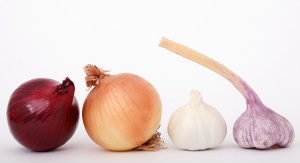 green tea (matcha), spices like basil, turmeric, ginger…
> Hormesis:
It is one of the great biological laws that states that a short and intense physical stress, applied to the body within reasonable limits (where it can adapt), will strengthen its vitality and immunity, or Ojas (see the article on hormesis). The saying goes, «What doesn't kill me makes me stronger.» It's somewhat similar here.
To achieve this effect, one can use, with a variable and tolerable intensity for each person:
- intense interval training (HIIT)
- cold exposure (cold shower, cryotherapy, Wim Hof method...)
- heat exposure (saunas, hammam, hot baths, infrared…)
- the breathing exercises with breath-holding
- fasting
- body friction and brushing…
Lifestyle hygiene
Largely forgotten in our modern societies, it is nevertheless essential to our vitality. This includes, but is not limited to:
- of’physical activity regular exercise for at least 30 minutes, 3 times a week,
- of sleep good quality sleep (let's repeat that),
- time spent outdoors and in contact with nature,
- breathing exercises of mindful breathing (which according to traditional Chinese medicine can increase the level of vital energy), of yoga and the meditation,
- some routines daily (somewhat ritualistic, which reassure the mind): personal care, getting ready, break times, etc…
Stress management and zen attitude
Ojas is a subtle essence between the body and the mind. The latter may even be essential to enhance the quality of this vital energy. Thus:
- having social relationships that are warm and nurturing with friends and family,
- being generous and having gratitude for what you have received that is good from life, or for nature,
- always keeping a sense of’humor, laughing at everything (and at oneself), knowing how to detach from things, staying positive and trusting life,
- Having a life goal, living fully and especially living the life that suits you, the one you have chosen, the one for which you are made,
- and of course, again meditationand others.
Ojas and aging
For an Ayurvedic doctor, the longevity of individuals is a matter of health and not a frivolity. This doctor will therefore be just as interested in the art of eliminating diseases as in that of extending healthy life, to the maximum.
It must be said that, for Ayurvedic tradition, the beginning of life is meant for learning, then the young person must first meet their material needs. Finally, after 50 years, they are supposed to better enjoy their free time to evolve spiritually. This can take time… so the additional years to live will be welcome.
1. Lad, Vasant. Textbook of Ayurveda: Fundamental Principles. First ed. Vol. 1. Vasant Lad, 2002
2. Lad, Vasant. Textbook of Ayurveda: A Complete Guide to Clinical Assessment. First ed. Vol. 2. Vasant Lad, 2007
3. Mills, E., Kelly, B. & O’Neill, L. Mitochondria are the powerhouses of immunity. Nat Immunol 18, 488–498 (2017) doi:10.1038/ni.3704
4. http://everydayayurveda.org/ojas-dhatus/
5. Dr. Marc Halpern, founder of the California College of Ayurveda, “Ojas provides the structure for prana to flow through”


Hello, thank you for this information
Thank you immensely for your advice which I hope will bring us a bit of improvement!
Thank you for this complete and reassuring article.
Our life, our health are indeed in our hands!
Looking forward to reading you again very soon.
Best regards. Y.R.
It's great to read you, everything is smooth…… Thank you😉
Very good advice, I will follow them while helping myself to read them, thank you very much.
Monique RICHARD
great explanations on this fascinating subject. I am discovering Ayurvedic medicine. Thank you again
Bravo, for all your articles, very constructive!
All your articles are fascinating and offer a clear and measured approach to complex subjects.
This is undoubtedly a good popularization of Science! Thank you
Thank you for this very pleasant comment to read. I am doing my best in this regard and am delighted that it interests you.
Very interesting content. My sincere thanks.