


Aside from facelifts, there are few techniques to combat facial sagging and skin laxity.
Radiofrequency devices and «remodeling» lasers can heat collagen deeply without damaging the skin, providing a tightening effect…
In both cases, it is the heat produced beneath the epidermis, up to several millimeters deep, that can firm the skin. It will cause a contraction of collagen fibers to create a tightening effect. Additionally, it will stimulate local microcirculation to promote skin regeneration through better blood flow delivering oxygen and nutrients to the skin.
With these techniques, unlike abrasion laser treatments, there are no immediate visible marks or bothersome aftereffects because the skin remains intact. While not miraculous, these techniques, when properly employed (and not too late…), can thus be an interesting alternative to facelift surgery (see also our tips against skin laxity).
Goal: firmer and tighter skin
In aesthetic medicine, skin laxity is difficult to treat and, until recently, surgical facelift was the only solution, by removing excess skin (on the face as well as the body). In recent years, some non-invasive treatments have begun to show promising results. Of course, one should not expect a miracle, and it is preferable to treat moderate cases of skin laxity before the damage becomes too advanced.
Remodeling lasers and radiofrequency systems work in the same way. They can heat the deep dermis sufficiently to achieve tightening effects without damaging the skin's surface. From a certain temperature, the collagen in the skin can retract, leading to a skin tightening effect and firming of the tissues.
Furthermore, an increase in local blood microcirculation will occur. This will stimulate the production of new collagen (and possibly elastin), which will densify the dermis but also promote cellular exchanges. Skin cells will then have more nutrients and oxygen available. The drainage of toxins will improve. The skin will be rejuvenated.
Skin remodeling through heat
Non-abrasive remodeling lasers
These are certain lasers (NdYag, Erbium glass, infrared…) known as «non-ablative». They work without abrasion or destruction of the treated tissues. They reach the mid-dermis without harming the skin's surface. The delivered heat is controlled as well as its depth. A cooling system is generally applied to the skin's surface to protect it.
Aside from some temporary redness, there are no marks after the sessions. These should be repeated to achieve lasting firming (count on 4 to 8 sessions, spaced about 1 month apart). These treatments can also be used against enlarged pores and scar marks.
Firming the skin with radiofrequency
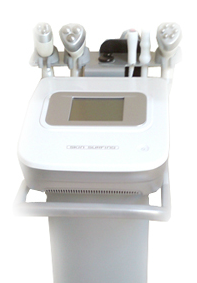 Radiofrequency devices use short waves (radio waves). They generally do not need to cool the skin as the heat is delivered deeper beneath the skin. They allow access to the deep dermis.
Some devices are monopolar (with a single electrode), these are generally the ones that act the deepest but are more painful. Others are bipolar, tripolar, or multipolar and generally require more sessions.
Radiofrequency acts more on skin laxity than on its superficial appearance. The results on the facial skin are quite consistent with good devices and good operators.
Several sessions are most often necessary (between 2 and 8 depending on the devices and the powers delivered). There are no bothersome aftereffects.
It seems that, apart from the tightening effect, a refinement of the thickness of the local subcutaneous fat is regularly achieved. This technique is therefore often recommended to treat puffy and lax lower faces as well as arms and thighs where skin laxity is accompanied by a (slight) excess of cellulite…
 more info
The results of these «skin tightening» treatments»
Although an immediate result is visible, it is ephemeral. The real results (for both techniques) come very gradually and are more noticeable after about 6 months (the time it takes to produce collagen and regenerate skin tissues).
It seems that these techniques for tightening the skin work better in younger people (especially before 45 years old) and less well on very damaged skin (notably those that are devitalized by the sun) or very thin and withered skin.
The integration of the treatment
In Integral Anti-Aging Medicine, it is important to consider the benefit of combining these techniques with other skin treatments. The association with mechanical stimulations and revitalization exfoliations can also be interesting depending on skin types. In any case, a global approach is necessary to treat the body in its various functions that affect the quality and firmness of the skin. Complementary means of improving the skin.
They mainly consist of providing the skin with the nutrients it needs, helping it to combat oxidation, to hydrate itself (through the
cosmetics , through the, micronutrition micronutrition, phyto-hormone therapy, etc…).
Skin cells respond to the stimulation of local treatments only if they have access to the essential micronutrients necessary for their proper functioning and regeneration. If they are suffering or deficient, neither radiofrequency nor remodeling lasers will have a real effect.
Respecting local balance
When the skin is aggressed, including by heat, there is a risk of disrupting its balance. These treatments increase the so-called « metabolic » reactions of the skin and lead to temporary inflammation.
It will therefore be necessary to compensate according to the constitution of the treated subject with cosmetics or micronutrition that reduce these inflammatory effects. For example: antioxidants and omega 3… in creams or dietary supplements or in its foods. If we refer to Ayurvedic medicine, a plant like aloe vera or coconut oil (for example) would be very suitable to accompany these treatments. Indeed, according to Ayurveda, their action reduces the element «fire» brought by the heat of the devices. This is particularly useful when the treated skin already has this element in abundance. This is the case for irritable, red, couperose skin, etc.
Here too, with a laser or a radiofrequency device, it's all about balance.
References
- Lupton JR, Williams CM, Alster TS.
Dermatol Surg. 2002 Sep;28(9):833-5.
Nonablative laser skin resurfacing using a 1540 nm erbium glass laser: a clinical and histologic analysis. - Papadavid E, Katsambas A.
Int J Dermatol. 2003 Jun;42(6):480-7. Review.
Lasers for facial rejuvenation: a review.

Thank you very much for your response. I forgot to tell you that I have an autoimmune disease, PR, and it has been a month and a half since I had this laser treatment, my face is still thin, my doctor told me that I need to wait 3 months to see any potential improvement, but I am tormented by regrets and very affected by this situation.
Hello, I had a Fotona laser rejuvenation session followed immediately by a spot treatment session, about ten days later, my face has thinned and looks aged.
Unfortunately for me, I have lost the volume of my entire face, I am 54 years old, and it has affected me a lot. Is this phenomenon reversible? And how can this loss be explained?
Indeed, this is contrary to the intended goal. However, it is very difficult to respond without knowing what products were used in addition to the laser. It is possible that the heat from the laser affected the subcutaneous fat cells, leading to a reduction in the thickness of fat under the skin or dehydration. In principle, this can return to normal if there is no tissue damage. In any case, you need to wait several weeks to see the effect of the laser on the skin (the time it takes for collagen to be produced following the laser treatment). Check back in 1 month to see how it is, and let us know.
Hello,
I am 41 years old, with good skin quality but a slight sagging of the facial oval and a pronounced nasolabial fold.
What can I do to correct and prevent this? If I understand correctly, radiofrequency can be effective; should I combine it with injections – hyaluronic acid or skin boosters? Should I fill the fold or have hyaluronic acid injected into my cheekbones?
And for prevention – should I focus more on skin boosters, hyaluronic acid, radiofrequency, or another technique?
Thank you
Answering you without seeing your face would not be serious. A competent doctor should advise you based on your case: filling in if there are deep wrinkles or real volume deficiencies in certain areas of the face (and not just systematically plumping the cheekbones as we often see), etc. For prevention, it mainly happens from the inside. So: good nutrition, good oxygenation, proper skin care with natural products, good hygiene, balancing hormonal levels, avoiding toxin accumulation, etc. All of this is described on this site to help you. Mesolifts and other skin boosters are more interesting than radiofrequency for maintenance because they stimulate and nourish the skin without overly aggressive effects.
I lost more than 15 kilos at 15 years old, 7 years ago, but I did not use any remedies for skin sagging; my skin was all flabby. Today, I am 21 years old and over time it has improved, but I can still feel it even if it is not too visible. Can I use radiofrequency on my whole body, or what should I do?
We are not really in the realm of anti-aging at 22 years old, but this question can also arise with age.
When a person loses a lot of weight, the skin can become excess and sometimes struggles to retract (especially as one ages since it then lacks elastin). Some people naturally have thinner, more fragile, or less elastic skin, and their skin will then have more difficulty recovering (the same applies after pregnancies). It is difficult to propose radiofrequency for the entire body as it may be expensive. Perhaps only on the most damaged areas. After that, it is especially important to look at the long term and ensure there are no nutrient deficiencies, especially in proteins, unsaturated fatty acids, silicon, and vitamin C in particular. Exercise is highly recommended. Exposure to cold can also improve the skin, just like daily brushing with a special body brush (made of boar bristles) to avoid irritating the skin.
Thank you for your response, but since dental implants are inside, I do not see a connection with ablative lasers that remain on the surface of the skin.
My question is related to the fact that HIFU or laser in radiofrequency penetrates deeper into the layers of the skin to create heat; could its beam potentially «hit» an implant and cause damage to the implant or even pain?
If you are talking about dental implants (and not injectable implants), it is different: in theory, very powerful ultrasound and radiofrequency can indeed have a deep effect that could heat dental metal material and generate a painful sensation. In practice, you really have to get very close to these areas to feel something, but you still need to be cautious.
PS: laser and radiofrequency are two different things.
Hello,
Is the laser safe on the face when one has several implants?!
Thank you for your response ;-)
The same answer as for radiofrequency: no specific effects described with non-ablative lasers (the remodeling lasers we are talking about here, which do not abrade the skin). In practice, nothing particular to report.
Hello, all sorts of radiofrequency and ultrasound devices are sold for home use. I would like to acquire one, but are they effective? And if so, which one do you recommend?
I have had 3 radiofrequency sessions, and the last one was a month and a half ago. My question is, can I do a laser before the 3-month exhaustion period (the maximum period when collagen does its work)?
A priori, a laser will not stop the production of collagen related to radiofrequency, which acts much deeper anyway.
.
«It seems that, aside from the tightening effect, a refinement of the thickness of the local subcutaneous fat is regularly achieved... I have no local subcutaneous fat or very little, and my thin skin tends to wrinkle rather than sag, so with RF treatment, am I at risk of ending up – at best – certainly tighter but also more hollow?»
Thank you. Last but not least, which radiofrequency device? From what I see, there are plenty, and there are even new machines that transmit heat with needles? Which RF devices would you recommend for sagging? And what do you think of the E-matrix in particular?
On areas where the skin is very thin and where there is not much subcutaneous tissue or muscle laxity (like around the eyes and neck...), it is quite effective. For the sagging of the jawline, I find RF more effective (be careful, it still doesn't replace a facelift).
Thank you. And do ablative lasers work for tightening? Better or worse than RF?
Hello, I would like to do something about sagging, jawline, shadows of jowls, and all those joys. I am 57 years old, have skin that is not very wrinkled but is now wrinkling quickly (recent menopause) and whose volumes are also changing rapidly.
Apparently, I cannot have injections since I have Hashimoto's. But for Botox, is a small lion's wrinkle injection possible or not?
For tightening: I had thought about Ultherapy but it is expensive and I may not react. So I am considering lasers (but without social eviction, soft) and lamps. Is a laser therefore less effective than radiofrequency?
And the lamps?
For lamps, does anyone have a recommended address? Good machines and good practitioner.
Thank you
Aside from HIFU and radiofrequency, there is hardly anything other than lifting (or thread lifting if the sagging is moderate). The flash lamp does not tighten the skin, and the results of non-ablative lasers are quite disappointing. As for injections, no regrets because they are not a treatment for ptosis and sagging (only for wrinkles).
OK, it’s clearer this way, thank you. I also have wrinkles above my lip that are settling in, especially the lion's wrinkle. Can I consider a bit of Botox with Hashimoto's or not?
Officially, the contraindications for botulinum toxin are myasthenia; women who are breastfeeding and, more relatively, people with neuromuscular transmission disorders such as amyotrophic lateral sclerosis… Thyroiditis is not included. After that, it’s up to the doctor to decide based on your case.
Hello,
I suffer from rosacea, can I have radiofrequency sessions?
Thank you for your response.
There is no formal contraindication. The face will likely be redder after the session but should have returned to its normal appearance the next day.
Hello,
Can we have radiofrequency sessions while on anticoagulant treatment (Kardégic 75 mg)?
Thank you for your response
Yes, it is possible. There is no problem to fear.
Hello, I am 60 years old, have very good skin, just sagging around the mouth of the face, I need to have hyaluronic acid injections, can I also have radiofrequency sessions at the same time? Thank you for your responses.
There is no particular known problem, but I would avoid doing radiofrequency on freshly injected hyaluronic acid if possible (at least not on the same day).
Good evening, I had radiation therapy on my neck. This has caused premature aging of the skin in the lower face, starting from the mouth. Can I have radiofrequency sessions and can they yield results? Thank you for your response.
In principle, heating skin that has already been irradiated does not seem to be the best treatment. Revitalizing methods like mesolift or carbon dioxide would seem more appropriate to me, as well as good regenerating and nourishing cosmetics (for example, essential oil of immortelle or tea tree, vitamins A, C, and E, coconut oil, etc.).
Hello,
Having dental implants, can I still have radiofrequency?
Sincerely
Radiofrequency should heat the skin and at most the subcutaneous fat, not the bones. So there is no problem.
Hello,
It is read everywhere that dental implants are one of the contraindications to radiofrequency, yet you say the opposite.
I am currently undergoing radiofrequency sessions and I have a metal implant, what risk do I really incur? Does the metal of the implant risk heating up and damaging the gum?
Hello, you have the answer below in a comment from 09/10/2018.
Hello, I am 35 years old, and I have a slight sagging in the oval of my face… how much does a session cost, please? And how long does it take to see results? Thank you.
It depends on the device used. For common devices, expect to pay between 100 and 200 euros per session and 5 to 6 sessions for a treatment. The result starts after 1 month and evolves to stabilize 6 months later.
Hello, are the results obtained from radiofrequency, such as collagen and fibroblast stimulation, durable even at a very advanced age (60 years and older)? In other words, will this collagen stimulation by RF remain active even after menopause, and with the same effectiveness? Thank you in advance. Best regards.
Hello
If one has arrhythmia, can radiofrequency...
Cause a problem?
Thank you
Radiofrequency is contraindicated for pacemaker carriers. Otherwise, there is really no reason for it to influence a cardiac arrhythmia.
Hello
We hear a lot about the dangers of electromagnetic waves.
Knowing that radiofrequency emits these waves (like a mobile phone), is there not a significant health risk in undergoing this treatment?
Thank you for your response
It is indeed the same radiation as a microwave or phone, so it has the same effects on the body. That said, radiofrequency treatments are only done occasionally. One might think that the real dangers exist more with daily or very repeated exposures, like with mobile phones, for example.
Can I undergo radiofrequency on my face after just having a CO2 laser session?
It is wise to wait until the skin irritation has passed. Moreover, the CO2 laser already has a tightening effect (less deep than radiofrequency)...
Hello, I have several small moles on my face, is it contraindicated to have radiofrequency sessions? Thank you for your response.
As a rule, we will avoid placing the handpiece on moles during the session, but this should not prevent the use of radiofrequency.
Hello, can this trigger an ophthalmic shingles again? Thank you in advance.
In principle, it is only about heating the skin of the face. There is really no reason for concern. Herpes or shingles can occur with more aggressive treatments like laser abrasion, for example.
I have vitiligo on my body. Can I have a radiofrequency session? Won't it risk causing vitiligo on my face?
Thank you
It's difficult to give a definitive answer. Normally, the temperature of RF is not sufficient to damage the melanocytes that provide pigmentation to the skin, so there should be no danger.
That said, vitiligos evolve in such unexpected and even strange ways that caution is advised: either abstain or start with a test on a small area and wait to see after several weeks before continuing.
Hello,
Can you tell me on average the duration of these effects for this type of treatment? Should one have sessions every year or are a few sessions enough to be at ease for 2/3 years? I am 35 years old and have slight skin laxity around the jawline.
Thank you
In my experience, with 5 to 6 bipolar radiofrequency sessions every 3 weeks, we achieve a result that is then maintained according to the patient's needs (generally one session every 3 to 6 months).
In principle, results are easier to achieve on younger skin like yours. One piece of advice: try 3 sessions and see if there is already a result. If not, you may not respond, and then it would be pointless to continue.
Good evening, does RF work on stretch marks? Thank you for your response. Best regards.
RF with microneedles can yield results, but with simple contact electrodes, it is not miraculous.
Hello, I have already had three facial sessions with no results. Should I continue? My fourth session is on April 24. Is it worth doing it? I await your response, thank you in advance.
In my experience, if there are truly no results after 3 well-done sessions (and after waiting at least a month to judge), it is pointless to continue. 20 to 25% of cases do not respond to treatment, or the machine is not powerful enough, or it is poorly used, or your case is not a good indication, etc., etc.
Hello, I have enlarged pores, especially on one side of my nose. I have already had laser treatment several times, but it is still very noticeable, which is really bothersome.
I wanted to know if it is better for me to do radiofrequency or a light or medium peel. I would like results fairly quickly...
It is difficult to reduce very enlarged pores on the nose anyway, aside from deep exfoliations.
Radiofrequency is not specifically designed for enlarged pores. Abrasion laser (fractional or not) is the usual treatment for this. A medium peel may possibly yield a result, while a light peel will likely not be effective here.
.
Hello, does radiofrequency also act on wrinkles?
What are the prices?
Thank you for your feedback,
Good evening.
By firming the skin, RF may slightly reduce wrinkles related to laxity. For expression lines, hyaluronic acid injections will be more effective. The two treatments complement each other.
The cost depends on the device and the number of sessions for a treatment. On average, you can expect 150 to 250 euros per session for a total treatment of 4 to 6 sessions.
I have couperose on my cheeks and chronic urticaria, heat worsens the problem. Would radiofrequency be harmful in my case?
Radiofrequency itself should not have an aggravating effect on couperose. However, it emits strong heat that may temporarily bother you. You can do a test to see if you tolerate the sessions and compensate for the effects of the heat with applications of aloe vera gel. Dr D. N.