


To reduce brown spots and achieve a more even complexion, we aim to prevent the skin from producing too much melanin. This is the pigment that gives the brown (or tanned) hue.
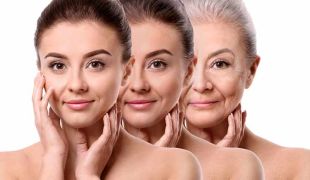
With age, it begins to form irregular clusters that blur the complexion…
To achieve this, various substances are used that generally act on the cells that produce these pigments (melanocytes). On the other hand, by accelerating the skin's cell renewal, the melanin produced struggles to pigment the new cells. Thus, the skin tends to lighten with any exfoliating treatment (creams, peels, abrasions, scrubs…) that will «refresh» the complexion.
Lightening products for spots
Hydroquinone and corticosteroids are reserved for certain medical uses. Their abusive use can lead to serious skin problems. Other products are quite numerous. None are truly miraculous, but when used regularly and persistently, they can yield good results.
Here are the most commonly used:
Plant products and extracts
Arbutin (deoxyarbutin): similar to hydroquinone but without its risks (some refer to it as «phytohydroquinone»). It is found in certain fruits (pears, blackberries, strawberry tree, bearberry…). In Indian cosmetics, these fruits can be applied to the skin (in slices or as a puree).
Kojic acid : naturally produced by certain fungi or through fermentation, it is quite effective for treating age-related pigment spots.
Phytic acid : is also an antioxidant found mainly in cereals.
Aloesin : is found in aloe vera. It is a skin lightener, antioxidant, and anti-inflammatory. The inside of aloe leaves is used in cosmetic treatments, applied directly as fresh gel or incorporated into creams.
 Lightening essential oils
Some essential oils have depigmenting properties. However, they should be used with caution as any skin irritation could (with sunlight or UV) lead to new pigment spots.
These include essential oils of:
– celery (to be used only in the evening due to the risk of photosensitization)
– carrot
– citrus
– geranium
– ylang-ylang.
Other depigmenting active ingredients
Niacinamide is the active form of vitamin B3 (niacin).
Rucinol and flavonoid plants (such as artichoke or skullcap): have no undesirable side effects.
Azelaic acid : also widely used against acne and rosacea, it has an exfoliating effect and can cause slight irritation. It is not known to have any general toxic effect.
Alpha-hydroxy acids
These can be fruit acids (glycolic, malic, lactic, tartaric, citric…), or retinoic, ascorbic (Vitamin C), linoleic, glycyrrhizic (from licorice).
They are not actually depigmenting agents but they promote the skin's cell renewal. They are exfoliants that enhance the action of depigmenting products with which they are often combined.
How to proceed in practice
Products dedicated to treating brown spots generally combine several active ingredients. They can be applied to the entire face and décolleté.
It may also be more interesting, with certain products, to apply them only to the spots using specific tips or cotton swabs. The idea is to reduce color differences on the skin so that the spots stand out less rather than to lighten the overall complexion.
Vegetable oils to use for spotted skin:
 Applying a vegetable oil in the evening is a good moisturizing and nourishing treatment for the skin. Spotted skin can use coconut, lily, or castor oils.
Ayurveda recommends saffron oil against pigmentation, complemented by applications of licorice extracts and aloe vera gel.
It is possible to prepare a vegetable oil to which essential oils are added, such as carrot and geranium (about 1 to 3% of each). It will be applied in the evening.
You can also apply organic essential oil (pay attention to its quality!) on the spots with a cotton swab in the evening. Do not insist (one contact is enough) as essential oils penetrate very well into the skin.
Brightening masks for the complexion
Cucumber mask that contains enzymes against the formation of melanin. Lemon juice can also be used. The aloe vera gel mask can be enriched with essential oils.
The 10% licorice macerate is also interesting in this type of treatment.
Depigmenting creams
It is generally more effective to combine a depigmenting treatment with an exfoliating treatment. There are also ready-made creams that combine both.
Exfoliating masks can be done additionally once a week or every 15 days.
It is difficult to say that one depigmenting active ingredient is significantly better than the others. All have proven effects. In practice, it seems that combinations of depigmenting actives yield more consistent results.
It is clear that one must inquire about the added chemical additives and excipients because many creams contain parabens and other more or less toxic products.
If you opt for natural solutions, it is possible to prepare lightening creams without toxic excipients. In a neutral cream base, one can incorporate natural active ingredients (plant extracts, essential oils, vitamin C…) or synthetic depigmenting products (azelaic acid, kojic acid…), etc.
Aloe vera gel is an excellent treatment, particularly for oily skin. One can perfectly use the gel from the leaves of the aloe, taken directly from a plant at home. The antioxidant properties of aloe are then maximized and the cost is almost zero. However, be careful to have the right variety of aloe vera with clear gel.
In any case, the treatment of pigmented spots is gradual and must be followed for several months.
Medical treatments for brown spots
If it is only one or a few localized spots, it is more convenient and quicker to use intense pulsed light or laser.
However, to prevent the reappearance of spots, it is highly recommended to use depigmenting treatments afterwards.
In the context of skin aging, it is important to understand that in addition to isolated spots, multiple small irregular pigment deposits appear everywhere on areas exposed to light. Therefore, it is often necessary to treat all of these areas.
Of course, it should be noted that the first thing to do is to protect your skin from the sun. Inevitably, sun exposure will cause pigmented spots to return, more or less quickly. Similarly, the areas of skin with spots can be the site of keratoses due to UV exposure. These keratoses can themselves degenerate into epithelial tumors (skin cancers). Therefore, it is important to show any suspicious lesions to a doctor.
References
- Jones K, Hughes J, Hong M, Jia Q, Orndorff S.
Pigment Cell Res. 2002 Oct;15(5):335-40.
Modulation of melanogenesis by aloesin: a competitive inhibitor of tyrosinase. - Martínez-Gutiérrez A, Asensio JA, Aran B.
J Cosmet Sci. 2014 Nov-Dec;65(6):365-75.
Effect of the combination of different depigmenting agents in vitro.

Hello,
I just discovered your site, and I read everything I could with great interest… But, unfortunately, I cannot connect; my inbox remains empty… I will contact you again tomorrow Monday, February 17.
Thank you for all this really fascinating information.
Best regards.
Hello, thank you for this precise article, unfortunately I did not have the chance to be warned in time and although I have been little exposed since I turned 17 and I avoid the sun and heat, I did get burned just by going out in the city or waiting by the water for my family to decide to come back as long as I didn’t have a vehicle :/. Also, after my «expiration problem», I suddenly found my arms covered with quite disgusting spots (however, my face is relatively spared; it looks like simple freckles that I have always had with the slightest exposure) and shady spots on my calves of an English white (I no longer show my legs because of «post-expiration» cellulite). Also, exposing myself to synthesize vitamin D becomes extremely complicated; if I use sunscreen, absorption will be hindered, so I use aloe vera and coconut oil and avoid the hottest hours.
If I expose my arms and back only in the morning, would that be sufficient for vitamin D, and is there a risk of worsening the spots at that time? (I think logically it will be exactly the same but maybe not, so I might as well ask the question)
Thank you :)
20 minutes of exposure per day are, in principle, sufficient to synthesize vitamin D. If it is not a harsh sun, there is no concern for brown spots.
Hello, thank you for all this useful information.
I have been suffering from spots on the skin of my upper lip for 5 years as if I were shaving. I have used several depigmenting creams; peels with no results, lemon, honey with no results. I have very fine hairs in this area and I don't know why I have this green spot. I use a depilatory cream and pulsed light for hair removal and I do not expose myself to the sun. What natural remedy can you recommend?
Can I make a mixture of carrot and celery and apply it or do I need oils?
Thank you for your advice. I will experiment… Liliane
Is wearing sunscreen the only solution to avoid brown spots?
If one does not expose themselves or is minimally exposed to UV, they will definitely have fewer pigmented brown spots on the skin. To avoid UV, there are indeed sunscreens, or clothing, hats, parasols, sunshades, etc.
ROSEHIP OIL, HORSERADISH OIL, AND SEA BUCKTHORN SEED OIL FOR CARRIER OILS AND CARROT AND CELERY OIL (may not be suitable for acne-prone skin)