


- Fighting against hair loss
- Good local blood circulation
- Filling deficiencies
- Hair regrowth stimulation treatments
- Micro-hair grafting
Article updated on 12/12/2024
Identifying the cause or causes of hair loss
First and foremost, it is essential to evaluate the possible causes, which are numerous. We summarize them here, and you will find more details on dermatology websites.
The most common cause is’androgenetic alopecia (also called androgenic). Abnormal in women but more or less «normal» in aging (especially in men), it is also believed to be highly hereditary. It is linked to a modification of the androgenic hormonal environment. In particular, testosterone is converted too much into dihydrotestosterone (DHT), which affects the hair follicle by reducing its growth. Thus, a hair falls out and regrows according to a hair cycle averaging several years, but here, with each regrowth, it becomes thinner and devitalized until it becomes nonexistent. To simplify, let's say that this process is «normal» with aging, but some individuals may be much more genetically sensitive to it, and at an earlier age.
Aside from androgenetic alopecia, possible causes (or additional factors) include:
– telogen effluvium medication-induced (from aspirin to chemotherapy, many chemical medications can cause hair loss)
– the dermatoses of the scalp, alopecia areata, fungal infections
– uric acid’hyperseborrhea (very oily hair with dandruff)
– disorders hormonal : certain pregnancy outcomes, thyroid diseases, hyperandrogenism (too many male hormones)
– radiotherapy, burns, significant and ongoing stress…
The integrative approach to hair loss
 If there is a specific and well-identified cause of alopecia, it must be treated first. For other cases where hair falls out too quickly for multiple reasons, hereditary or simply related to aging, an integrative and holistic approach follows the plan below:
1 – ensure that the hair follicle is well nourished (good blood circulation in the scalp)
2- check that this blood flow provides all the micronutrients essential (supplement the diet if necessary)
3- eliminate possible causes ( toxins , tobacco, medications…)pollutants, stimulate hair
4- growth with available treatments 5- balance the
if necessary, when it disrupts hair growth hormonal terrain 6- not forgetting to take care of one's hair in its
maintenance maintenance daily: washing, brushing, protection, styling…
According to this approach, here are the treatments that can be provided, either by oneself or with a doctor.
Stimulate the blood circulation in the scalp
Brushing and stimulation
Gentle, regular brushing and stimulating massage with a brush (made of boar bristles to avoid traumatizing the scalp) are good habits for hair vitality.
Scalp massages
Scalp massages (with or without lotion) also promote local blood circulation. However, be careful not to be rough and pull out hair. Practice gently.
Circulatory lotions (minoxidil, plants…)
Minoxidil (Aminexil°, Rogaine°, Foligain°…) is originally used against high blood pressure. It is a vasodilator that increases blood flow to the scalp when applied locally. It seems that the effect on hair stops when the treatment is discontinued. Therefore, it should be continued continuously. Generally mild, side effects do exist (itching, acne, headaches, dizziness…).
There are also many lotions to activate circulation with various products and plants (see below).
Carboxytherapy
Subcutaneous injection of carbon dioxide gas has vasodilating and oxygenating effects on tissues.
Electrotherapy, microcurrents, LEDs, lasers
These are also techniques aimed at increasing microcirculation around hair follicles. Here, needles connected to electric currents or LED light, or low-intensity lasers (which some call «cold» lasers) are used. It is possible that beyond the microcirculatory action, there is stimulation of the cells that produce hair. Results have been recorded, but no technique has really made a difference compared to others, and conclusive scientific studies are not abundant.
Local vasodilators in mesotherapy
The mesotherapeutic injection of vasodilator medications will increase local blood flow and allow hair bulbs to be better irrigated and nourished.
Filling the nutritional deficiencies
 Just as a plant will struggle to grow in dry or nutrient-poor soil, your hair will have difficulty growing if it does not easily find its daily nutrients. These include minerals, vitamins, amino acids, and essential fatty acids.
Nutrition
It must be healthy and varied to provide the body with all the vitamins, minerals, amino acids, and unsaturated fatty acids that are essential. In particular, attention should be paid to the intake of B vitamins and sulfur-containing amino acids (cysteine, methionine…).
General intake
Although scientific studies on these products are rare, it is generally accepted that high-dose supplements of vitamins B5 and B8 (Biotin° Bepanthene° injections or tablets), and sulfur-containing amino acids are effective against hair loss.
Supplementation: it aims to prevent deficiencies, meaning not lacking anything that is necessary for hair growth. Various supplements offer mixtures of nutrients intended for hair health. They typically include:
– essential micronutrients: mainly vitamins B5 (pantothenic) and B8 (biotin), but also B3, A, E, B6, magnesium, Zinc, silica. The iron should only be given in case of verified deficiency.
– non-essential nutrients: sulfur-containing amino acids (cystine, methionine…), antioxidants, soy isoflavones (for their effect on hormonal balance), etc…
Supplementation : it will contain the same micronutrients but at much higher doses than the recommended daily allowances (RDA). This is particularly true for vitamins B8 and B5, which are traditionally given for hair loss at doses that can exceed 100 times the RDA. We are then in the case of a true treatment based on essential nutrients and no longer just optimizing intake to stay healthy.
Local intake
There are two ways to deliver micronutrients to hair follicles through the scalp:
– mesotherapy injections (see below), where mixtures of products containing minerals, vitamins, amino acids are used. The most commonly used products are vitamins B5 and B8, E and C, silicon, magnesium…
– lotions containing these same nutrients. The passage through the skin will be more difficult and will depend on the form in which these nutrients are delivered, and the components of the lotion that will transport them. Moreover, not all nutrients are absorbable through the skin.
Stimulating hair growth
Lotions and natural anti-hair loss and stimulating substances
Even if we no longer believe in the miracle lotion that regrows hair, there are still interesting local products because they are truly active on the life of the hair. The problem is indeed there: when a hair follicle no longer produces hair and atrophies, it is declared «dead». As of now, we do not yet know how to «resurrect» it, but research, particularly genetic, may hold some surprises for us.
In the meantime, we know the action of certain substances on the follicles and on the quality of the hair they produce. Some plants have been used for this since ancient times, and we now know where their virtues come from.
The root of ’nettle, for example, is capable of reducing the activity of 5 alpha reductase view higher. The’oats also has these properties as well as the lignans which are contained in large quantities in flax seeds and also in cereal grains, brown rice, apples, garlic, broccoli…
Some essential oils are locally interesting for hair. Some reduce seborrhea (cedar, lavender, rosemary…), others activate microcirculation (camphor, ginger, tea tree…). Studies have indeed proven the effects of certain essential oils in alopecia: e.g. « Randomized study on aromatherapy in alopecia areata ».
 The ayurvedic cosmetics is well acquainted with the use of natural products for hair. It widely uses applications of vegetable oils such as jojoba, flax, sesame, coconut… to be chosen according to hair type (according to the Ayurvedic typology).
Stemoxydine
It is a molecule proposed in 2013 by a major cosmetic laboratory that promises an average of 1700 more hairs after treatment. This product would shorten the «sleep» phase of the hair follicle (between hair loss and regrowth). It is not (yet) about reviving a follicle that has been inactive for years. However, the treatment is expensive. It will be easier to form an opinion with a few years of hindsight, but the wealthiest should be able to try it without fear: the laboratory announces it without side effects.
Mesotherapy: the direct application of products to the scalp
This involves multiple micro-injections distributed over the entire area to be treated using ultra-fine needles. The injections are made in the first few millimeters of the scalp, either manually or with the help of a gun capable of automating the gesture. They are minimally painful in this area.
It is a technique known and practiced since the 1980s. It satisfies a large number of patients and doctors due to its results. One should not expect to regain an adolescent's hair, but the effects generally felt and/or verified are:
– reduction of seborrhea (which makes hair greasy and promotes hair loss)
– thickening of the hair, improvement of its texture and shine
– finally and above all, reduction and slowing of hair loss.
Observation shows that people who regularly undergo such treatments retain their hair better and longer. The results are attributed to better nutrient supply to the hair bulb, improved local blood microcirculation (which tends to decrease with age), and also to a decrease in the hormonal sensitivity of hair follicles to androgen hormones.
It is a medical technique that remains natural depending on the products used. Initially, doctors mainly used vitamins B5 and B8 (biotin, pantothenic acid), and then various products were added:
– natural substances : multivitamins (also containing other vitamins), magnesium, organic silica, zinc, amino acids, progesterone
– vasodilator medications (which increase local blood flow) one of the most well-known being minoxidil
– hormonal regulators reducing the action of 5 alpha reductase, the enzyme that transforms our testosterone into another hormone (DHT: DiHydroTestosterone) which promotes seborrhea and hair loss
– specific peptides : more recently, mixtures of peptides intended to stimulate hair growth have appeared on the market and are applied locally through microneedling or mesotherapy.
Local injection of platelet growth factors
Since the 2000s, growth factors contained in the blood platelets from a blood sample of the patient have been concentrated. They are then reinjected into the scalp to stimulate growth, or even regrowth, as some studies seem to show that a modest gain in hair might be possible.
Quite frequently, doctors mix these growth factors with micronutrients such as vitamins, amino acids, etc…
This technique has the advantage of being completely natural and therefore safe with no side effects. However, it must be performed with the utmost asepsis. It is, of course, more expensive than simple mesotherapy. This technique was suspended in France at the end of 2013 by the DGS.
General treatments: the hormonal aspect
 Natural remedies for hair loss
 Natural remedies for hair loss
Nettle root, pumpkin seeds, saw palmetto (sabal serrulata), African plum (pygeum africanum), are capable of reducing the activity of 5-alpha-reductase and thus intervening against androgenetic hair loss. They can be found in the form of powder capsules, mother tinctures, or even herbal teas.
Flaxseed, in addition to its richness in omega 3, contains lignans (phytoestrogens) that would improve the condition of the hair and prevent their loss by inhibiting the action of 5-alpha-reductase.
The Zinc is an essential nutrient that also acts in this direction. It is also used in acne against hyperseborrhea and has antifungal action.
A lack of selenium can be an aggravating factor in alopecia, but in general, before taking nutrient supplements, it is advisable to eliminate and compensate for any deficiencies in vitamins, minerals, amino acids, etc.
Finally, it should be noted that these remedies are also used in men against prostate disorders related to the activity of this same enzyme (5-alpha-reductase).
Testosterone and 5-alpha-reductase, the enemy enzyme
Various medications have been developed to combat the activity of this enzyme.
 Finasteride : improvements in hair loss and regrowth (moderate) have been scientifically demonstrated, but they cease when treatment is stopped. Side effects exist (loss of libido, gynecomastia (increase in breast volume in men…). They would also subside upon stopping treatment.
Dutasteride is a molecule with the same type of effect, discovered more recently. It would be more effective as it acts on both types of 5-alpha-reductase enzyme (instead of one for finasteride) but would also have slightly more side effects.
Antiandrogens (e.g., cyproterone, flutamide, nitutamide): they decrease, as their name indicates, male hormones (and consequently DHT). Their use is only considered in women or in certain serious diseases such as prostate cancer in men.
Other hormones
Estrogens : a lack of estrogens, particularly at menopause, promotes hair loss and degradation (thinner, drier). They may be justified as part of hormone replacement therapy if non-hormonal natural phytoestrogens are insufficient. Only a doctor is qualified to decide, and only estradiol (bio-identical form of estrogen) should be used in this case.
Progesterone : it stimulates hair growth in both quantity and quality. Same remarks as above. It can also be applied locally as a lotion.
Comprehensive view of hair loss treatment
 In a huge market for the cosmetic and pharmaceutical industry, let’s be wary of overly promising sirens of victory against alopecia.
We are still in the same «3 phases» logic of comprehensive anti-aging (these points are detailed at the beginning of this article):
1. make sure that an excess of toxins or pollutants (internal or external) does not harm the proper growth and health of your hair.
2. make sure to not miss out on essential nutrients (especially B vitamins, E, minerals like zinc, silica, selenium, iron, omega 3… whose deficiency can directly influence hair loss
3. stimulate (gently preferably) the deficient functions, whether hormonal or circulatory, as we have seen.
Finally, do not wait until you are bald but regularly maintain your hair with appropriate care and treat (preferably with natural means) as soon as you lose your hair in too great a number or in quality.

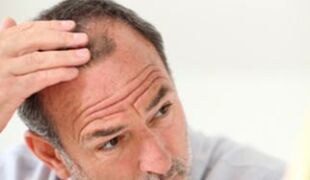

Hello, in the case of androgenetic alopecia, by inhibiting DHT, can we hope for hair regrowth, or is the previous loss irreversible?
Best regards
If the cause is only there, the problem is not too old and in a woman, it is possible. For a man, there is little chance.
Stay healthy
Hello, suffering from endometriosis I am currently on continuous Slinda.
Before that I was on Androcur for my condition but it had stopped my hair loss (androgenetic alopecia). This treatment gave me a meningioma and I had to stop it.
I read that saw palmetto could block DHT but I have a family history of breast cancer. But apparently, it should be avoided in this case. Is that true please?
If so, are there other effective anti-DHT options please?
Thank you in advance.
Sincerely
Nathalie
Hello Nathalie.
Saw palmetto should be used with caution only in cases of breast cancer, and it is not an absolute contraindication, it is not one in the case of only a family history.
The other DHT inhibitors are mentioned in the article. That said, you must first be sure that your problem is that one. You need to find the cause(s) and treat them (as explained here). Take care of yourself.
Hello, I am prone to hair density loss, the dermatologist diagnosed androgenetic alopecia (mild diffuse alopecia and receding hairline) which bothers me a lot for aesthetic reasons related to the shape of my skull, especially since my hair is fine by nature, and advised the application of Minoxidil for MEN… without wanting to contest his expertise, personally I would prefer to refrain and stick to the dosage for women but I would like to have your opinion.
Thank you very much for the article!
PS if minoxidil works by vasodilation, can scalp massages have a comparable effectiveness?
Minoxidil does not have a hormonal action, however, it can also activate the growth of facial hair, which is why it is given in a lower dose for women. After that, each case is particular. All techniques leading to vasodilation and better circulation do indeed have a comparable effect. Thank you for your appreciation.
Hello, I would like your advice. I have been diagnosed with androgenetic alopecia for 1 year, I am on Diane35 and Minoxidil to apply every evening, the effectiveness so far is not great, I wanted to complement the treatment with nettle root capsules but I am hesitant to take them because in a previous comment it is said that it is an anti-aromatase, so I am afraid it will worsen hair loss. What do you recommend I take as natural remedies?
Sincerely
Here, the reduction of the conversion of testosterone to DHT is the main activity of nettle root, and this is the most important point in cases of seborrhea and hair loss. The anti-aromatase activity is secondary in this case.
If one does not want to use it, there are other plants that act on DHT such as epilobium, saw palmetto, or even green tea.
Remember that this is one of the factors where we can intervene, and it is important to take stock of everything that can influence alopecia: diet, stress…
Hello. I need your advice please. I am 30 years old and I have been suffering from intense hair loss since the end of 2018 after stopping my Minidril pill. A hormonal assessment done in 2020 shows that everything is normal, even urinary cortisol. However, an MRI reveals PCOS.
My iron level is at 65 ng. I did a course of Cystine B6 in 2020 which had no impact on my hair loss. It is starting to become visible at the vertex.
My dermatologist says I suffer from androgenetic alopecia. My gynecologist talks about «moderate» PCOS and says that I am hypersensitive to androgens. I specify that I ovulate every 32 days or 39 days and that I do not suffer from acne, oily skin, or hirsutism.
My question is: can hair loss be linked to PCOS? Given the hypersensitivity to androgens, can I consume saw palmetto in your opinion?
Thank you.
Hair loss and PCOS can have the same cause: hyperandrogenism (or hypersensitivity of androgen receptors). Saw palmetto reduces the action of certain androgens on hair, so why not? It is possible.
This is an answer to your question but does not constitute medical advice or a consultation, which we prohibit from giving in the comments.
Thank you very much. What I mean is that even though my hormonal assessment is normal, is it possible that it is due to PCOS given that the MRI shows I am suffering from hair loss? Even if I have no proof from the blood test. Thank you.
As I told you, PCOS is not a cause of hair loss, but both can have the same origin: hyperandrogenism (or hypersensitivity of androgen receptors), meaning a hormonal imbalance.
Hello,
Could you tell me how saw palmetto interferes with hormones?
Does this mean that depending on our hormonal constitution, taking saw palmetto would increase estrogen or progesterone?
Sincerely
As stated earlier in the article, saw palmetto decreases the conversion of testosterone to DHT (the hormone promoting hair loss). This is mainly where it would act. It would also reduce excess estrogen according to some studies, which can be interesting for some men or for women with hyperestrogenism. Evidence that Serenoa repens extract displays an antiestrogenic activity in prostatic tissue of benign prostatic hypertrophy patients.
Hello,
Regarding androgenetic alopecia, which practitioner and examination should we see and do to detect this anomaly? Does it relate to estrogen and progesterone or is it a different hormone?
I alternate between periods when my hair is doing well and periods when it thins out and is very coarse.
Thank you for your advice.
A dermatologist is the specialist who treats hair loss issues. They must know how to detect the origin. Estrogens and progesterone are not androgenic hormones. They actually have a rather opposite effect on hair.
Hello,
I need some clarification. Should I bring estrogens or progesterone?
I suffer from androgenetic alopecia, vaginal and skin dryness, and premenstrual disorders. I prefer to take plants, but I know that some will stimulate estrogens and others progesterone.
What do you recommend?
Sincerely
Sabrina
It is necessary to try to restore a balance between estrogens and progesterone, adapting to each case according to specific needs. It should be done gradually and «by feel» while monitoring the evolution of symptoms and feelings to adjust the treatment. Whether using plants or bio-identical hormones, it is always better to have follow-up from a doctor who knows the subject.
Are there any side effects of natural products (pygeum, etc.) on health like finasteride?
Stemoxydine does not have any contraindications in this case, in principle. However, it is likely to be inactive, given the effect of chemotherapy on hair follicles and the way the product works. If you want to take something, focus on nutrients that are beneficial for hair growth that you might be deficient in. That being said, hair generally grows back very well after chemotherapy with a very frequent increase in vigor. Have confidence, that is the most important.
I am on oral chemotherapy, my hair is becoming soft, increasingly thin, can I use stemoxydine locally?
Thank you for your response
what is the best treatment for hirsutism Finasteride; Dutasteride, tadenan or permixon. I have already taken androcur and diane35 with no results.
There is no «best treatment»; there is the most suitable treatment for your case. This means that we must first understand the cause of the problem (hormonal, genetic, acquired, multiple, etc.). Generally, people do not understand this and believe in miracle products.
The remedies you mention can indeed all have an effect. Some are plant extracts, others are synthetic molecules. Then we need to compare the doses provided per tablet or capsule and adjust the treatment. A competent doctor or endocrinologist should be able to do this.
Hirsutism is a very bothersome problem for women. Of course, if the cause is mainly genetic, the most effective solution will often remain the ’hair removal.
Recently menopausal, I stopped Yaz last August for a low-dose HRT (patch + progesterone). I have been losing my hair continuously since October with the appearance of a slightly receding hairline. What should I do? Is this normal? Thank you for your response.
It is possible that your HRT is not dosed correctly (to be checked). After that, there are always other possible causes for hair loss: lack of nutrients, stress, anxiety, toxins, etc. It is difficult to tell you more, of course.
Hello,
I am questioning zinc. I was advised to take 30mg per day for 3 months against acne. It also regulates hormones according to my naturopath. However, my hair loss continues. And on one site, I read that zinc increases testosterone and the enzyme that converts testosterone to DHT, responsible for hair loss. I no longer understand, some sites recommend zinc for hair loss and others say it can be the cause in high doses... Should I take it or not?... Thank you in advance.
If your blood zinc level is too low (which is not uncommon), the question does not arise; you need to take it (usually between 15 and 30 mg/day depending on the form of zinc). Zinc acts on the pituitary-adrenal-gonadal axis and can therefore regulate sex hormones, including testosterone. It may eventually promote its production in someone who is deficient, but if taking zinc were enough to raise testosterone levels, bodybuilders would no longer need to inject it.
On the other hand, as mentioned in the article, zinc can regulate the excessive conversion of testosterone to DHT and thus improve acne and hair loss problems related to hyperseborrhea.
So yes, take it if you are deficient (thus blood tests) but at reasonable doses.
hello, I have always fought against DHT but now that I am menopausal, I read that nettle root is harmful to women because it lowers estrogen levels! What phyto solution to combat DHT? Thank you.
Indeed, nettle also has a slight anti-aromatase action, thus decreasing the conversion of testosterone to estradiol (the same goes for flax, zinc, passionflower, etc.). That said, in menopause, this should not change estrogen levels much, which are already very low.
Otherwise, saw palmetto does not have any particular anti-aromatase activity.
excellent results with dutasteride (alpha-reductase inhibition) and tadalafil (vasodilator) if well indicated,
I have started using spironolactone after mesotherapy with a ready-made nutrient mix plus silicon and injectable minoxidil. The results are encouraging.
Is this treatment only for men because I am a woman and I am losing hair at the fringe. I am desperate and looking for all means to eradicate the phenomenon.
Thank you for your response
These treatments are also valid for women. They must be chosen according to the cause or causes of hair loss, which must be identified beforehand.