


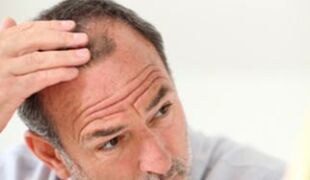
Hair becomes thinner with age while some women see an increase in hair growth. While there are local techniques to address either of these issues, it is important to remember that overall health can greatly influence them.
In particular, any abnormal hair loss should raise suspicion of a health disorder (hormonal, nervous, metabolic) or nutritional deficiencies, etc. Therefore, it is always necessary to investigate a general health issue when addressing alopecia (hair loss).
Integral anti-aging medicine will first focus on correcting the underlying condition and then treating locally, using natural methods whenever possible. Resorting to allopathy or hormones (bio-identical if possible) may be necessary in some cases.
Treatments used for hair problems
– cosmetics: plants, particularly essential oils, are very useful. Ayurvedic medicine is well-documented on hair care.
– nutritherapy: to correct very common deficiencies (for example: magnesium, silica, zinc, vitamin B6…
– hormonal balance restoration when it is disrupted
– in allopathy, vasodilators that increase microcirculation in the scalp (minoxidil for example) and finasteride which inhibits certain hormonal transformations at the level of the hair follicle-sebaceous gland
– mesotherapy and other medical techniques for stimulating the scalp
– hair micrografting when baldness is established and irreversible.
Treatments to combat unwanted hair
It is important to differentiate between true hypertrichosis and the desire for hairless skin, which can be considered a fashion or hygiene phenomenon.
 True hypertrichosis can be socially embarrassing, especially for women. These are real health issues often related to hormonal or genetic disturbances. In this case, general treatments are often necessary in addition to hair removal.
In the second case, it is obvious that local treatments are sufficient (different types of hair removal).


Leave A Comment