


 Weight gain related to age
 Anti-cellulite treatments as age advances
Nutrition to change body shape
Exercise for body shape and overweight
Cellulite and its «orange peel» effect can appear very early in women after puberty. A concern for most women, it is not related to aging (unlike wrinkles, for example) but rather to hormonal factors, blood circulation, dietary hygiene, and a sedentary lifestyle.
However, body cellulite evolves with age, and its appearance, severity, or treatments are not the same at 40 years old (and beyond) as they are for women in their 20s.
How fat becomes cellulite
The 3 causes of cellulite formation are:
– excessive volume increase of fat cells (worsened by weight gain),
– water retention or edema (worsened by a sedentary lifestyle, poor circulation, overly estrogenic hormonal factors, certain contraceptive pills, the pollutants endocrine disruptors…),
– fibrosis and hardening of tissues (worsened by poor circulation, the glycation linked to excess dietary sugars, poor oxygenation of the body, a sedentary lifestyle, toxic accumulation…).
These factors exacerbate each other and lead to the phenomenon of «orange peel». Its severity varies depending on the extent of tissue involvement and its duration. The different factors must be treated simultaneously as a whole: circulation, hormonal factors, toxin accumulation, tissue oxidation, etc…
Cellulite changes with age
As we age, the aggravating factors of cellulite change as follows:
Local venous and lymphatic circulation becomes less effective
Over time, circulation slows down and blood vessels gradually lose their tone and flexibility, especially if the individual experiences oxidative stress or significant factors. glycation This will tend to cause cellulite to spread towards the knees and lower legs. Cellulite becomes more diffuse, especially if the lymphatic circulation hurts.
Decrease in progestogenic hormonal terrain in perimenopause
During the 4 to 5 years leading up to menopause, the hormone progesterone decreases faster than estrogens. This creates a hyper-estrogenic environment with a tendency towards edema and swelling, weight gain, poorer circulation, easier fat storage, etc. This environment is therefore unfavorable to cellulite, particularly that which is located below the waist, which is more dependent on these hormones.
Then decrease in estrogenic terrain after menopause
After menopause, estrogens become deficient. From that point on, cellulite in the lower body tends to decrease in volume, at the expense of that in the upper body. Thus, if one gains weight at that time, it will more readily settle on the abdomen, chest, and upper body.
Decrease in the tendency towards fibrosis
The body produces collagen fibers less easily as it ages (thus there is less fibrotic reaction). Consequently, the hardness of cellulite decreases. Very hard cellulite areas become softer. This is partly an improvement, but in fact, a skin laxity appears over time, generally worsening the appearance of "orange peel" skin, but this is another issue to distinguish. Overall management of cellulite and orange peel skin as one ages.
Integral anti-aging medicine offers general treatments addressing the entire body and the underlying causes of cellulite aggravation. It includes the 3 phases of revitalization:
1. Detoxification to cleanse the body
First precaution: as the body ages, it eliminates toxins and calories less easily, adopt a rather light diet, or even
 , in general or through low-toxicity, cures lasting a few weeks. Very often, in cases of diffuse cellulite, the liver is congested. Regularly cleanse your body of toxins. If your circulation is sluggish, toxins and edema tend to settle in the lower body. Walking, swimming, cycling, jogging will help activate circulation and drainage in the legs and thighs. Drink more pure water and do not overdo it with salt in foods if you tend to have morning swelling and edema.
Nettoyez régulièrement votre corps de ses toxines. Si votre circulation est ralentie, les toxines et l’oedème ont tendance à se déposer dans le bas du corps. La marche, la natation, le vélo, le jogging, vous aideront à activer la circulation et le drainage dans les jambes et les cuisses. Buvez plus d’eau pure et n’exagérez pas avec le sel dans les aliments si vous avez tendance aux gonflements matinaux et à l’oedème.
Constipation must also be addressed as it can worsen cellulite problems.
2. Nutritional therapy to meet nutrient needs
Possible nutrient deficiencies should be investigated when dealing with cellulite issues. Often, a lack of high-quality protein is present, associated with an excess of sugary foods or starchy foods and highly refined cereal flours, which are low in dietary fiber.
The silica is an important mineral for the flexibility and tone of tissues. It generally decreases in the body with age as it becomes less well absorbed by our digestive system. A colloidal silica supplement may be particularly interesting, especially in cases of venous circulation problems.
Deficiencies of vitamin C, vitamin A, vitamin E, vitamin B3, and selenium are often associated with circulatory disorders.
Stimulation of slowed functions
– balancing the hormonal terrain: it is necessary to seek to improve a disruption of the hormonal terrain that is too pronounced or causing too many unpleasant effects. Improving or restoring hormonal levels is part of treatments against aging. Before resorting to bio-identical hormones, homeopathic or phytotherapeutic solutions can be used.
– stimulation of blood circulation: any activation of circulation being beneficial for circulation, venotonic plants such as ginkgo biloba, sweet clover, small holly, etc. can be interesting (see circulation problems).
 Finally, issues of static posture and musculature can play a significant role.
Cellulite has multiple causes. General treatments must be prescribed according to each case. They significantly improve the results of any local treatment.
Local treatments for cellulite
Anti-cellulite treatments aim to address the three causes mentioned above in specific areas of the body where undesirable fat accumulates (belly, saddle bags, knees, hips…). Here are the interesting treatments for cellulite and orange peel skin.
Anti-cellulite creams
They generally work by a lipolytic effect (that is, they increase the ability of fat cells to release the fat they contain) or by affecting local microcirculation (increased local circulation will promote tissue decongestion, drainage, and combat edema). They can have several associated effects.
 It is important to choose creams or gels with good penetration power of their active ingredients through the skin. These are treatments that can be done at home. They can be good complements to medical techniques or an excellent way to continue self-care regularly.
Creams that activate the microcirculation and/or venous return are often used, as well as preparations that have an anti-edema effect. They tend to reduce the aggravating factor of cellulite, which is poor local circulation.
The caffeine is the active ingredient that seems to be most prescribed by doctors (Medical Index study) in the fight against cellulite. Its properties are now well known: it reduces edema, regulates vascular tone, increases lipolysis, and moreover, limits fat storage (G.Bereziat CNRS).
The essential oils and some algae and plants have also proven the penetration of their active ingredients under the skin.
Massages to reduce cellulite
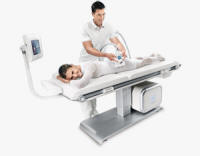 Massages have, throughout history, been used for slimming. They do not do everything, but they activate the local microcirculation of cellulite areas. They help the penetration of actives such as essential oils or caffeine…
Recent studies have shown that certain mechanical massage techniques (mechanotransduction) activated lipolysis (draining of fat cells, reducing their volume) in the treated areas. Significant reductions in the thickness of cellulite dimples have been confirmed with this technique alone.
Tonic massages stimulating the skin (manual or mechanical) are interesting for older women as they also address the treatment of skin laxity.
Mechanical massages (such as kneading) reduce fibrosis, decongest, and tone the tissues. The resulting softening of the tissues gradually improves the quilted appearance of «orange peel» skin. It is necessary to undergo 10 to 15 massage sessions, twice a week on average.
Manual massages given according to the rules Ayurvedic (or Chinese) are interesting in their approach to energy rebalancing.
Mesotherapy with or without needles for orange peel skin
Mesotherapy is one of the oldest medical treatments for cellulite. It involves performing micro-injections into the dermis of products aimed at improving circulation, draining, and decongesting, in relation to the cellulite areas. Today, there are also systems that allow products to diffuse under the skin into the fat, without using a needle and therefore without skin damage or pain.
Mesotherapy is used to improve local microcirculation and skin quality but not to destroy or reduce the volume of fat cells. This allows for decongestion and better drainage of the tissues. It is therefore more interesting for areas located on the lower body, where circulatory disorders are more often found.
Eight to ten sessions should be performed, at one or two-week intervals. Minerals or extracts from plants and algae will be willingly used, combined with antioxidant substances, or even micronutrients according to the needs of the person's skin.
Anti-cellulite treatments using physical agents
 Various methods are now proposed to treat cellulite, using electric currents, radio waves, acoustic waves, cold or the ultrasound. They are applied using plates or electrodes as appropriate, placed on the areas to be treated.
The principles are generally the same: to improve local microcirculation in order to drain the cellulite tissues (anti-edema action)  and to decongest them. Thus, fat cells can empty better, congestion and fibrosis are less severe, and the orange peel appearance improves.
In the current state of knowledge on the subject, we mainly retain here the ultrasound and acoustic waves under certain conditions of power and frequency.
The application techniques of intense cold (cryolipolysis) on certain areas  of the body seem, if used properly, to be able to reduce localized fat or cellulite volumes. They yield better results on the abdomen and hips; however, they have little effect on the appearance of the skin.
The waves short or radio may be interesting, particularly regarding the appearance and tone of the skin, but require further studies. It will also be necessary to ensure the safety of these waves on the body in the long term (which remains an unknown).
Reduce fatty deposits and improve the silhouette
 These are medical techniques capable of reducing localized cellulite volume by progressively decreasing the number of cells (adipocytes) that make it up. This reduction of localized cellulite will lead to a lasting refinement of the silhouette in the treated area. Here, fat is not suctioned out as in liposuction, but its thickness gradually decreases.
There are various techniques that can be combined. Thus, they are applied with moderate intensity, but their combination enhances the results. These include:
– application of acoustic waves
– use of ultrasound to promote damage to cell membranes
– with or without injections of neutral solutions that enhance the action of these physical agents
– application of very low temperatures (intense cold, lipo-cryotherapy)
– combinations of mechanical rolling, drainage, electromagnetic waves, infrared, etc.
These treatments use physical agents that primarily act on fat cells. When applied by skilled hands, their side effects are almost absent. They exclude drug substances that are toxic to the body.
In which cases should fat volumes be reduced?
Just like liposuction, techniques for reducing cellulite areas do not «make you lose weight» and do not address overweight issues. They are aimed at silhouette problems due to excess localized cellulite (saddle bags, knees, abdomen, hips, etc.).
The combinations of techniques tailored to each case seem to be more effective, safer, and well tolerated.
How do these treatments proceed?
 The chosen techniques are applied successively to the area to be treated. An elastic support (panty) is preferable during the days following each session.
The number of sessions needed to achieve a sufficient reduction in cellulite thickness varies between 2 and 6 on average, for results that can be equivalent to liposuction if the fat thickness is moderate and lasts just as long over time.
Between sessions, the treated areas are drained, which further refines the area, and it is advisable to tone the skin with massages.
Advantages and disadvantages
Advantages for older skin
These methods can be performed on all skin types without the risk of sagging or «hollows and bumps» effects. As age progresses, the skin is less toned, and one may fear poor results in the appearance of the skin after liposuction.
The correction is progressive and sustainable. It is a customizable “à la carte” slimming treatment.
The intervention is very light, does not require skin opening, at most just injections. The aftereffects are simple (1 to 2 days of discomfort on average).
Disadvantages
Multiple sessions are needed to achieve the final result (3 to 6 depending on the associated techniques and the case to be treated). The doctor must be aware of the risks and avoid being too aggressive. Sometimes bruising is more pronounced after these interventions in older individuals with more fragile vessels.
Precautions in combined liporeduction treatments
The doctor, based on their experience and after assessing each case, evaluates the use of associated techniques. Even though the aftereffects are generally simple, this procedure must be performed under serious safety conditions and by a practitioner well-trained in anatomy and the various techniques.
One must always adhere to a moderate amount of fatty tissue treated in each session, so that the body can integrate this reduction of some fat cells safely and at its own pace. It is the number of sessions that will allow for the treatment of larger volumes, not the fact of having larger sessions.
The integration of anti-cellulite care
In Integral Anti-Aging Medicine, it is essential to systematically consider for each treatment performed:
- the interest of combining techniques : by choosing the most suitable ones according to the person. This often allows for enhancing the effects, leading to better results.
- the use of cosmetic products: they have a certain interest provided they have proven their ability to penetrate the subcutaneous tissue. These include products like essential oils, caffeine, certain plants and algae…
- the respect for local balance. This is done according to the skin type and possible reactions based on the constitution of the treated subject. For example, in an anabolic subject with cold cellulite and water infiltration, with slower circulation, techniques that provide heat, energy, and movement will be more indicated, as well as creams that «heat up». Conversely, in a metabolic subject, with hot cellulite, little water infiltration, the application of cold (cryotherapy) will likely be more interesting, as well as creams that «refresh». Therefore, we always aim to restore local balance (heat against cold, movement against stasis and congestion, etc…).
- weight balance: is the weight stabilized? the nutritional intakes are they balanced in quantity as well as in quality? is the hormonal environment good?
- the person's posture and musculature: they play a huge role in the distribution of body fat and cellulite.
- finally, let's not forget to adopt a good lifestyle hygiene, particularly a healthy diet and the’physical exercise.
Treatments are then much more effective and the results more lasting.


Well, but what advice for major skin laxity, loss of skin elasticity, wrinkled skin... at the age of 60 and over (belly, thighs, knees, even calves), following treatments with weight gain and then weight loss. What solutions do you propose for this skin laxity – psychologically poorly tolerated. The practice of sports, a newly adapted nutrition helped me regain a very satisfactory silhouette, the problem is different when looking at one's nudity in the mirror.
thank you sincerely
The skin laxity you describe is quite different from the problem of cellulite, and one can have one without the other. It is true that many women seeing their skin become flabby and less smooth, especially after fifty, confuse this with cellulite. In fact, it is a loss of tone and elasticity of the skin related to aging. It is linked to several phenomena leading to the thinning of the skin and a decrease in elastin fibers.
You will find the answers to your questions in this article on skin laxity. You will understand that there is a large part of prevention to maintain our elastin fibers as best as possible. But it is never too late, and some treatments exist to try to firm the skin as you will see.
PS: however, it is true that as you specify, exercise significantly improves, especially in the lower body, I have noticed this since I started practicing brisk walking.
Otherwise, how to find a doctor for these age-related problems? The general practitioner I see is really overwhelmed with patients and does not really have the time (nor the motivation) to devote to issues outside the scope of strictly health problems, whereas I only have aesthetic and psychological concerns at the moment…
Hello,
As for me, it has not diminished at all in the lower body, on the contrary, I did not have it and always tended even very young to gain weight in the belly and arms but not in the thighs. But with this issue, I have become acquainted with fat thighs and buttock volume. Even more unpleasant as I cannot explain why it is still there. Moreover, I have orange peel skin all over my body, even in areas that are not very fatty like the forearms. Only my hands, feet, shoulders, and base of the neck are spared while I had no cellulite (except on the arms, that's probably where I have the most along with the thighs). Even by informing myself on the subject, I have difficulty understanding why me, who was originally rather thin, by the way…