

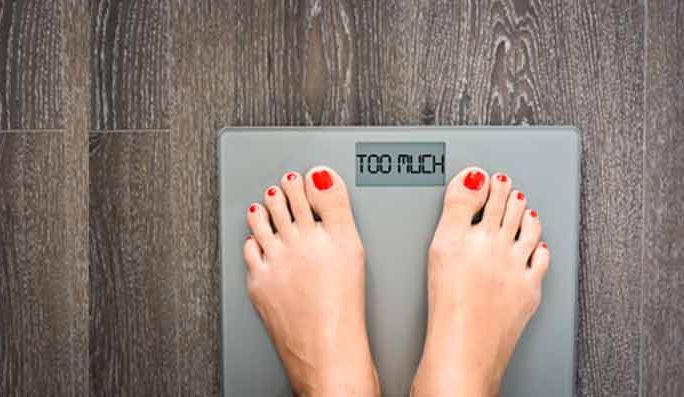
 Age and weight gain

Between puberty and menopause, both men and women tend to gain weight: 7 to 10 kg for women in most studies. Furthermore, a survey conducted by Forza Supplements in 2014 showed that women were more likely to gain weight between the ages of 35 and 40, while men faced the most overweight issues around the age of 44. Gaining weight as we age is not a myth.
Over time, pounds settle in more easily if we are not careful. Here are the explanations and ways to avoid this cumbersome overweight.
Why do we often gain weight as we age?
As always, there is not just one reason. The causes of this overweight are multiple and intertwined:
Hormonal terrain modification
One well-known cause is the decrease in hormone levels that begins after the thirties, particularly that of the ’growth hormone for both sexes and of the testosterone (especially in men but also in women). These two hormones stimulate muscle production in our bodies and activate lipolysis, which is the elimination of fatty substances contained in our fat cells. As these hormones decrease, there is a resulting increase in fat mass at the expense of muscle in the body.
For women, menopause, the sharp decline in the progesterone (starting from pre-menopause) promotes fat storage in the body and also water retention. Then, the decrease in estrogen levels acts in a particular way: as it mainly favored fat deposition in the lower body, its drop leads to a new distribution with weight gain in the upper body, particularly the abdomen.
For men, we talk about ’andropause. At this point, the decrease in testosterone promotes the loss of muscle mass. The belly begins to gain weight. Quite often, an increase in estrogen levels, normally low in men, appears, predisposing to increased fat storage on the thighs, buttocks, and chest of these gentlemen (see explanations here).
Decrease in energy production
The activity of the mitochondria that produce our energy in our cells becomes less efficient with aging. Ultimately, calories are less well «burned» as we age.
Moreover, a study (Sung-Jun Clark 2017) informs us that an enzyme (DNA-dependent protein kinase) whose activity increases with age may be involved. It would lead to a reduction in the number of mitochondria and a greater production of lipids (fats) in our cells. This promotes weight gain and obesity.

(9) mitochondria in a cell (wikipedia°)
Researchers have managed to reduce age-related weight gain by decreasing the activity of this enzyme in mice. Of course, the pharmaceutical industry is considering the development of such a drug for humans.
Decrease in basal metabolism
The minimum amount of energy that our body expends each day to stay alive is the « basal metabolism. It decreases with age, just like muscle mass. These two phenomena are correlated, as well as with the decrease in our calorie burning. Thus, if our expenditures decrease a little and our calorie (nutritional) intake remains the same, we will tend to gain weight slowly.
Decrease in physical activity
In general, professional situations and family responsibilities often lead to a certain sedentariness starting in one's thirties. One stops a sport, there is no time to go out or take up hobbies, work does not leave us enough energy to exercise, etc. This will further decrease our energy expenditures and promote the accumulation of excess weight.
Dietary deviation
It must be acknowledged that the pleasures of the table are shared more as one ages. There are more occasions, business meals, or simply more desire to indulge in eating. Generally, these meals are rich in calories, sugars, alcohol, and fats, which does not help the situation.
Finally, it is worth mentioning that with aging, digestive metabolism disorders often appear, as well as insulin resistance which can lead to diabetes and also promotes weight gain.
An overweight we could do without
Where do the excess pounds go with age?
 Here, men and women become equal as they both tend to gain weight, especially around the belly. Indeed, after menopause, the hormonal difference between the two sexes decreases. The woman's body becomes more masculine, while the man's body sometimes becomes more feminine.
Women no longer gain weight «in a pear shape» with age but «in an apple shape» like men. This is mainly related to the decrease in estrogen as we have seen.
Can we prevent these extra pounds?
While it is difficult to prevent most mechanisms related to aging, it is always possible to counteract them in order to prevent this weight gain, which is therefore not inevitable. Moreover, we all know people who remain slim throughout their lives. As we will see below, it will be necessary to stimulate lean mass gain to maintain it and limit the mechanisms of fat storage.
How to stay slim as we age
Unfortunately, there is no magic pill, but we can tackle the causes of overweight since we now know them.
Maintain muscle to better burn calories
Here, there is no secret: it is by moving that the miracle happens. Inactivity melts away muscles. Sports and physical exercise are our friends and those of our longevity.
 Do not exercise just for the sake of exercising. Do it for pleasure. Find an activity that you enjoy (not too hard but not too easy). Many are doable well into old age and for everyone: hiking, cycling, swimming, yoga, jogging, tennis… We also know of surfers over 70, kitesurfers over 80, and centenarian cyclists! Our limits are mostly in our minds, but regular practice is certainly needed.
Know that a study (William PT 1997) showed that men who run regularly gain on average only 1.5kg between 20 and 50 years old..
It is not mandatory to spend your days in the gym: 3 one-hour sessions per week already yield very good results. It seems that’interval training (regardless of the sport) works best. It significantly increases growth hormone and muscle mass. It requires little time.
If you have stopped all physical activity, start cautiously at first. The yoga is excellent in this case, and a wonderful anti-aging and health practice.
Finally, there are also some natural remedies to maintain muscle with age (you will find everything in this article.).
Eat better and healthier
You can imagine that as you age, it is not by starting to enjoy digestifs and fine pastries that you will stay slim. You will need to lighten your diet. The good news is that caloric restriction increases health and longevity. Moreover, this does not mean you will have to starve. It is enough to modify eating habits to move towards a healthy diet.
The basic rules here will be the reduction of fast sugars (high glycemic index foods) and enough proteins to maintain our lean mass (our muscles).
No need to look very far: the recommended anti-aging diet to increase longevity will be perfect to help you avoid weight gain starting in your forties and beyond.
That said, there are foods that promote the production of hormones that prevent weight gain:
- beans (containing L-Dopa which stimulates growth hormone)
- oats, garlic, chili, coconut oil, flaxseed, nuts, for testosterone
- broccoli, avocados…: containing NMN which protects the energy activity of our mitochondria
Whether they are foods, natural remedies, or dietary supplements, it cannot be emphasized enough that without good digestion and absorption, they risk remaining ineffective.
Promote fat elimination by activating energy production
We have seen that with more muscle, the basal metabolism increases and thus we burn fat better. Here are other ways to activate this calorie burning.
Not only will you increase your metabolism and be less likely to gain weight, but you will also be fitter. This energy production is optimal in our mitochondria when we burn the nutrients we ingest with the oxygen we breathe.
Already, you understand that it is necessary to supply oxygen to the cells. In fact: improving your exercises and your blood circulation helps with weight loss. Again, movement and physical activity (especially outdoors) will be welcome.
Moreover, certain micronutrients are essential for this combustion; magnesium, B vitamins, coenzyme Q10, NAD+… Therefore, it will be necessary to ensure their intake in our foods, or even to supplement them.
Finally, certain substances can boost our mitochondria, whose efficiency tends to decrease with age:
- acetyl-L-carnitine
- alpha-lipoic acid
- of plant origin, it is easy to systematically add oils rich in (flax, safflower, walnuts, hemp…) uncooked, as they are or on your vegetables. We will use coconut fat or olive oil for cooking. Duck fat, goose fat, ghee or clarified butter… are also good for cooking.
- glycine (an amino acid)
- those that increase NAD+ in our cells: resveratrol from grapes, riboside, NMN found in broccoli and avocados…
Finally, it has been shown that the massages increased mitochondrial function.
You will learn more about how to produce more energy dans cet article sur la fatigue.
Balance your hormonal terrain
Il ne s’agit pas ici de prendre des hormones systématiquement en vieillissant mais de corriger les déséquilibres, naturellement si possible.
Nous avons vu que l’hormone importante était l’growth hormone. Elle baisse au fil du temps mais d’après les chercheurs, ceci serait dû surtout à une mauvaise hygiène de vie : alimentation, manque de sommeil, environnement…
 En France, il est interdit d’utiliser l’hormone de croissance (hormis pour certaines maladies). Un moyen simple pour l’augmenter est de faire travailler ses muscles (notamment l’exercice fractionné) et d’éviter les sucres rapides qui font monter notre insuline. Des acides aminés comme ornithine, arginine, glycine, glutamine… aident sa fabrication, idem pour la vitamin B3 à forte dose et le Zinc dont il ne faut pas manquer.
De plus, la production de testostérone chez l’homme, tout comme d’oestrogènes et progestérone chez la femme ménopausée, se réduit avec l’âge. Il sera donc souvent intéressant d’améliorer et rééquilibrer leurs fonctions. Pour cela, il est possible d’agir avec des remèdes naturels : homéopathie, plantes hormono-sensibilisantes, précurseurs hormonaux (DHEA, pregnénolone) voire un traitement substitutif avec des hormones bio-identiques. Ceci est expliqué en détail dans l’article hormones et anti-âge.
Parmi les nutriments utiles à leur production, citons : le magnésium, le zinc, le sélénium, la vitamine E et B6.
Il ne faut pas oublier la thyroid qui peut, en se déréglant, influencer la prise de poids. Cependant, seule l’hypothyroïdie favorise l’embonpoint et elle n’est pas systématique, heureusement.
Modify your lifestyle
Nous avons vu plus haut que l’hygiène de vie et l’environnement peuvent influencer la production d’hormone de croissance. Il en est de même pour les autres hormones.
A sommeil suffisant est très important pour la régulation hormonale.
La pollution et les endocrine disruptors en particulier sont souvent néfastes pour le poids car ils ont, pour beaucoup d’entre eux, un effet « oestrogène like » (matières plastiques, conservateurs, revêtements d’intérieur, pesticides, détergents…).
Finally, le stress mal géré peut dérégler toutes nos hormones mais fréquemment, il conduit à une augmentation du cortisol et à une baisse de l’hormone de croissance, ce qui aggravera les problèmes d’excès de poids.
Conclusion, rester mince à tout âge est possible si l’on apprend à se connaître et que l’on adopte une bonne hygiène de vie, c’est à dire celle qui nous équilibre et qui maintient au mieux notre terrain hormonal et notre combustion de calorie (dépenses énergétiques). Les grands principes sont là, il suffit de les adapter à chacun selon sa constitution.


A 68ans passée j’avoue que rester svelte me demande d’être tres attentive je suis tjrs sportive vtt je nage je marche tous les jours
Et je fais également très attention à ce que je mange jai supprimer le beurre je sucre tres peu et au miel j’arrive à tjrs maintenir mon poids et quand même je craque de temps en temps avec une bonne bière
Conclusion effectivement pour garder un poids de forme il faut s’en donner la peiné
Tout à fait. Et l’expérience m’a montré que des résultats étaient toujours possibles quand la volonté et la constance sont là. Et parfois, bien au delà de ce que l’on croit. Le corps humain est incroyable.
J’ai perdu 5 kilos sans bouger davantage rien qu’en supprimant tout ajout de sucre sous quelque forme que ce soit ainsi que tout laitage non écrémé et ce poids est stable. J’ai enfin retrouvé mon bon corps.
Ce qui est amusant c’est que pour ma stature n’importe quel calculateur m’attribuera 61 ou 62 kg, poids que j’avais atteint en continant à manger « normalement » malgré la « chute », or j’etais essoufflée, videe, engluee dans la graisse et le brouillard mental. Je nai rien fait de plus que supprimer le sucre en plus d’une activite physique reguliere et d’un reequilbrage alimentaire alors encore incomplet avant ce sevrage, et ce gras car c’est bien du gras et non de la masse musculaire a tout naturellement fondu. C’est bien la preuve que mon VRAI POIDS DE FORME est de 57kg grand maximum et meme moins car j’en ai perdu un de plus en supprimant presque toutes les cereales (pour des raisons autres) et qu’ c’est son RESSENTI qu’il faut écouter, ne pas tenir compte des « vous ne devez pas maigrir plus » « il ne faut surtout pas que vous maigrissiez » et autres « mais ma cherie tu n’es pas faite pour etre mince » ou encore « ça creuse les joues et ça vieillit » ou « tu vas perdre ta poitrine – TANT MIEUX !). Personne n’est fait pour se trainer étouffer etre abruti perdre la memoire ne plus pouvoir s’habiller selon sa personnalité et son type de physique et se sentir mal.
Poutr moi la solution a été l’éviction du sucre ajouté (hormis de rarissimes écarts mais surtout ça doit rester très occasionnel dans l’ideal c’est à traiter comme un sevrage tabagique), rien de plus ni de moins.
Hello,
Il y a environ 2 ans j’ai pris 2 puis 3 kilos d’un seul coup ces derniers suite à des habitudes alimentaires qui ne m’ont pas réussi (cuire et manger un gateau par jour ou presque lors d’un mois d’hiver particulièrement froid) que je n’arrivais pas à reperdre en depit de tous mes efforts et jusque au début de ce mois.
En septembre j’ai décidé de supprimer tout ajout de sucre quel qu il soit y compris rapadura sucre de coco xylitol de mon alimentation, cesser tout grignotage, réduire drastiquement les produits laitiers jusqu’à presque les supprimer d’ailleurs et éviter toute source de gluten autre que des flocons d’avoine et du pain aux 3 cereales vendu en rayon bio. Sans faire quoi que ce soit d autre et en gardant ma routine d’exercices, j’ai effectivement perdu plus de 3 kilos environ 1 par semaine , des centimètres et la masse grasse est passee de 25 à 22,3 %. Je suis non seulement mieux mais plus alerte plus énergique moins confuse et déprimée, mon teint est plus clair.
Peut être cette expérience aidera d’autres lectrices.
Ma cellulite a également en partie fondu et j ai retrouvé ma fermeté habituelle compte tenu de l’âge.
Je voudrais toutefois savoir si cette perte de 3 kilos en a peine 1 mois peut être considérée comme trop rapide. Je n’ai pourtant rien fait d’autre que suprimer le sucre et quasiment tout produit laitier, sans me sous alimenter pour autant (davantage de légumes aussi) ni perdre de force musculaire.
Ai je le risque de reprendre au moindre écart ? Je m’autorise parfois une friandise mais de façon maîtrisee afin d’éviter tout craquage incontrôlé. Je suis consciente que c’est une rééquilibrage nécessaire une nouvelle façon de se nourrir et ce à vie.
J’espère juste que cet affinement providentiel sera durable. Je n’ai pas de problème de santé particulier qui puisse expliquer la rapidité de cette légèreté retrouvee :)
Je ne vois que le sevrage de tout sucre autre que celui des fruits en mode sevrage pur et dur pour commencer :)
Je peux garantir qu’on a beaucoup moins de fringales, on a juste faim, en fait, tout en ne mangeant plus en excès, pour moi ça s’est rééquilibre naturellement.
Je n’ai pas grossi entre 35 et 40 ans, j’avais meme maigri auparavant, c’est apres que ça m’est arrivé, dans mon cas le mal vient de la pré-bouse qui m’a affublee de 6 kilos en un an, dont j’ai pu reperdre une partie mais pas la totalité il me restait 2 kilos de trop impossibles à déloger, puis la bouse a frappé et j’en ai repris 3 en un an puis 3 autres en à peine 2 mois et j’ai eu beau faire il est impossible de m’en debarrasser je vais devoir consulter et essayer d’obtenir plus que des generalités du genre « c’est l age » je veux savoir ce quil se passe au juste dans mon organisme pour qu’il soit déglingué de la sorte. C’est en tout cas un veritable fleau on se croit à l’abri parce qu’on n’a pas de poitrine et qu on ne grossit pas, puis on se retrouve avec cette gelatine et une affreuse poitrine dont on n’a que faire et des frais de garde robe, c’est très deprimant…
vieillir, la perte d un avenir et le deuil de soi meme est une chose horrible il est difficile d’eviter le stress et la depression. Pour l’exercice c’est vrai, on ne peutr persverer lorsque c’est chiant il faut que ce soit avant tout un plaisir et en oubliant la finalite sinon ca met la pression et ça en fait une source de stress. Auparavant on etait libre de devenir vieux et moche on pouvait se laisser glisser tranquille dans l’autre monde, la societe etait surtout faite pour les vieux, tout autre mode de vie etait exceptionnel, revolutionnaire, rebelle, subversif, exceptionnel, un territoire vierge à conquerir, on pouvait mettre de la distance entre la decheance et soi rien qu’en etant soi meme, aujourdhui c’est une norme , la competition continue encore et toujours c’est devalorisant et stressant pour ceux qui ne peuvent pas suivre. Le niveau financier joue aussi. L’avantage d’un ewxercice comme le yoga est d’etre à la portee de toutes les bourses si on pratique chez soi, ça demande juste davantage de prudence (non encadre) et de discipline. Le yoga est vraiment une belle invention :)
Avec l’age on se laisse aller, il faut faire attention a l’alimentation et aussi c’est tres important de pratiqué du sport.