


Well known for its antioxidant properties, turmeric has many other benefits, particularly useful in anti-aging.
Professor M. Capt describes the powers of this wonderful spice.
Our aging is often burdened with disabilities (cancers, cardiovascular accidents, autoimmune diseases, Parkinson's, etc...) sometimes as early as the age of 40. In most countries, humans have stopped extending their life expectancy, which had gained nearly 40 years in a century!
The blame lies with all the lifestyle diseases that share a common factor: «oxidative stress,» due to an overload of free radicals. Even a balanced and proper diet is not always sufficient, and the use of antioxidants is often necessary. Turmeric is one of them.
Turmeric, plant and spice
History
A very ancient plant, known for over 6,000 years in India, probably originating from Vietnam, it is cultivated in India, China, and the Middle East.
 Botany
 Botany
There are about 110 species of turmeric, the most common being «curcuma longa». It is the most used due to its health benefits. Turmeric powder oxidizes in light.
Biochemistry
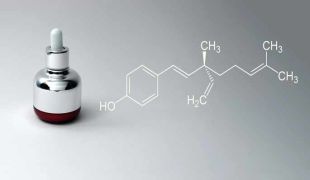
Curcumin, extracted and isolated from turmeric in 1870, is not only a major very powerful antioxidant (10 times more than vitamin E), but also plays a role in regulating a very large number of cellular functions.
The properties of turmeric on health
A powerful anti-inflammatory and analgesic
Turmeric is an anti-inflammatory comparable to medications in this class and is even as effective as cortisone and phenylbutazone. It may be more powerful than hydrocortisone, by reducing histamine levels and increasing the rate of natural cortisone produced by the adrenal glands.
Turmeric has a pain-relieving action by releasing substance P and inhibiting certain enzymes involved in the synthesis of inflammatory substances, such as prostaglandins E2 and leukotrienes. It may also enhance the effect of cortisol on cells, potentially prolonging its half-life and/or decreasing its degradation by the liver.
Significant antioxidant power
Turmeric is very effective against damage caused by free radicals. As early as 1995, numerous studies demonstrated that it inhibited the oxidation of fats and neutralized superoxide and hydroxyl free radicals. This exceptional antioxidant is 3 times more powerful than the resveratrol, pycnogenol, more effective than vitamin C, capsaicin, and BHT…
The protective and anti-aging effects of turmeric
Curcumin from turmeric has recognized effects on two metabolic pathways. It is capable of slowing down:
– the insulin/Igf1 pathway (Insulin Igf1 Signaling),
– the mTOR pathway (mammalian Target of rapamycin).
The slowing down of these two pathways is known to improve longevity in many studies.
Neurodegenerative diseases
Turmeric plays a role in protecting the nervous system, including in Alzheimer's and Parkinson's, primarily by increasing the level of glutathione (antioxidant). It also acts at the level of the mitochondria* of the brain by limiting the formation of peroxynitrites, ions contributing to cell death. This was confirmed by Professor Gregory Cole, Director of the «Alzheimer’s Disease Center,» University of California.
American studies, in 2004 and then 2007 (in vivo), established that turmeric destroys «beta-amyloid» deposits, damaging neurons in Alzheimer’s. Its effect is greater than that of usual medications, even ibuprofen, which is reputed to be effective for this pathology.
Cardiovascular problems
 Turmeric helps lower cholesterol levels in the blood while increasing its fluidity. Moreover, in 1997, a study published in the journal «Molecular Cell Biochemistry» reported that turmeric demonstrated «in vivo» its ability to decrease total cholesterol and LDL while increasing HDL. In April 2008, this same journal confirmed these results, specifying that turmeric strongly protects against the oxidation of lipid membranes. This was confirmed by another study in 2002, in India, by the Cancer Research Center.
Spanish researchers from the University of Granada have proven the beneficial effect of turmeric in the prevention of atherosclerosis. Two other studies in 2008 also attest to the protective role of turmeric against heart failure.
Against declines in immunity
Turmeric acts as a stimulant for the immune system, which represents a useful weapon in the treatment of AIDS. To confirm this immuno-modulatory action, Indian researchers gave turmeric to mice. After only 12 days, compared to a control group, the number of leukocytes had increased by 50%!
– What about the effect on HIV? Numerous studies, including several conducted in Toulouse, have shown that turmeric slows the progression of HIV by increasing, among other things, the levels of T-CD4 and T-CD8 lymphocytes in the blood.
– By what phenomena? Turmeric indeed inhibits the synthesis of the integrase enzyme that allows the virus to integrate into the host cell's genetic code. Furthermore, turmeric inhibits the production of cytokine by this same cell, cytokine that stimulates the formation of HIV in lymphocytes. Finally, as individuals with AIDS have an increased need for antioxidants, turmeric partially meets this need.
Against cancer
Initially, a simple observation revealed by the late neuropsychiatrist, David Servan-Schreiber: in India, where turmeric is consumed in large quantities, there are about 10 times fewer cancers than in many other countries. Turmeric seems to be a first-rate anti-cancer agent. An article published in the famous «Journal of National Cancer Institute» in May 2008 confirms that it blocks cell proliferation and destroys various types of cancer cells (prostate, breast, colon, melanomas, etc.).
On l’utilise non seulement en prévention mais également en accompagnement des traitements classiques et pendant les radio et chimiothérapies.
Deux études récentes de l’Université Columbia de New York ont prouvé l’inhibition par le curcuma des cellules cancéreuses de la prostate. D’excellents résultats ont été obtenus, en outre, sur le redoutable cancer du pancréas, en 2008, par le Prof. Swammy et ses collaborateurs dans le Dpt. de Médecine de l’Université d’Oklahoma.
Des chercheurs de l’Université du Texas, dont le Prof. Anderson, du Cancer Center d’Houston,
pensent que le potentiel anti-cancéreux du curcuma est liée à la diminution d’activité d’une enzyme impliquée dans le cancer.
En 2010, des travaux menés à l’Université John Hopkins, de Baltimore, ont montré que le curcuma, associé à de la quercétine, réduisait de près de 75% la croissance de polypes du colon chez des patients souffrant d’un risque héréditaire accru de cancer colorectal.
Citons, enfin, les recherches faites dans ce domaine par le cancérologue réputé, à Aix-en-Provence, le Pr.Jean-Loup Mouysset.
Against eye problems
Le curcuma s’est révélé efficace contre toutes les inflammations oculaires, en particulier les uvéites, les infections et les dégénérescences.
Other therapeutic properties of turmeric
Against bacterial infections and parasites
Le curcuma inhibe la croissance de nombreuses bactéries, dont l’« Entamoeba histolytica « , le « Clostridium perfringens », le « Sarcina », le « Gaffkya », les « Staphylocococcus », les « Streptococcus », les « Bacillus », ainsi que d’autres champignons pathogènes. Il inhibe également la production de certaines toxines bactériennes, très nuisibles pour l’organisme, telles les « aflatoxines », très cancérigènes et produites par les moisissures se développant dans la nourriture mal conservée.
Against digestive disorders
La Commission européenne comme l’OMS reconnaissent l’efficacité du curcuma contre les dyspepsies. Même les experts du WHO Collaborating Center for Traditional Medecine de l’Université de l’Illinois, à Chicago confirment son action dans l’apaisement des inflammations digestives.
Against wounds and skin diseases
Selon des Etudes faites aux USA, à Bethesda, le curcuma agit en cas de plaies, d’ulcères, de mycoses, voire d’irritations cutanées. C’est un agent cicatrisant. Certaines études montrent son effet bénéfique contre les brûlures de la radiothérapie.
Against environmental pollution
Le curcuma semble remplir un rôle non négligeable de protection cellulaire à l’égard de multiples sortes de polluants environnementaux.
Une étude menée en1998, à l’Université de Médecine de Tufts, à Boston, a montré que le curcuma, associé à des iso-flavonoïdes, a un puissant effet inhibiteur de croissance sur les cellules cancéreuses du sein, induit par les perturbateurs hormonaux pseudo-oestrogènes. Une autre étude du Collège de Médecine de New-York, en 2001 (Prof. JagKushik) confirme l’effet protecteur du curcuma contre l’activité oestrogénique du DDT.
Le curcuma préserve également des effets mutagènes induits par les différents polluants environnementaux, tels que les radiations, les herbicides, les pesticides et les métaux lourds.
How to take turmeric?
 In what form and at what dosage?
 In what form and at what dosage?
Cela dépend du contexte, ainsi que du niveau de risque individuel comme familial. Chez un individu « moyen » la prévention peut s’envisager sous forme simplement alimentaire, à savoir saupoudrer ses plats avec du curcuma du commerce. Il faudrait prendre, par exemple, une cuillère à café de curcuma tous les jours. Plus pratique est la prise sous la forme de gélules, d’autant qu’il faut y associer du poivre (environ 1% de la dose avalée) pour améliorer l’assimilation du curcuma par l’organisme.
En effet, seulement 5 à 60% (au mieux) sont absorbés par la muqueuse intestinale. Pour améliorer encore son absorption, on conseille d’associer des corps gras (huile de colza,
d’olive, de poissons…).
Pour protéger d’une pollution potentiellement cancérigène (électro-pollution, pesticides, etc…) on recommande des doses de 300 à 600 mg./jour, soit, en gros, l’équivalent de 1 à 2 cuillères à soupe, auquel on ajoutera un peu de poivre noir. Si possible, associer du brocolis et/ou des choux, dont le sulforaphane neutralise certains toxiques carcinogènes. C’est ce que recommande le Pr Mouysset.
En association d’un traitement (d’un cancer, par exemple), les doses peuvent aller jusqu’à 1.200 mg., soit 4 cuillères à soupe.
Le curcuma peut aussi se trouver sous d’autres formes : frais, en huile essentielle… Différents Laboratoires vendent des gélules de curcuma. Essayez de vous assurer de la traçabilité du produit (pays d’origine, certification « bio ») et surtout garantissant l’absence de solvants (acétone, par exemple), souvent utilisés dans les curcuma « 1er prix ».
Conservez la poudre au frais, au sec et à l’abri de la lumière, pour préserver ses qualités.
Precautions and contraindications
– prise d’anticoagulants (risques d’hémorragies) :pas plus de 300 mg., tous les 2 jours seulement.
– en cas d’ulcères duodénaux et/ou calculs biliaires : même dosage que ci-dessus
– en cas de grossesse (par principe de précaution).
Hello
J’ai la chance d’avoir du curcuma dans mon jardin donc je le consomme cru dans une preparation râpé avec du miel le matin a jeun et le soir au couché très efficaces contre tous sorte de maladie. Cru avec du miel c’est plus efficace que cuit
je suis un homme de 53 ans , le curcuma est certe benifique pour la sante en générale,
moi je prend quotidiennement avant le petit déjeuner en estomac vide , une cac curcuma ,1/2 cc gimgenbre et une pince de poivre noir , le tout dans un grand verre d’eau citronnée naturelle tiede (1/2 l) , résultat est que je n ai plus de douleurs au niveau du bas du dos, , je me sens en forme tout le long de la journee.
Merci pour ce conseil à delphine. Une autre façon de rendre le curcuma plus assimilable par l’organisme est de préparer une émulsion en mélangeant une cuillère à soupe de curcumine avec 1 cuillère à café ou 2 d’huile de noix de coco fondue. On passe le tout au mixer pour faire une émulsion et avale docilement.
merci pour vos conseils mais pourrais je remplacer lhuile coco par lhuile dolive svp
Le curcuma, oui, mais à haute dose! Comme vous le dites, le curcuma a des vertus anticancer qui ont été largement démontrées, au même titre que sa faible absorption par l’organisme quand on le prend par voie orale. Je partage avec vous des conseils que j’ai trouvé pour l’avaler dans des formes plus efficaces qu’à coups de cuillères à soupe de poudre.
Dans 12,5 cl d’eau bouillante (important) vous mélangez une cuillère à soupe de poudre de curcumine et laisser l’ébullition se poursuivre pendant
jaimerais savoir la suite de votre commentaire qui est a mon sens tres interessant